


Callous unemotional traits mediate the presence of challenging behaviors in adults with autism spectrum disorder and intellectual disability
- PMID: 39712441
- PMCID: PMC11660373
- DOI: 10.1080/20473869.2023.2171756
Callous unemotional traits mediate the presence of challenging behaviors in adults with autism spectrum disorder and intellectual disability
Abstract
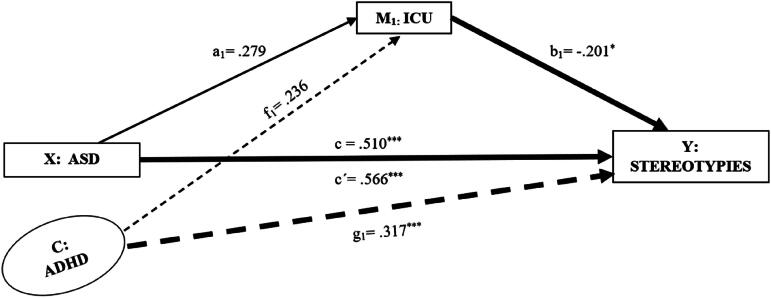
Background: Callous-unemotional traits (CUT) are an antisocial personality trait, which can be present in people with autism spectrum disorder (ASD), especially in relation to difficulties in empathy. These traits are related to challenging behaviors, such as aggressive behavior, which may occur in people with ASD. Method: This study aimed to expand the understanding of the role of CUT in adults with ASD and intellectual disability (ID). Eighty-three adults with a diagnosis of ASD and ID participated in the study. Results: Mediation analyses found that CUT indirectly mediated the relationship between ASD symptomatology and the frequency of self-injuries and stereotypies, but not aggression. Conclusions: It is considered that CUT may have a protective effect on the presence of individual challenging behaviors in adults with ASD and ID. The apparent relationship between CUT and executive functioning was discussed. CUT traits may be considered as a variable to contemplate in relation to interventions in challenging behaviors in the ASD population, especially in those individuals who show aggression-related behaviors and who have a higher executive level.
Keywords: Callous – unemotional traits; adults; autism spectrum disorder; challenging behaviors; mediation analyses.
© The British Society of Developmental Disabilities 2023.
Figures


References
-
- American Psychiatric Association (APA) . 2013. Diagnostic and statistical manual of mental disorders. 5th ed. Arlington: American Psychiatric Association.
-
- Bakker-Huvenaars, M. J., Greven, C. U., Herpers, P., Wiegers, E., Jansen, A., van der Steen, R., van Herwaarden, A. E., Baanders, A. N., Nijhof, K. S., Scheepers, F., Rommelse, N., Glennon, J. C. and Buitelaar, J. K.. 2020. Saliva oxytocin, cortisol, and testosterone levels in adolescent boys with autism spectrum disorder, oppositional defiant disorder/conduct disorder and typically developing individuals. European Neuropsychopharmacology: The Journal of the European College of Neuropsychopharmacology, 30, 87–101. - PubMed
-
- Bedford, R., Gliga, T., Hendry, A., Jones, E. J. H., Pasco, G., Charman, T., Johnson, M. H. and Pickles, A. and The BASIS Team . 2019. Infant regulatory function acts as a protective factor for later traits of autism spectrum disorder and attention deficit/hyperactivity disorder but not callous unemotional traits. Journal of Neurodevelopmental Disorders, 11, 14. - PMC - PubMed
-
- Conners, C. K.Erhardt, D. and Sparrow, E.. 1999. CAARS. Adult ADHD Rating Scales. Technical manual. Multi-Health Systems.
-
- Danielsson, H., Henry, L. A., Rönnberg, J. and Nilsson, L.G.. 2010. Executive functions in individuals with intellectual disability. Research in Developmental Disabilities, 31, 1299–1304. - PubMed
LinkOut - more resources
Full Text Sources
