Depressive Symptoms in Adults with Autosomal Dominant Polycystic Kidney Disease
- PMID: 39714938
- PMCID: PMC12045507
- DOI: 10.34067/KID.0000000683
Depressive Symptoms in Adults with Autosomal Dominant Polycystic Kidney Disease
Abstract
Key Points:
Our results show a relatively low prevalence of elevated depressive symptoms in a large sample of predialysis adult patients with autosomal dominant polycystic kidney disease.
Frequent pain was found to have a significant association with depressive symptoms, underscoring the importance of adequate pain control.
The severity of autosomal dominant polycystic kidney disease was not associated with depressive symptoms after accounting for potential demographic and clinical factors.
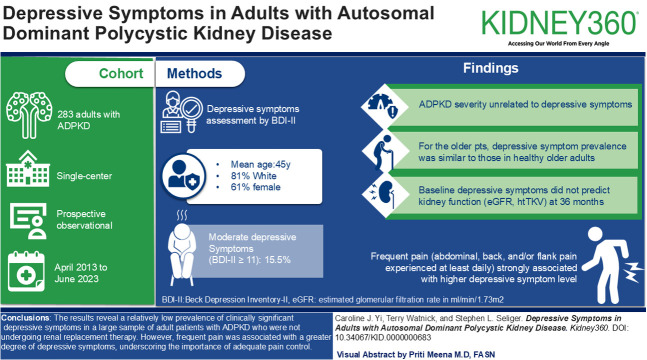
Background: Patients with autosomal dominant polycystic kidney disease (ADPKD) face mental health challenges linked to disease progression and its heritable nature. Prior studies reported mixed associations between depressive symptoms and ADPKD severity and progression. In this study, we assessed depressive symptoms and disease severity over 3 years in patients with ADPKD without ESKD.
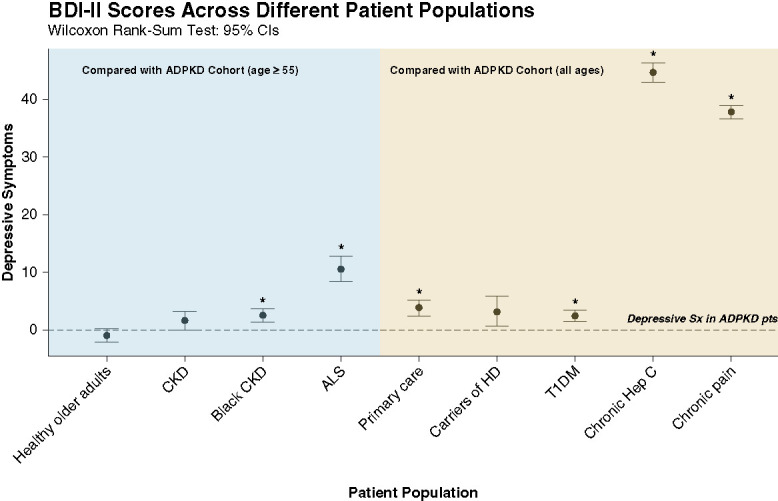
Methods: Two hundred eighty-three adults with ADPKD were enrolled from April 2013 to June 2023 in a single-center prospective observational study. ADPKD severity was assessed with estimated GFR and height-adjusted total kidney volume (htTKV). Depressive symptoms were assessed with the Beck Depression Inventory II. Depressive symptom burden was compared with previously reported cohorts of patients with other chronic, progressive diseases. The relationship of ADPKD severity and ADPKD-related pain with depressive symptoms was estimated using multiple linear regression, adjusting for potential confounders.
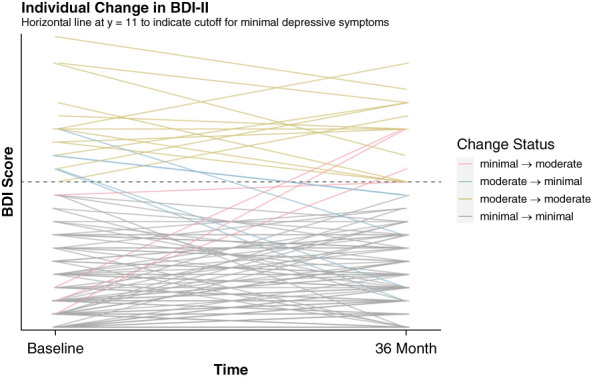
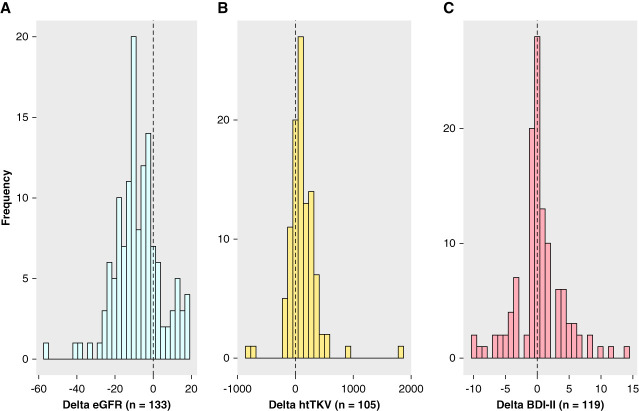
Results: Among 283 adult patients with ADPKD (mean age 45 years; 81% White; 61% female), 15.5% reported moderate depressive symptoms (Beck Depression Inventory II ≥11). Depressive symptom prevalence (all ages) was lower than in primary care samples. For the older patients in our cohort, depressive symptom prevalence was similar to those in healthy older adults. ADPKD severity (eGFR, 73±33 ml/min per 1.73 m2; htTKV, 1104±80 cc/m) was unrelated to depressive symptoms, although frequent pain (abdominal, back, and/or flank pain experienced at least daily) was strongly associated with higher depressive symptom levels. Baseline depressive symptoms did not predict kidney function (eGFR, htTKV) at 36 months, adjusting for baseline measures and confounders.
Conclusions: Our results reveal a relatively low prevalence of clinically significant depressive symptoms in a large sample of adult patients with ADPKD who were not undergoing KRT. However, frequent pain was associated with a greater degree of depressive symptoms, underscoring the importance of adequate pain control. Although these findings highlight the resilience of patients with ADPKD, routine mental health screening is recommended, and validated pain assessment tools may provide useful resources to quantify and manage pain in ADPKD.
Keywords: ADPKD; depression; epidemiology and outcomes.
Conflict of interest statement
Disclosure forms, as provided by each author, are available with the online version of the article at
Figures
References
Grants and funding
LinkOut - more resources
Full Text Sources
Research Materials
Miscellaneous