


Distinct patterns of cell adhesion, migration, and morphology in olfactory neuroepithelium cells of bipolar disorder patients
- PMID: 39716063
- PMCID: PMC11667855
- DOI: 10.1186/s10020-024-01039-8
Distinct patterns of cell adhesion, migration, and morphology in olfactory neuroepithelium cells of bipolar disorder patients
Abstract
Background: Bipolar disorder (BD) is a severe, chronic mental illness that remains difficult to diagnose due to the lack of specific biomarkers, relying primarily on clinical assessments. Early diagnosis and treatment are essential for improving prognosis and lowering suicide risk. This study aimed to identify biomarkers and therapeutic targets by utilizing olfactory neuroepithelium (ONE) cells from patients with BD and controls.
Methods: Immunofluorescence of ONE cells, along with proteomic and RNA sequencing analyses, was performed to investigate cytoskeletal changes and pathways involved in cell adhesion, movement, and morphology. Additionally, potential biomarkers were investigated in blood samples to improve clinical accessibility.
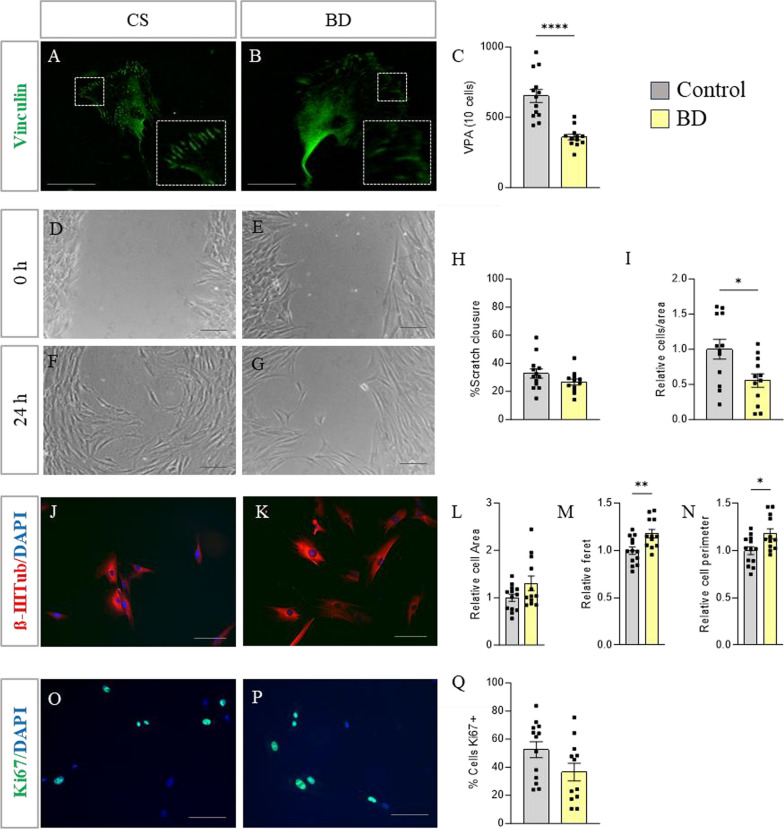
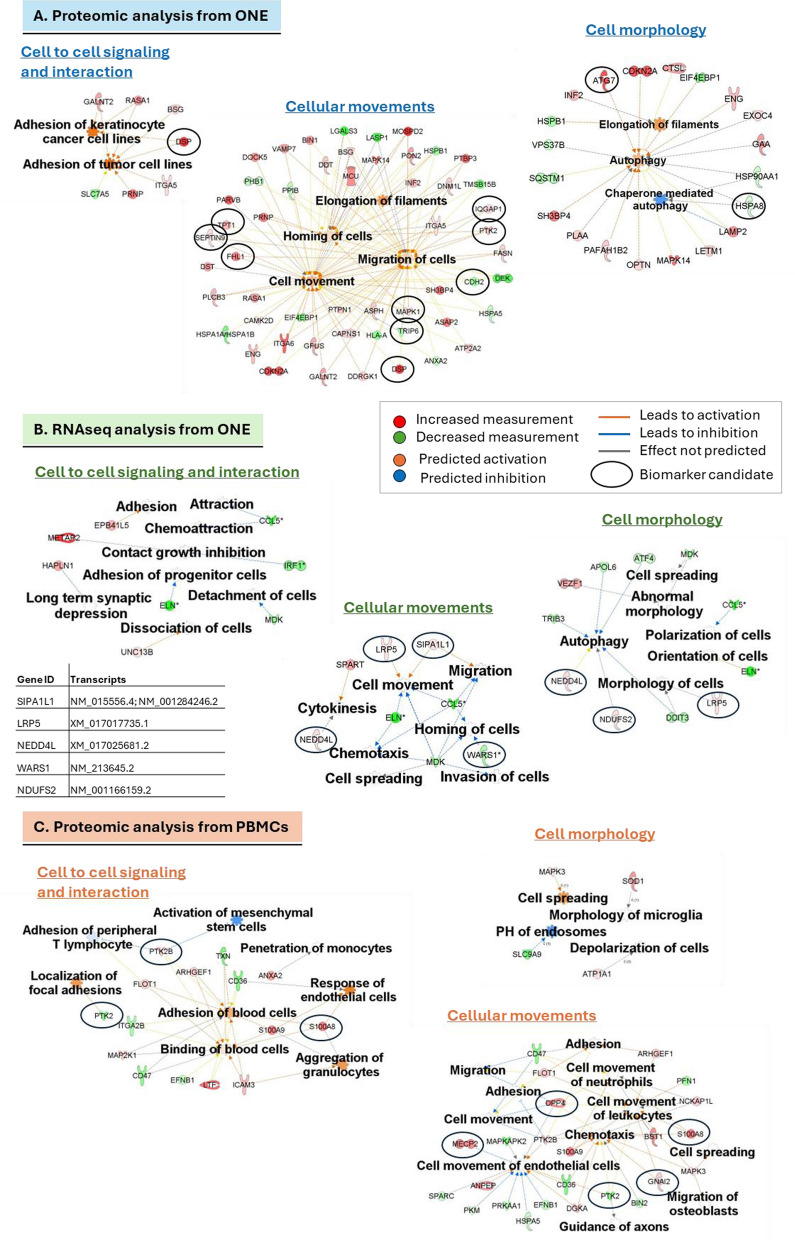
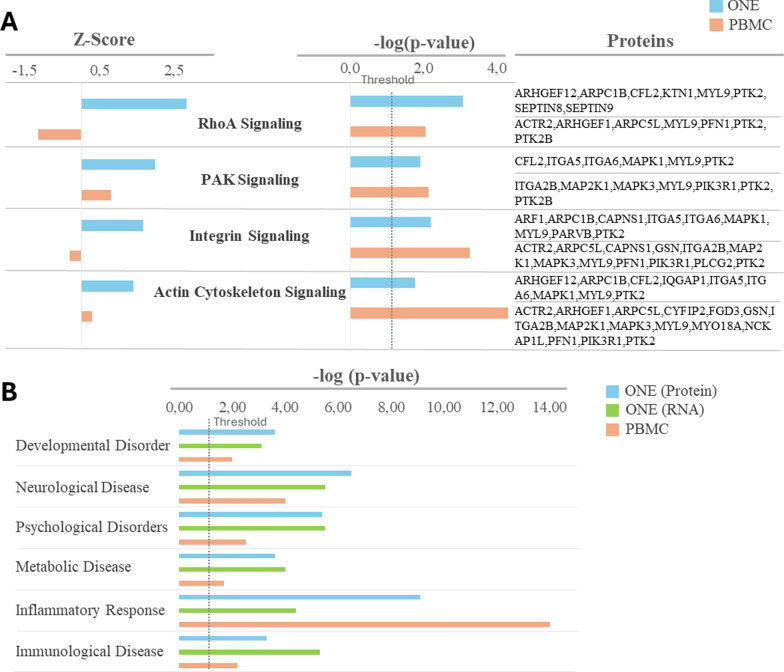
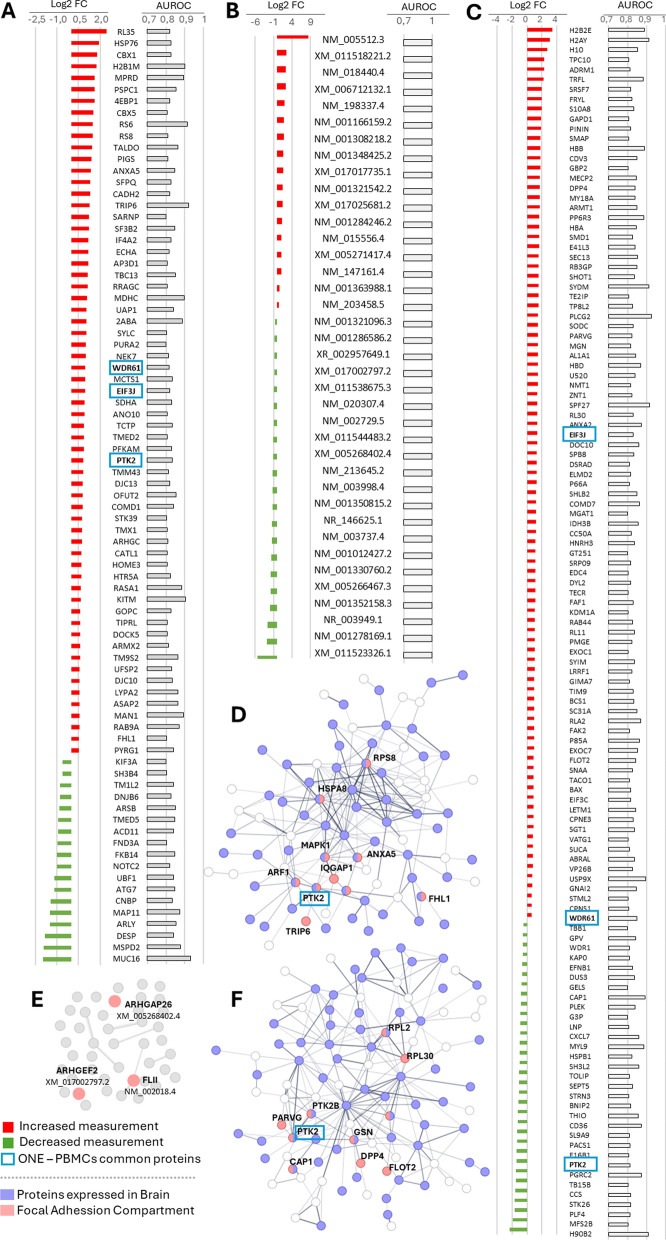
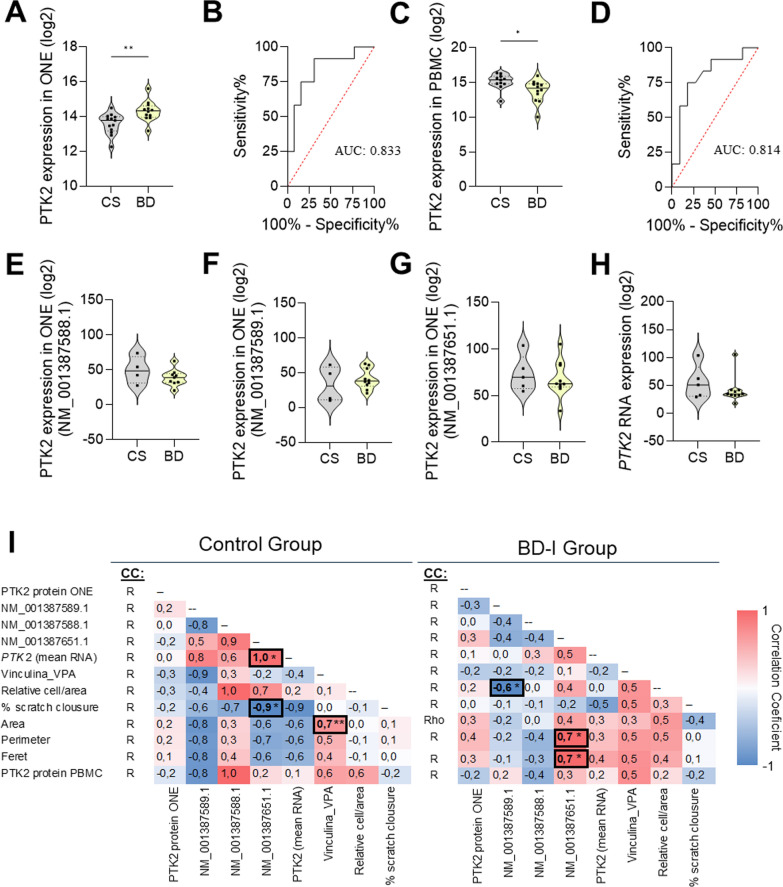
Results: Thus, according to functional assays, ONE cells derived from BD patients exhibited decreased substrate adhesion, reduced cell migration, and morphological changes compared to control cells. In addition, proteomic and RNAseq analyses in ONE cells and peripheral blood mononuclear cells (PBMCs) revealed alterations in pathways such as RhoA/PAK/Integrin and Actin Cytoskeleton Signaling, as well as significant changes in inflammatory and immunological pathways. AUROC analysis identified proteins like PTK2 as potential diagnostic biomarkers, showing altered expression in both ONE cells and PBMCs. PTK2 RNA expression correlated with distinct morphological traits in BD ONE cells.
Conclusions: In summary, this study identified cytoskeletal alterations, reduced adhesion, and disrupted migration patterns in BD ONE cells, highlighting molecular mechanisms underlying these changes and emphasizing PTK2's role as a potential diagnostic biomarker for BD.
Keywords: Biomarker; Bipolar disorder; Cytoskeleton; Olfactory neuroepithelium.
© 2024. The Author(s).
Conflict of interest statement
Declarations. Ethics approval and consent to participate: The Andalusian Ethics Committee (CCEIBA) approved this study, and all the participants signed the informed consent. Consent for publication: Not applicable. Competing interests: The authors declare no competing interests.
Figures
References
-
- American Psychiatric Association. Diagnostic and statistical manual of mental disorders. 5th ed. Arlington: American Psychiatric Publishing; 2013.
-
- Armendáriz BG, del Masdeu MM, Soriano E, Ureña JM, Burgaya F. The diverse roles and multiple forms of focal adhesion kinase in brain. Eur J Neurosci. 2014;40(11):3573–90. - PubMed
-
- Benítez-King G, Valdés-Tovar M, Trueta C, Galván-Arrieta T, Argueta J, Alarcón S, et al. The microtubular cytoskeleton of olfactory neurons derived from patients with schizophrenia or with bipolar disorder: implications for biomarker characterization, neuronal physiology and pharmacological screening. Mol Cell Neurosci. 2016;73:84–95. - PubMed
MeSH terms
Substances
Grants and funding
- FEDER-UCA18-106933/2014-2020 FEDER Operational Programme and by the Department of Economy, Knowledge, Business and University of the Regional Government of Andalusia
- PI-0009-2017/Programa Operativo de Andalucía FEDER, Iniciativa Territorial Integrada ITI 2014-2020" Conserjería de Salud - Junta de Andalucía
- PEMP-0008-2020/Conserjería de Salud y Familias - Junta de Andalucía
LinkOut - more resources
Full Text Sources
Medical
Miscellaneous
