


Association between phenotypic age and mortality risk in individuals with obesity: a retrospective cohort study
- PMID: 39717032
- PMCID: PMC11663737
- DOI: 10.3389/fpubh.2024.1505066
Association between phenotypic age and mortality risk in individuals with obesity: a retrospective cohort study
Abstract
Objective: This study investigates the association between phenotypic age acceleration (PAA) and all-cause and cause-specific mortality in obese individuals.
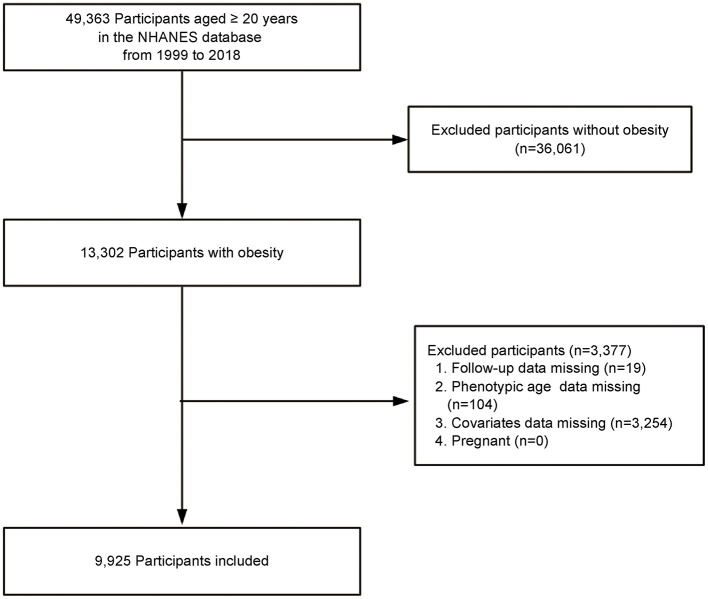
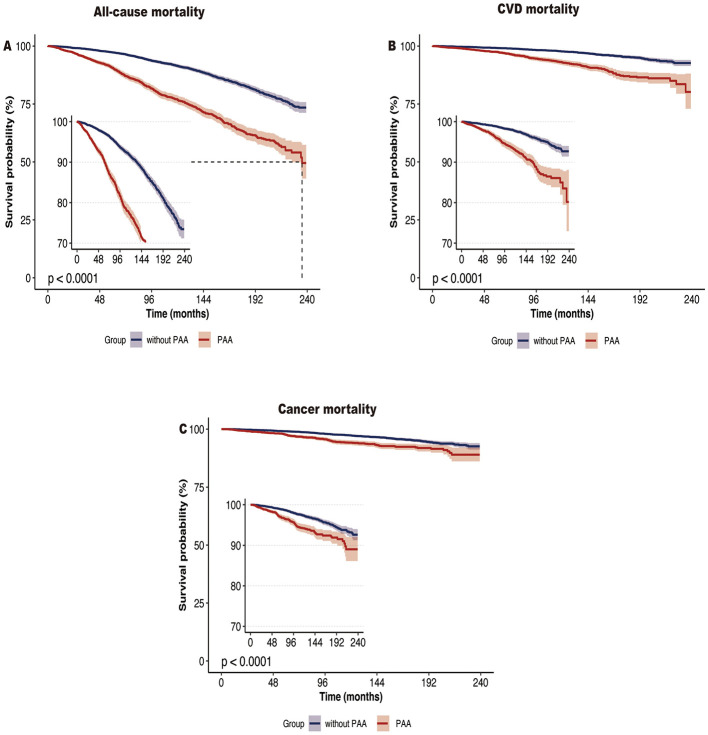
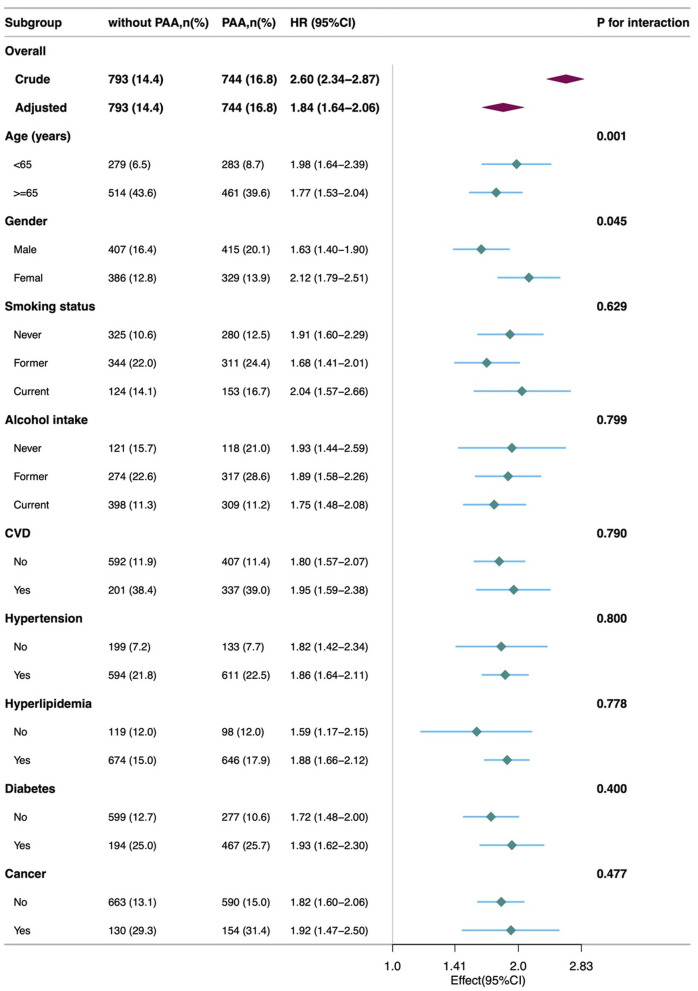
Methods: Data were drawn from the National Health and Nutrition Examination Survey (NHANES) between 1999 and 2018, including 9,925 obese adults (BMI ≥ 30 kg/m2). PAA, defined as phenotypic age exceeding chronological age, was assessed using clinical biomarkers. Kaplan-Meier survival analysis and Cox proportional hazards models were used to assess the relationship between PAA and all-cause, cardiovascular, and cancer mortality, adjusting for covariates such as age, gender, race, lifestyle, and health status. Subgroup and sensitivity analyses were performed to ensure the robustness of the findings.
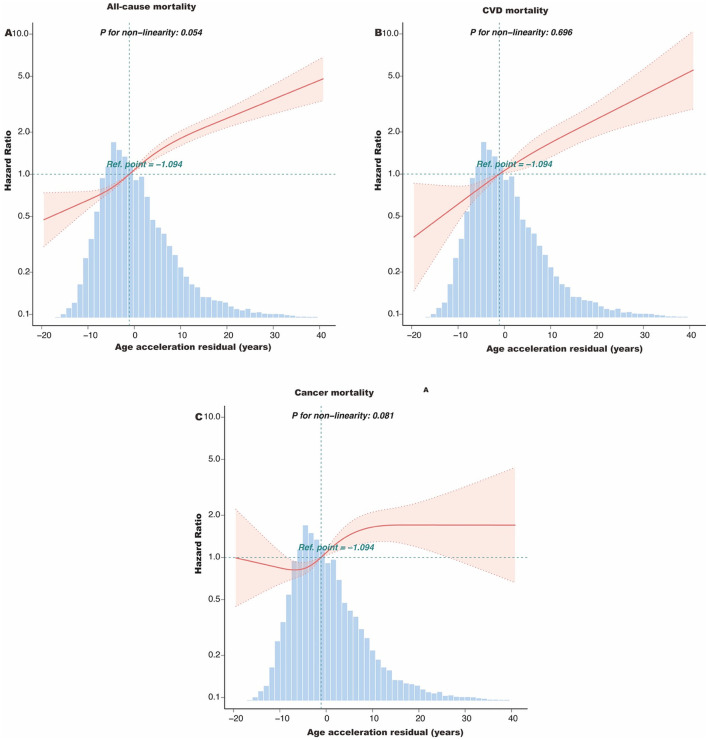
Results: During a median follow-up of 10.6 years, 1,537 deaths were recorded, including 419 from cardiovascular disease and 357 from cancer. PAA was significantly associated with all-cause mortality (HR = 1.84, 95% CI: 1.64-2.06), cardiovascular mortality (HR = 1.86, 95% CI: 1.50-2.31), and cancer mortality (HR = 1.47, 95% CI: 1.17-1.85). These associations remained significant after adjusting for multiple variables, and sensitivity analyses confirmed the robustness of the results.
Conclusion: PAA is an independent predictor of all-cause, cardiovascular, and cancer mortality in obese individuals. This study highlights the importance of PAA in mortality risk assessment and health management in the obese population.
Keywords: NHANES; all-cause mortality; cancer; cardiovascular disease; obesity; phenotypic age acceleration.
Copyright © 2024 Huang, Zhou, Huang, Wang, Liu and Liu.
Conflict of interest statement
The authors declare that the research was conducted in the absence of any commercial or financial relationships that could be construed as a potential conflict of interest.
Figures
References
-
- Okolo I, Mahmood AT. Obesity and cardiovascular disease in reproductive health. Obes Gynecol. (2020) 28:255–63. 10.1016/B978-0-12-817919-2.00028-0 - DOI
MeSH terms
LinkOut - more resources
Full Text Sources
Medical
