


Understanding Post-COVID-19: Mechanisms, Neurological Complications, Current Treatments, and Emerging Therapies
- PMID: 39717071
- PMCID: PMC11664001
- DOI: 10.2147/IJGM.S499905
Understanding Post-COVID-19: Mechanisms, Neurological Complications, Current Treatments, and Emerging Therapies
Abstract
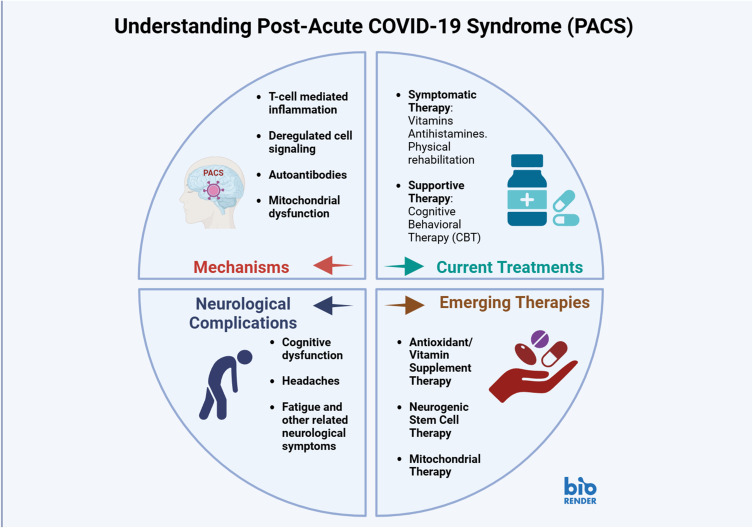
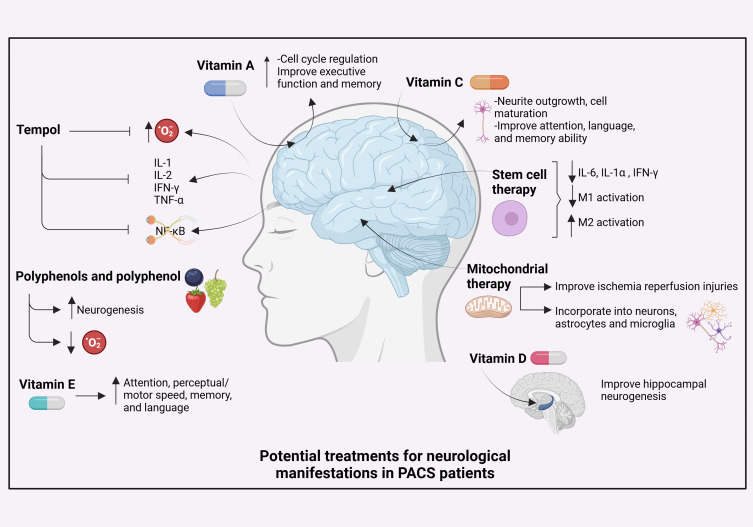
COVID-19, a highly infectious disease, caused a worldwide pandemic in early 2020. According to the World Health Organization (WHO), COVID-19 has resulted in approximately 774 million cases and around 7 million deaths. The effects of COVID-19 are well known; however, there is a lack of information on the pathophysiological mechanisms underlying the symptoms that comprise Post-Acute COVID-19 Syndrome (PACS) or Long COVID-19. Neurological sequelae are common, with cognitive dysfunction being one of the foremost symptoms. Research indicates that elevated inflammatory levels and increased oxidative stress may play a role in the etiology and severity of PACS. Treatment options are extremely limited, and there is no consensus among the medical and scientific communities on how to manage the disease. Nevertheless, many scientists advocate for using antioxidants for symptomatic therapy and cognitive behavior therapy for supportive care. Additionally, current research aims to ameliorate several aspects of the inflammatory cascade. This review highlights the intracellular and extracellular pathways crucial to the neurological manifestations of PACS, providing valuable information for healthcare professionals and scientists. Given the complex nature of PACS, understanding these pathways is essential for developing new treatment options. Assessing PACS is challenging, and reviewing current therapeutic options while proposing a triad of potential therapeutic elements will add value to clinical assays and guidelines. Current therapeutic strategies, such as antioxidants/vitamin supplements, neurogenic stem cell therapy, and mitochondrial therapy, could be combined to enhance their effectiveness. Future research should focus on validating these approaches and exploring new avenues for the effective treatment of PACS.
Keywords: PACS; cognitive dysfunction; long COVID-19; mitochondrial therapy; post-acute COVID-19 syndrome.
© 2024 Zambrano et al.
Conflict of interest statement
The authors declare that they have no known competing financial interests or personal relationships that could have appeared to influence the work reported in this paper. Andrés Caicedo is the scientific founder and advisor of Dragon Biomed, an entrepreneurial initiative at the Universidad San Francisco de Quito (USFQ). He also serves as a scientific advisor in the Research and Development department of Luvigix. In these roles, he provides scientific guidance and expertise but does not participate in the decision-making processes or operational activities of either company.
Figures


References
-
- Hamdan A, Eastaugh J, Snygg J, Naidu J, Alhaj I. Coping strategies used by healthcare professionals during COVID-19 pandemic in Dubai: a descriptive cross-sectional study. Narra X. 2023;1(1). doi:10.52225/narrax.v1i1.71 - DOI
-
- COVID-19 epidemiological update – 19 January 2024. Available from: https://www.who.int/publications/m/item/covid-19-epidemiological-update-.... Accessed March 16, 2024.
LinkOut - more resources
Full Text Sources
