


The Effects of Glutathione Monoethyl Ester on Different Biochemical, Oxidant, and Antioxidant Levels During Storage in Leukoreduced Red Blood Cells
- PMID: 39717241
- PMCID: PMC11665185
- DOI: 10.4103/abr.abr_169_23
The Effects of Glutathione Monoethyl Ester on Different Biochemical, Oxidant, and Antioxidant Levels During Storage in Leukoreduced Red Blood Cells
Abstract
Background: It is essential to maintain the quality of the stored blood, because various factors affect the stored red blood cells (RBCs) over time, some red blood cell storage lesions (RCSL) develop during storage, and it could reduce the function of the RBCs. The present study aimed to evaluate the effects of glutathione monoethyl ester on different biochemical changes, oxidant, and antioxidant levels in the leukoreduced RBCs (LR-RBCs) during storage.
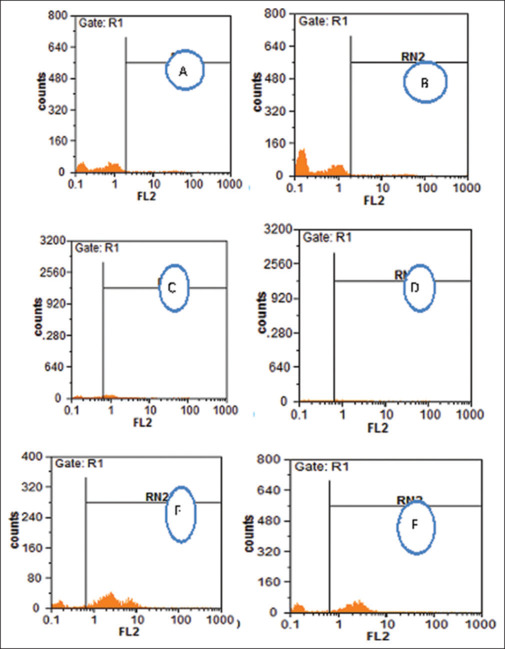
Materials and methods: About 10 units of LR-RBC were collected, processed and stored according to the standard operating procedures (SOPs) of the Iranian Blood Transfusion Organization. Each unit divided into 2 equal parts; LR-RBC treated with glutathione monoethyl ester and a control group. Exposure of phosphatidylserine (PS), reactive oxygen species (ROS) and microvesicle derived from the RBCs (RBC-MVs), were measured by the flow cytometry method. ELISA was used to measure the level of glutathione, and 2, 3-diphosphoglycerate (2,3-DPG). Glucose-6-phosphate dehydrogenase (G6PD) enzyme activity was measured with a chemistry autoanalyzer.
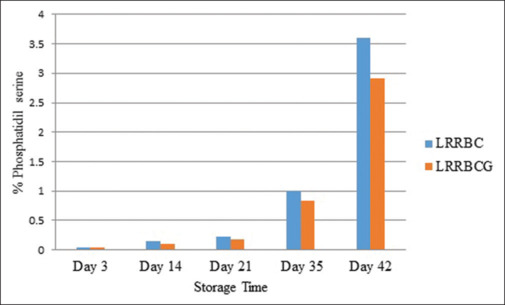
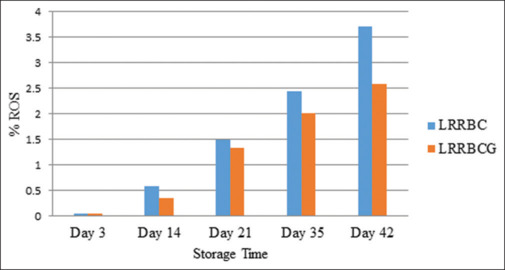
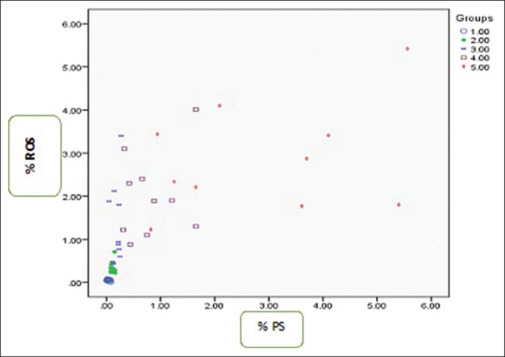
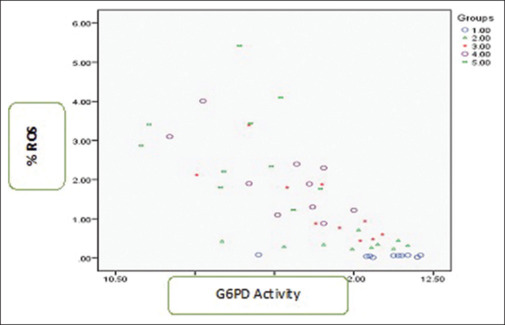
Results: The levels of glutathione reduced the initial value in the treated group (80%), and the control group (60%), respectively. Exposure of surface PS, ROS and RBC-MVs increased significantly during storage time for consecutive weeks to the amount of GSH. The levels of 2,3-DPG decreased with increasing storage time.
Conclusions: Overall, The study suggest that glutathione monoethyl ester is effective to reduce the oxidative stress and the quality of RBCs can be improved.
Keywords: Blood transfusion; glutathione; reactive oxygen species; red blood cells.
Copyright: © 2024 Advanced Biomedical Research.
Conflict of interest statement
There are no conflicts of interest.
Figures
References
-
- Wagner GM, Lubin BH, Chiu DT-Y. Oxidative damage to red blood cells. Cell Antioxid Def Mech. 2019;1:185–96.
-
- Hess JR, Greenwalt TG. Storage of red blood cells: New approaches. Transfus Med Rev. 2002;16:283–95. - PubMed
-
- Noulsri E, Lerdwana S, Palasuwan D, Palasuwan A. Storage duration and red blood cell-derived microparticles in packed red blood cells obtained from donors with thalassemia. Lab Med. 2022;53:302–6. - PubMed
-
- Li Y, Li C, Zhang L, Li J, Li Q, Ouyang H, et al. Long-term storage protocol of reagent red blood cells treated with 0.01M dithiothreitol (DTT) for pre-transfusion testing of patients receiving anti-CD38 therapy, daratumumab. Hematology. 2023;28:2186037. - PubMed
LinkOut - more resources
Full Text Sources
Miscellaneous