


Phytochemicals, promising strategies combating Cutibacterium acnes
- PMID: 39717554
- PMCID: PMC11663679
- DOI: 10.3389/fphar.2024.1476670
Phytochemicals, promising strategies combating Cutibacterium acnes
Abstract
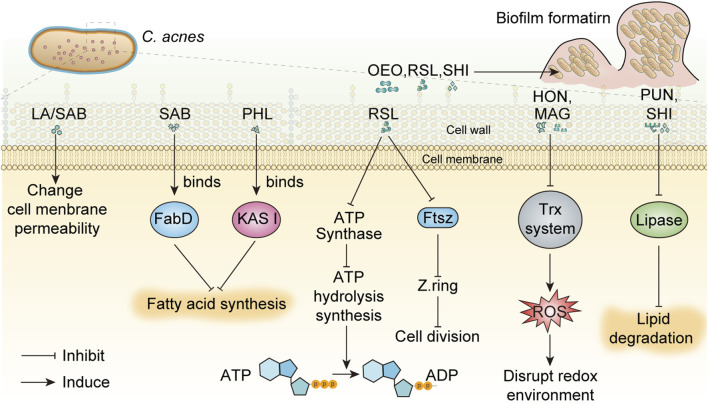
The excessive proliferation of Cutibacterium acnes (C. acnes) is an important reason for the occurrence of acne vulgaris, and genetic detection ratio of C. acnes in acne is as high as 60.5%. Until now, the treatment of C. acnes is mainly limited to antibiotics, but some strains of C. acnes produce antimicrobial resistances, making it difficult for clinical treatment. Additionally, antibiotics can cause severe adverse effects. Therefore, more and more people are paying attention to phytochemicals. It is well known that plants can synthesize a range of secondary metabolites, named phytochemicals, part of which have antibacterial properties. Additionally, the main advantages of phytochemicals are that they have good efficacies and less side effects, so they are suitable choices for medical treatment. This review mainly discusses the effects and mechanisms of phytochemicals against C. acnes.
Keywords: Cutibacterium acnes; acne vulgaris; antibiosis; phytochemicals; plant composition.
Copyright © 2024 Sun, Na, Wang, Zhu and Liu.
Conflict of interest statement
The authors declare that the research was conducted in the absence of any commercial or financial relationships that could be construed as a potential conflict of interest.
Figures
References
Publication types
LinkOut - more resources
Full Text Sources
Molecular Biology Databases
