


The value of real world evidence and pragmatic trials in advanced prostate cancer- insights from the electronic Prostate Cancer Australian and Asian Database
- PMID: 39717747
- PMCID: PMC11663904
- DOI: 10.3389/fonc.2024.1494073
The value of real world evidence and pragmatic trials in advanced prostate cancer- insights from the electronic Prostate Cancer Australian and Asian Database
Abstract
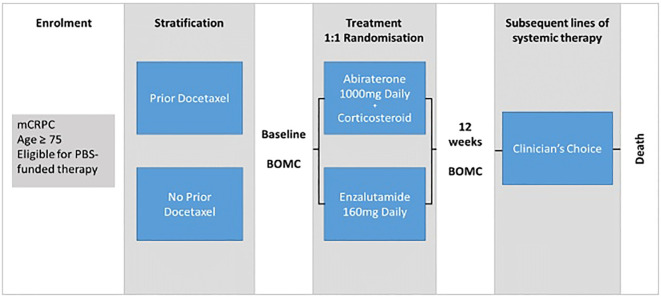
Prostate cancer is a common malignancy with an increasing incidence in ageing populations. However, older patients with prostate cancer are often underrepresented in traditional clinical trials. The electronic Prostate Cancer Australian and Asian Database (ePAD) is a multi-centre, multi-national prospective clinical registry, that records real world data from a broader population. An analysis of the first 753 metastatic castration-resistant prostate cancer (mCRPC) patients within ePAD demonstrated that 43% were aged 75 years and older. Older patients were more likely to have comorbidities including ischemic heart disease, diabetes and previous stroke. Treatment outcomes were similar in all age groups. However, older patients receiving chemotherapy were more likely to stop treatment due to toxicity. Furthermore, in a smaller ePAD analysis involving additional chart reviews within 3 high volume centres, at least one relative or absolute contraindication to abiraterone was seen in 72% of our cohort and with enzalutamide in 14%. In total, 47% had potential clinically significant drug interactions with abiraterone and 67% with enzalutamide. Registry-based randomised controlled trials (RRCTs) are a novel trial methodology aiming to bridge the gap between retrospective registry analyses and traditional randomised controlled trials. We conducted the REAL-Pro study in advanced prostate cancer, comparing cognition, depression and falls risk between CRPC patients receiving abiraterone or enzalutamide. The study closed early due to slow recruitment and a changing treatment landscape, highlighting the need for further research to understand clinician and patient perspectives towards pragmatic trials such as RRCTs and subsequently develop strategies to optimise future trial design and recruitment.
Keywords: older patients; pragmatic trials; prostate cancer; real world data; registry trials.
Copyright © 2024 Anton, Zlatic, O’Haire and Tran.
Conflict of interest statement
The authors declare that the research was conducted in the absence of any commercial or financial relationships that could be construed as a potential conflict of interest.
Figures
References
-
- Zeng C, Wen W, Morgans AK, Pao W, Shu XO, Zheng W. Disparities by race, age, and sex in the improvement of survival for major cancers: results from the national cancer institute surveillance, epidemiology, and end results (SEER) program in the United States, 1990 to 2010. JAMA Oncol. (2015) 1:88–96. doi: 10.1001/jamaoncol.2014.161 - DOI - PMC - PubMed
-
- Singh H, Kanapuru B, Smith C, Fashoyin-Aje LA, Myers A, Kim G, et al. . FDA analysis of enrollment of older adults in clinical trials for cancer drug registration: A 10-year experience by the U.S. Food and Drug Administration. J Clin Oncol. (2017) 35:10009–9. doi: 10.1200/JCO.2017.35.15_suppl.10009 - DOI
LinkOut - more resources
Full Text Sources
Miscellaneous
