


Assessing inequities in electrification via heat pumps across the US
- PMID: 39722745
- PMCID: PMC11667438
- DOI: 10.1016/j.joule.2024.09.012
Assessing inequities in electrification via heat pumps across the US
Abstract
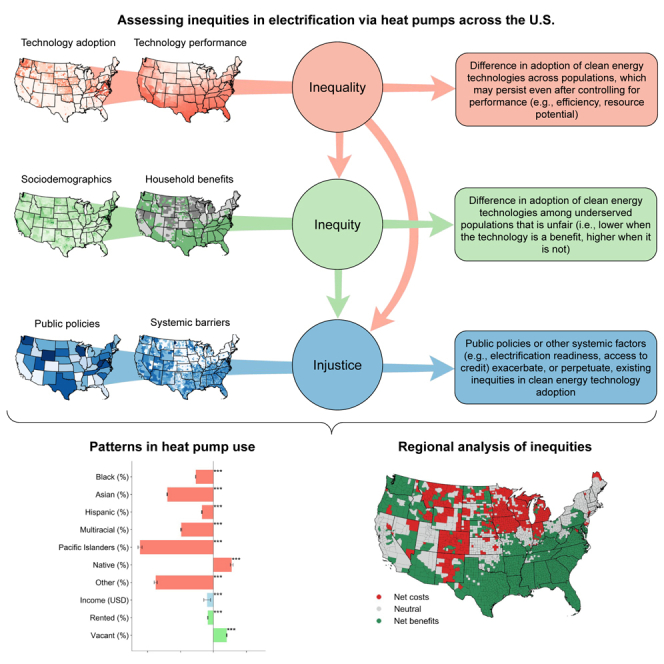
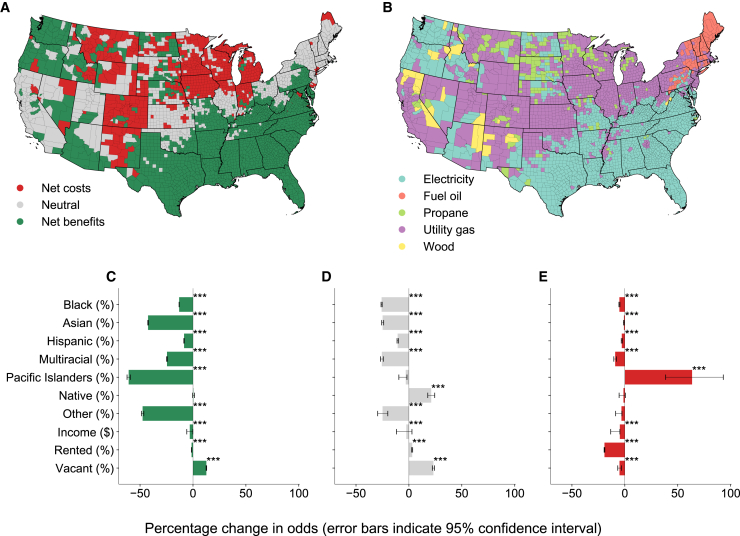
Heat pumps are an energy-efficient and increasingly cost-effective solution for reducing greenhouse gas emissions in the building sector. However, other clean energy technologies, such as rooftop solar, are less likely to be adopted in underserved communities, and thus policies incentivizing their adoption may funnel support to well-resourced communities. Unlike previously studied technologies, the effects of heat pumps on household energy bills may be positive or negative depending on local climate, energy costs, building features, and other factors. Here, we propose a framework for assessing heat pump inequities across the US. We find that households in communities of color and with higher percentages of renters are less likely to use heat pumps across the board. Moreover, communities of color are least likely to use heat pumps in regions where they are most likely to reduce energy bills. Public policies must address these inequities to advance beneficial electrification and energy justice.
Keywords: building electrification; energy justice; heat pumps.
© 2024 The Author(s).
Conflict of interest statement
The authors declare no competing interests.
Figures



References
-
- Klemun M.M., Edwards M.R., Trancik J.E. Research priorities for supporting subnational climate policies. WIREs Clim. Change. 2020;11 doi: 10.1002/wcc.646. - DOI
-
- IPCC Global Warming of 1.5C. An IPCC Special Report on the impacts of global warming of 1.5C above pre-industrial levels and related global greenhouse gas emission pathways. Spec. Rep. Glob. Warm. 15oC. 2018 https://www.ipcc.ch/sr15/
-
- Edwards M.R., Trancik J.E. Climate impacts of energy technologies depend on emissions timing. Nat. Clim. Chang. 2014;4:347–352. doi: 10.1038/nclimate2204. - DOI
Grants and funding
LinkOut - more resources
Full Text Sources