


Candidemia chronicles: Retrospective analysis of candidemia epidemiology, species distribution, and antifungal susceptibility patterns in Bahrain
- PMID: 39722764
- PMCID: PMC11551684
- DOI: 10.5501/wjv.v13.i4.98839
Candidemia chronicles: Retrospective analysis of candidemia epidemiology, species distribution, and antifungal susceptibility patterns in Bahrain
Abstract
Background: Invasive fungal infections, particularly candidemia, pose significant clinical challenges globally. Understanding local epidemiology, species distribution, and antifungal susceptibility patterns is crucial for effective management despite regional variations.
Aim: To investigate the epidemiology, species distribution, antifungal susceptibility patterns, and associated risk factors of candidemia among patients in Bahrain from 2021 to 2023.
Methods: This retrospective study analyzed demographic data, Candida species distribution, antifungal susceptibility profiles, and risk factors among candidemia patients treated at a tertiary care hospital in Bahrain over three years. Data was collected from medical records and analyzed using descriptive statistics.
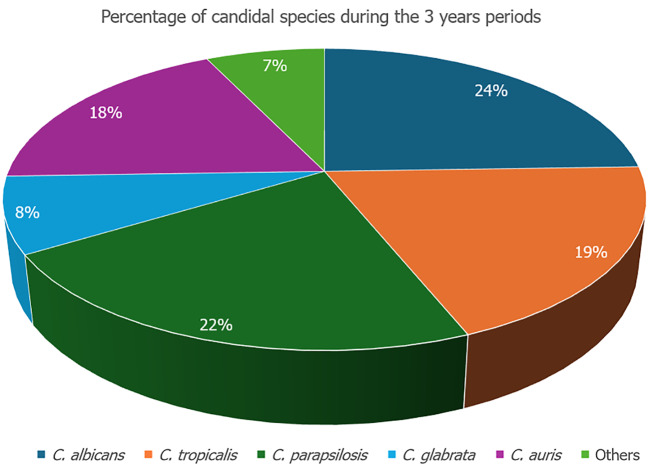
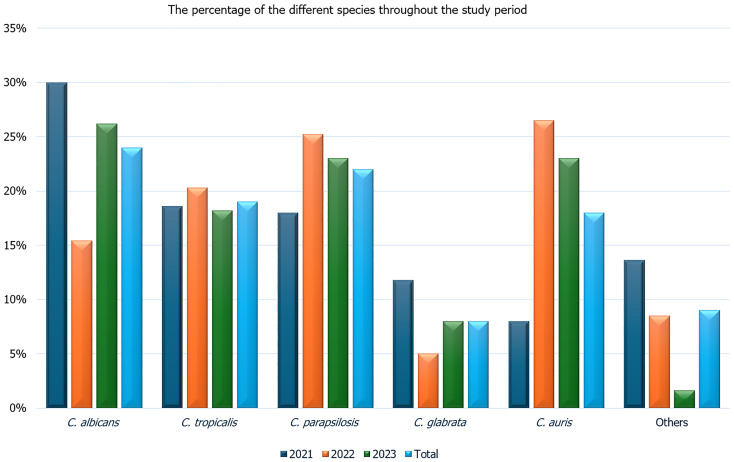
Results: A total of 430 candidemia cases were identified. The mean age of patients was 65.7 years, with a mortality rate of 85.5%. Candida albicans (C. albicans) was the most common species, followed by Candida parapsilosis, Candida tropicalis (C. tropicalis), and emerging multidrug-resistant Candida auris (C. auris). Antifungal susceptibility varied across species, with declining susceptibility to azoles observed, particularly among C. albicans and C. tropicalis. Major risk factors included central venous catheters, broad-spectrum antibiotics, and surgical procedures.
Conclusion: This study highlights the substantial burden of candidemia among older adults in Bahrain, characterized by diverse Candida species. It also concerns levels of antifungal resistance, notably in C. auris. The findings underscore the importance of local epidemiological surveillance and tailored treatment strategies to improve outcomes and mitigate the spread of multidrug-resistant Candida species. Future research should focus on molecular resistance mechanisms and optimizing therapeutic approaches to address this growing public health concern.
Keywords: Antifungal resistance; Antifungal susceptibility; Bahrain; Candidemia; Epidemiology; Fungal infections; Risk factors.
©The Author(s) 2024. Published by Baishideng Publishing Group Inc. All rights reserved.
Conflict of interest statement
Conflict-of-interest statement: The authors declare no conflicts of interest related to this study. The research was conducted independently, without any financial or personal relationships that could have influenced the work reported in this manuscript.
Figures
References
LinkOut - more resources
Full Text Sources
