


Elevated circulating homocysteine concentrations delayed nerve conduction velocity and increase the risk of diabetic kidney disease in patients with type 2 diabetes
- PMID: 39722814
- PMCID: PMC11668604
- DOI: 10.3389/fendo.2024.1451758
Elevated circulating homocysteine concentrations delayed nerve conduction velocity and increase the risk of diabetic kidney disease in patients with type 2 diabetes
Abstract
Introduction: China has the largest population of individuals with diabetes, and the prevalence of various complications among patients with type 2 diabetes remains high. Diabetic nephropathy affects approximately 20% to 40% of diabetic patients, becoming a major cause of chronic kidney disease and end-stage renal disease. Furthermore, around 50% of patients develop diabetic peripheral neuropathy (DPN), which is closely associated with physical disability, increased healthcare costs, and reduced work productivity. There is an urgent need for novel strategies in prevention, diagnosis, and treatment to improve patient outcomes.
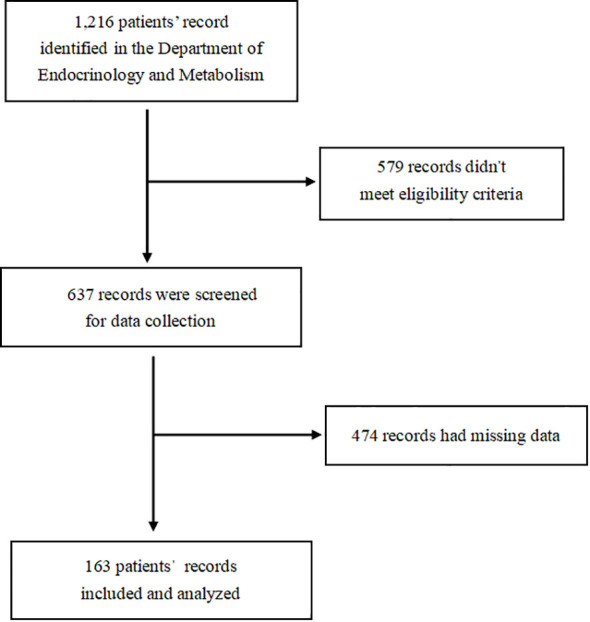
Methods: In this study, 163 patients with type 2 diabetes were selected as the observation group and further divided into three subgroups based on homocysteine (HCY) levels. The study measured several clinical parameters, including homocysteine, blood glucose, blood lipids, glycated hemoglobin, urinary microalbumin, urinary albumin-to-creatinine ratio (ACR), electromyography, and highly-sensitive C-reactive protein (CRP), among others. The levels of these indicators were analyzed and compared across the subgroups.
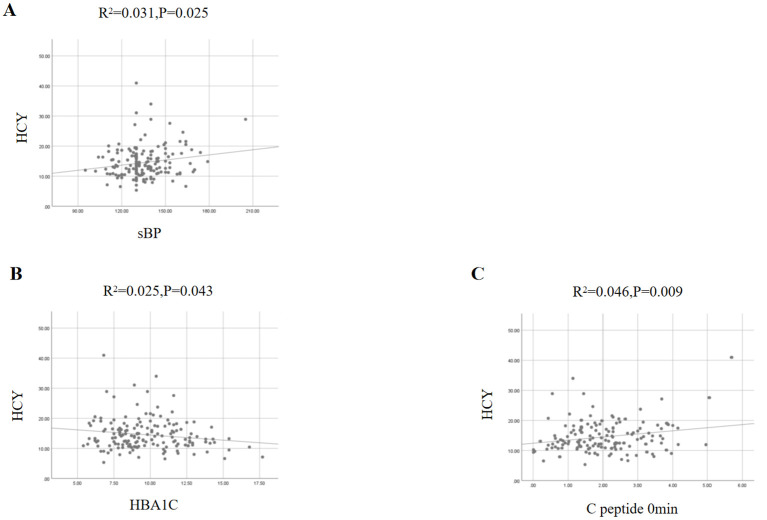
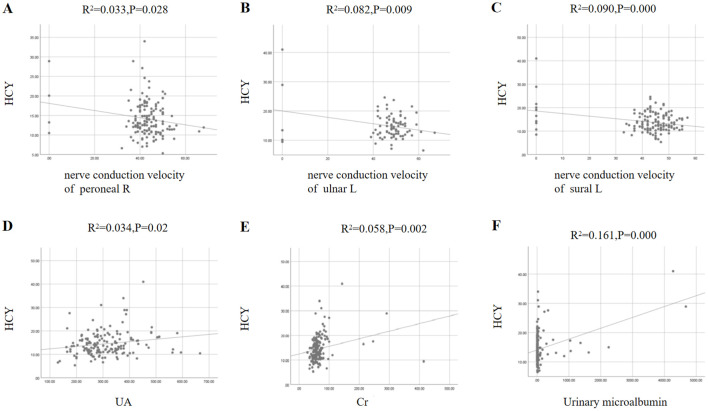
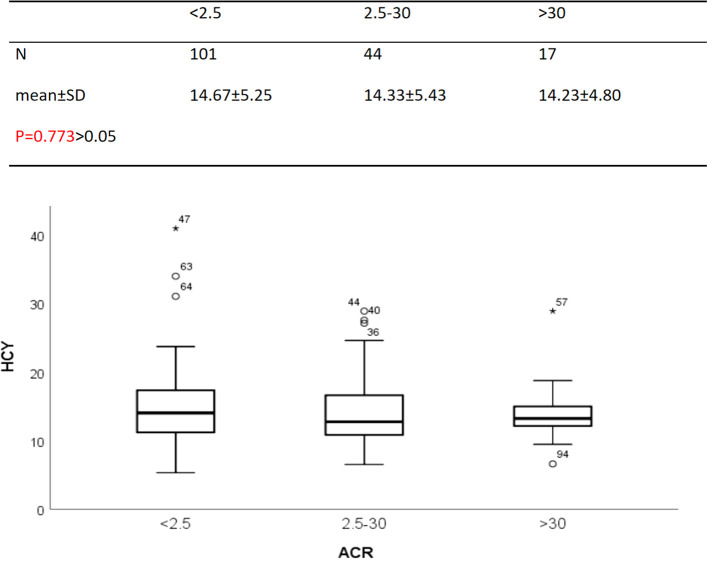
Results: The results revealed significant differences in uric acid, creatinine, urinary microalbumin, urinary ACR, and nerve conduction velocity (right tibial nerve sensory conduction) among different HCY levels in patients with type 2 diabetes (P < 0.05). Linear regression analysis indicated that homocysteine levels were associated with systolic blood pressure, glycated hemoglobin, fasting C-peptide, uric acid, creatinine, urinary microalbumin, and nerve conduction velocity (including motor conduction velocity of the ulnar nerve and sensory conduction velocity of the sural nerve).
Discussion: The clinical assessment of homocysteine in diabetic patients holds significant importance in the prevention of microvascular complications. Lowering HCY levels may offer a promising therapeutic approach for managing microvascular disease in diabetes.
Keywords: diabetic kidney disease; diabetic peripheral neuropathy; homocysteine; nerve conduction velocity; type 2 diabetes.
Copyright © 2024 Lv, Jia, Liu, Cheng, Liu, Kuang and Chen.
Conflict of interest statement
The authors declare that the research was conducted in the absence of any commercial or financial relationships that could be construed as a potential conflict of interest.
Figures
References
-
- Diabetes Branch of Chinese Medical Association . Chinese guidelines for the prevention and treatment of type 2 diabetes (2020 edition). Chin J Diabetes Mellitus. (2021) 13:95.
MeSH terms
Substances
LinkOut - more resources
Full Text Sources
Medical
Research Materials
Miscellaneous
