


Observed Effects on Very Early Pregnancy Linked to Ambient PM2.5 Exposure in China among Women Undergoing In Vitro Fertilization-Embryo Transfer
- PMID: 39722841
- PMCID: PMC11667290
- DOI: 10.1021/envhealth.4c00107
Observed Effects on Very Early Pregnancy Linked to Ambient PM2.5 Exposure in China among Women Undergoing In Vitro Fertilization-Embryo Transfer
Abstract
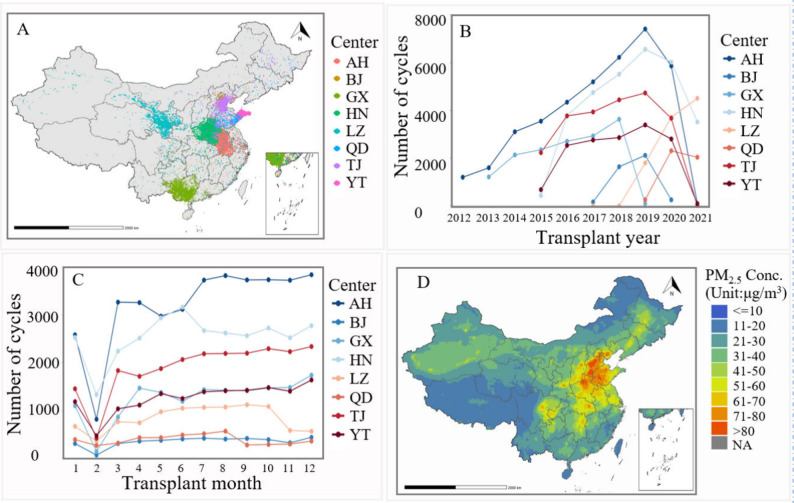
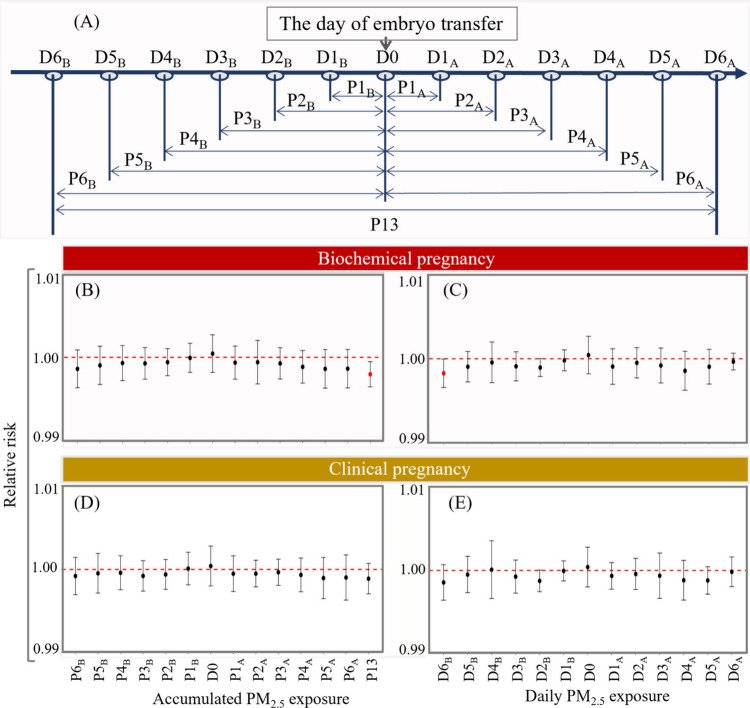
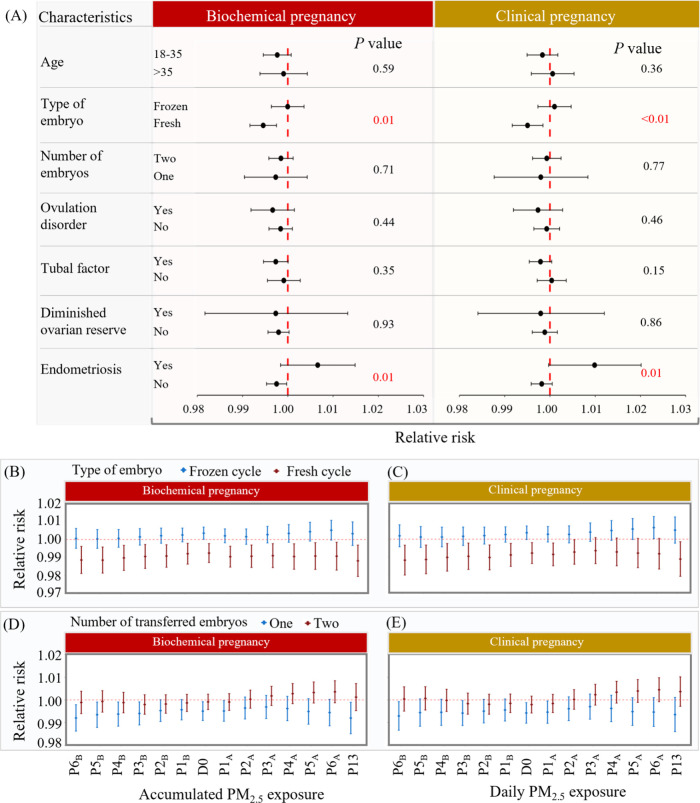
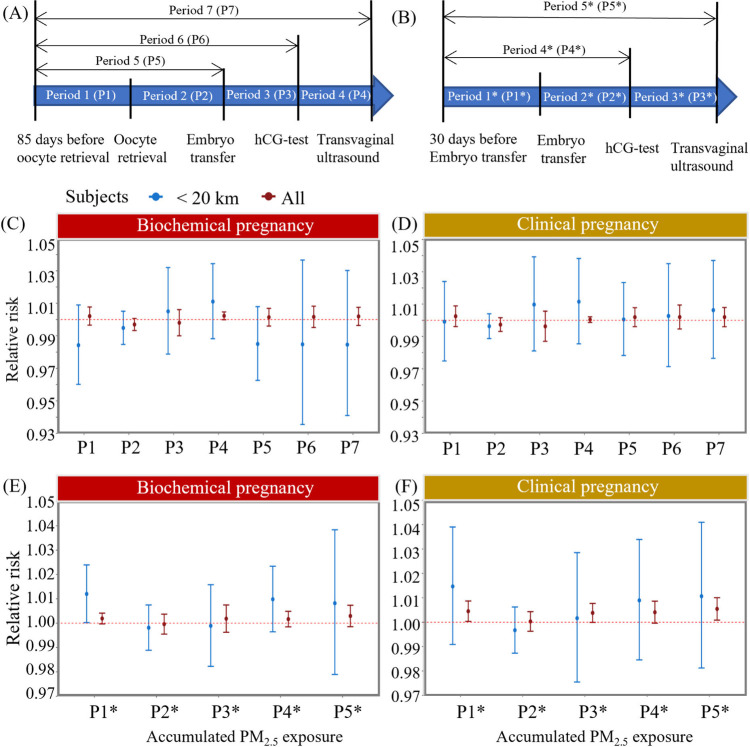
The adverse effect of ambient PM2.5 exposure on very early pregnancy (VEP) remains controversial among epidemiological studies but is supported by toxicological evidence. We adopted a multicenter retrospective cohort of 141,040 cycles to evaluate the effect of PM2.5 exposure on the VEP using the in vitro fertilization and embryo transfer platform and high-resolution PM2.5 data in China. We first investigated the association between PM2.5 exposure 1 week before and 1 week after the embryo transfer date and VEP. The average PM2.5 concentrations of the 2 weeks were approximately 47 μg/m3. The pooled results revealed a negative association between women's accumulated PM2.5 exposure during the 2 weeks near the day of embryo transfer and success odds of VEP with the relative risk of 0.999 (95% CI: 0.997-0.999) at each increase of 10 μg/m3. The women with the fresh cycle or one transplanted embryo were considered as a vulnerable population. Furthermore, seven periods for the fresh cycle and five periods for the frozen cycle from 85 days before oocyte retrieval to the day of gestational sac detection by ultrasound detection were defined. For these exposure periods, no association between the average PM2.5 exposure and VEP risk was identified. Our study provided large-scale population evidence for the association between PM2.5 exposure near embryo transfer day and VEP and identified vulnerable populations among women undergoing in vitro fertilization-embryo transfer.
© 2024 The Authors. Co-published by Research Center for Eco-Environmental Sciences, Chinese Academy of Sciences, and American Chemical Society.
Conflict of interest statement
The authors declare no competing financial interest.
Figures
References
-
- Skakkebæk N. E.; Lindahl-Jacobsen R.; Levine H.; Andersson A. M.; Jorgensen N.; Main K. M.; Lidegaard O.; Priskorn L.; Holmboe S. A.; Bräuner E. V.; Almstrup K.; Franca L. R.; Znaor A.; Kortenkamp A.; Hart R. J.; Juul A. Environmental Factors in Declining Human Fertility. Nat. Rev. Endocrinol 2022, 18 (3), 139–157. 10.1038/s41574-021-00598-8. - DOI - PubMed
-
- Zhang Y.; Wang J.; Chen L.; Yang H.; Zhang B.; Wang Q.; Hu L.; Zhang N.; Vedal S.; Xue F.; Bai Z. Ambient PM2.5 and Cclinically Recognized Early Pregnancy Loss: A Case-control Study With Spatiotemporal Exposure Predictions. Environ. Int. 2019, 126, 422–429. 10.1016/j.envint.2019.02.062. - DOI - PubMed
LinkOut - more resources
Full Text Sources