Aerobic Exercise and Weight Loss in Adults: A Systematic Review and Dose-Response Meta-Analysis
- PMID: 39724371
- PMCID: PMC11672165
- DOI: 10.1001/jamanetworkopen.2024.52185
Aerobic Exercise and Weight Loss in Adults: A Systematic Review and Dose-Response Meta-Analysis
Abstract
Importance: Current guidance on the duration of aerobic exercise recommended in existing guidelines comes primarily from individual trials. Meta-analyses are lacking to examine the dose-response association of aerobic exercise with adiposity measures.
Objective: To clarify the dose-response association of aerobic exercise with adiposity measures.
Data sources: PubMed, Scopus, the Cochrane Central Register of Controlled Trials, and gray literature sources (ProQuest and ClinicalTrials.gov) from inception to April 30, 2024.
Study selection: Randomized clinical trials with intervention durations of at least 8 weeks evaluating the effects of supervised aerobic training on adults with overweight or obesity.
Data extraction and synthesis: The PRISMA guidelines were followed to report the results of the meta-analysis. Data extraction was conducted by 2 teams of 2 reviewers each, working independently and in duplicate. Random-effects meta-analyses were performed to estimate mean differences and 95% CIs for each 30-minute per week aerobic exercise and to clarify the shape of the curvilinear associations.
Main outcomes and measures: Measures of body weight, waist circumference, body fat, adverse events, medication use reduction, and health-related quality of life score. The certainty of evidence was assessed using the Grading of Recommendations Assessment, Development and Evaluation (GRADE) tool, with a range from very low to high certainty.
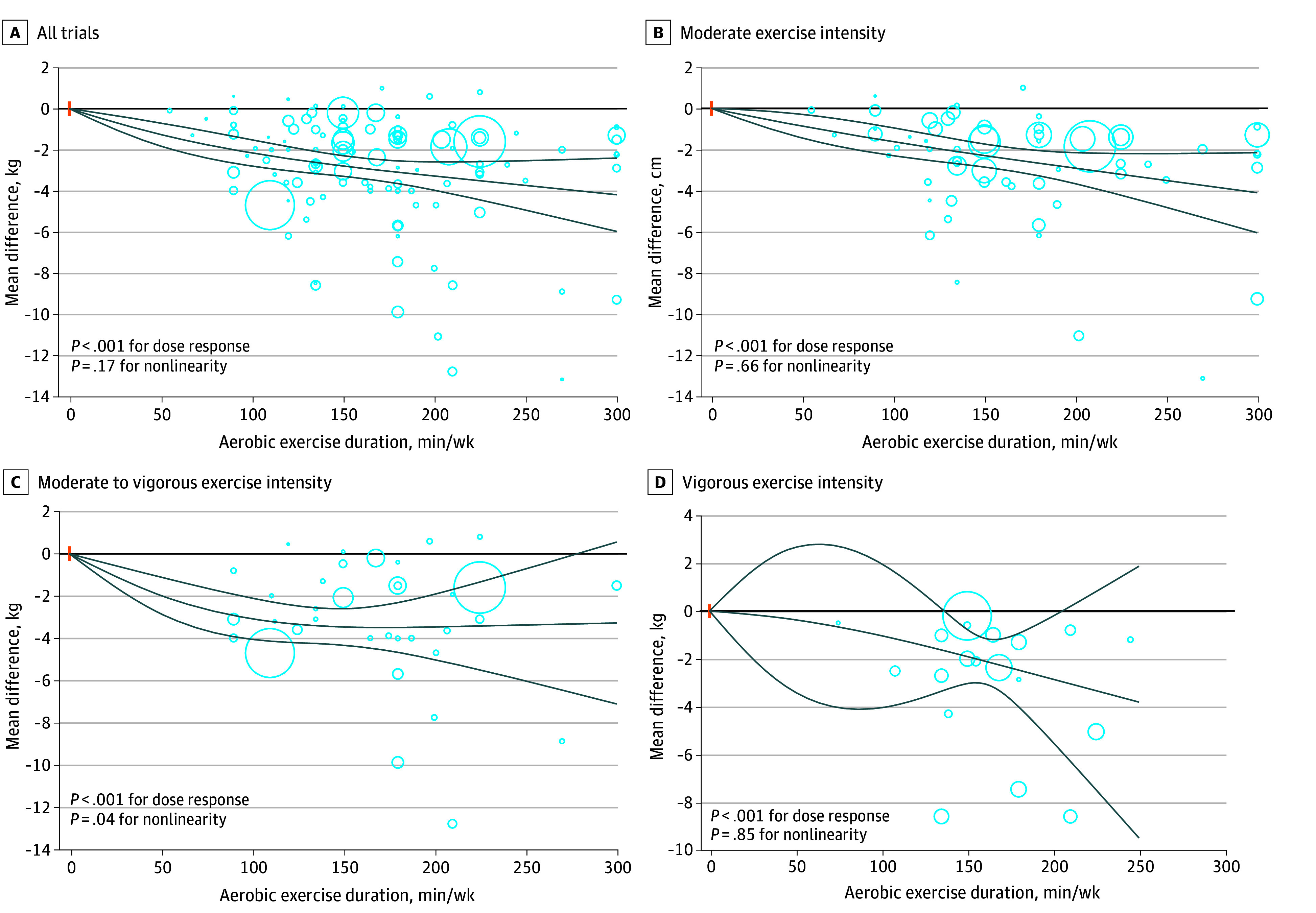
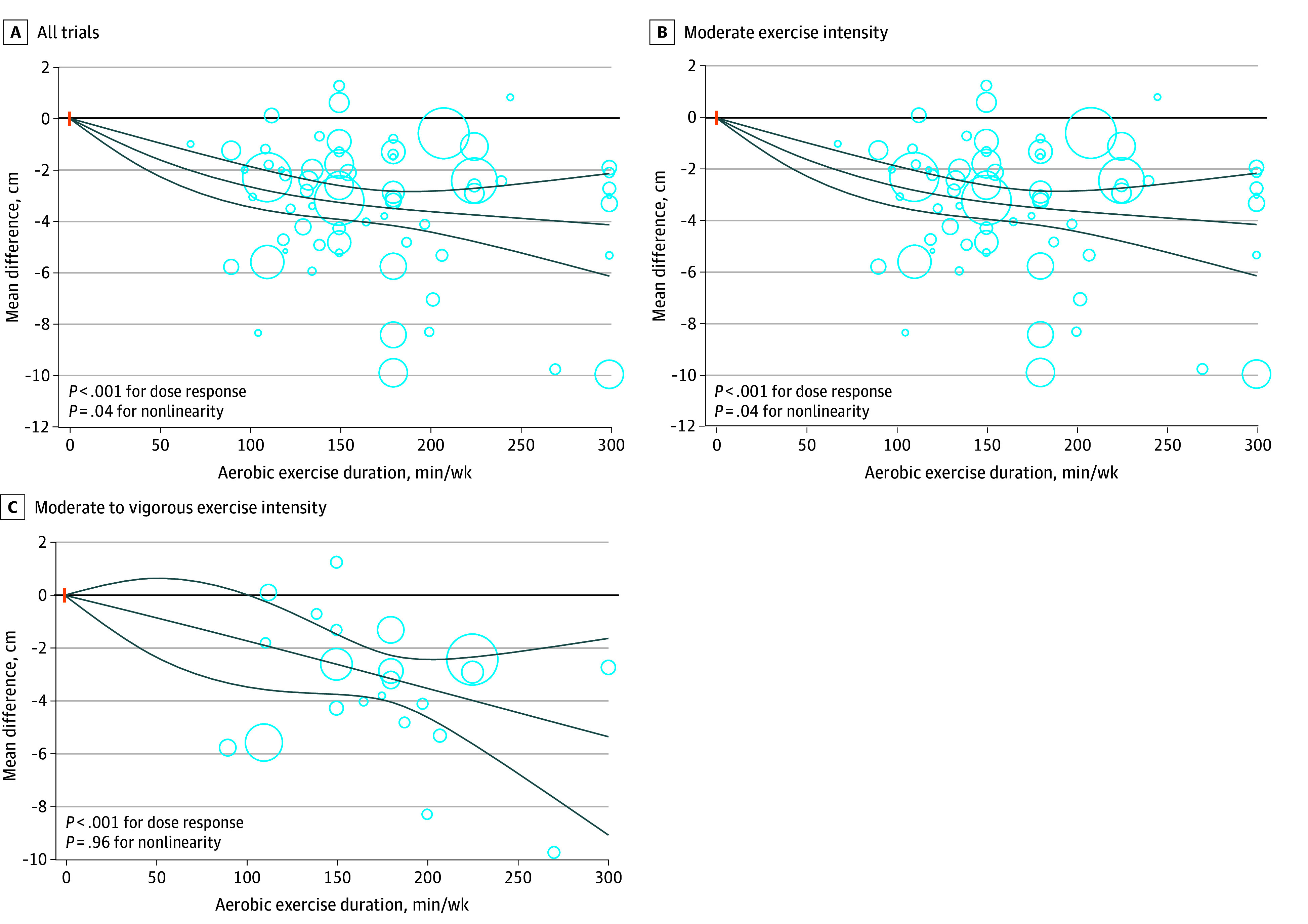
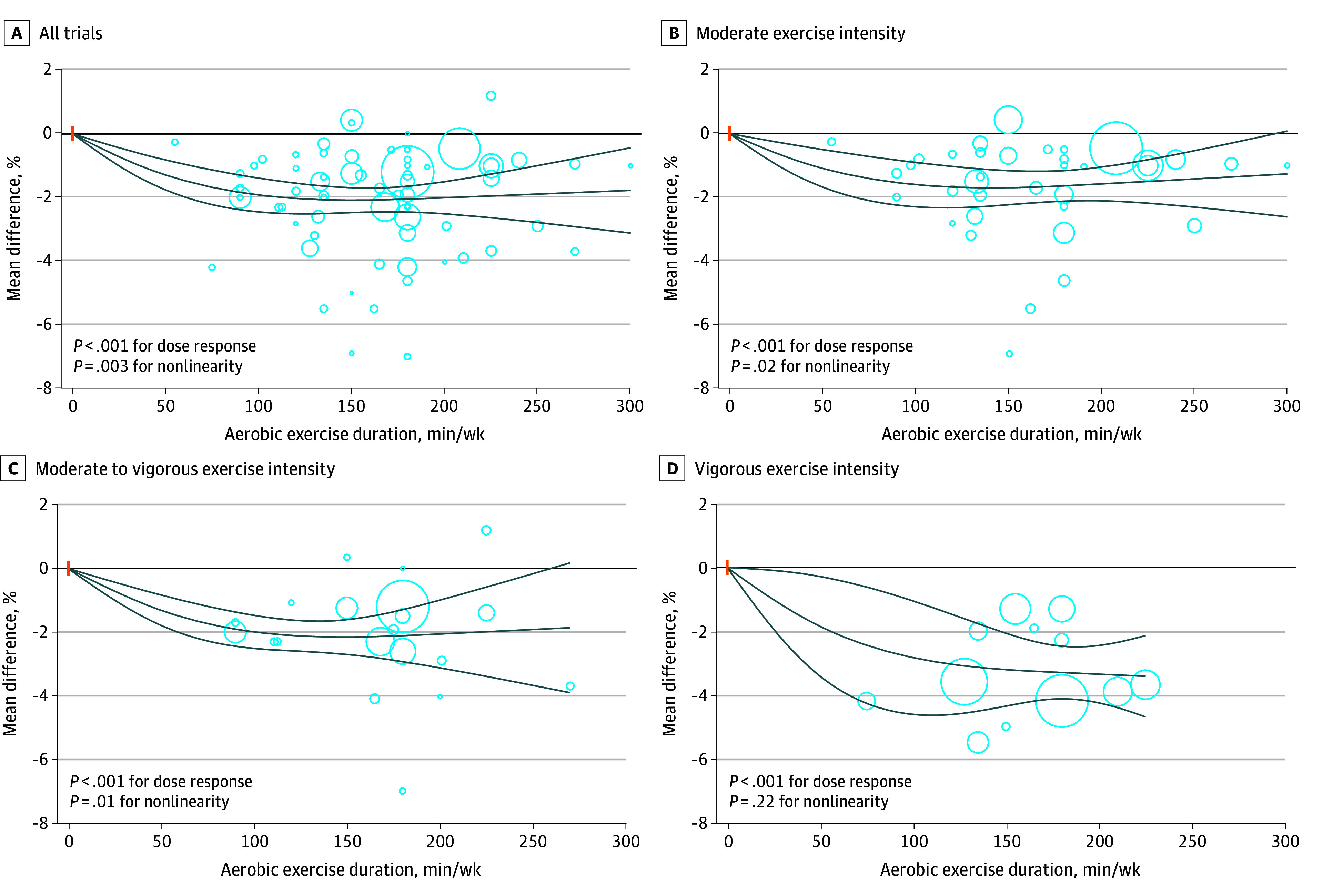
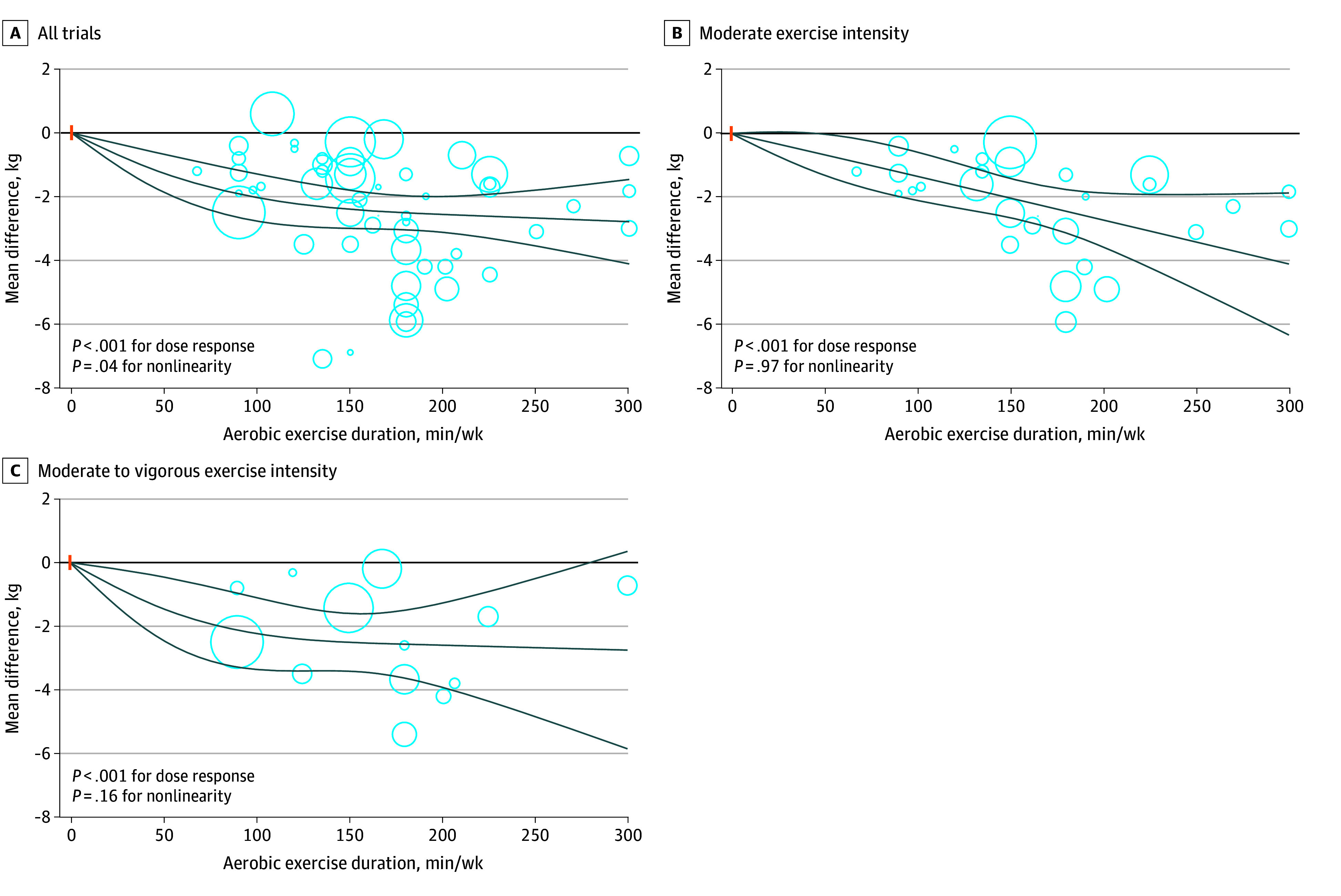
Results: In total, 116 randomized clinical trials involving 6880 participants (4199 [61%] female; mean [SD] age, 46 [13] years) with overweight or obesity were included. Each 30 minutes per week of aerobic exercise was associated with reduced body weight by 0.52 kg (95% CI, -0.61 to -0.44 kg; n = 109 trials, GRADE = moderate), waist circumference by 0.56 cm (95% CI, -0.67 to -0.45 cm; n = 62 trials, GRADE = high), body fat percentage by 0.37% (95% CI, -0.43% to -0.31%; n = 65 trials, GRADE = moderate), as well as the areas of visceral (mean difference, -1.60 cm2 [95% CI, -2.12 to -1.07 cm2]; n = 26 trials, GRADE = high) and subcutaneous (mean difference, -1.37 cm2 [95% CI, -1.82 to -0.92 cm2]; n = 27 trials, GRADE = moderate) adipose tissues. Aerobic exercise was associated with modestly increased physical (standardized mean difference, 1.69 SD [95% CI, 1.18-2.20 SD]) and mental (standardized mean difference, 0.74 SD [95% CI, 0.29-1.19 SD]) aspects of quality of life (1 trial with 80 participants, GRADE = low). It was associated with modestly increased mild to moderate adverse events, which were mostly musculoskeletal symptoms (risk difference, 2 more events per 100 participants [95% CI, 1 to 2 more]; GRADE = low). Dose-response meta-analyses indicated that body weight, waist circumference, and body fat measures decreased linearly or monotonically in association with increasing duration of aerobic exercise to 300 minutes per week, with aerobic exercise lasting 150 minutes per week at moderate to vigorous intensities resulting in clinically important reductions in waist circumference and body fat.
Conclusions and relevance: In this meta-analysis of randomized clinical trials, engaging in 30 minutes of aerobic exercise per week was associated with modest reductions in body weight, waist circumference, and body fat measures among adults with overweight or obesity. However, aerobic training exceeding 150 minutes per week at moderate intensity or greater may be needed to achieve clinically important reductions.
Conflict of interest statement
Figures
References
-
- World Health Organization. Overweight and obesity. WHO Fact Sheet No. 311. 2020. Accessed November 15, 2024. https://www.who.int/news-room/fact-sheets/detail/obesity-and-overweight
-
- Abarca-Gómez L, Abdeen ZA, Hamid ZA, et al. ; NCD Risk Factor Collaboration (NCD-RisC) . Worldwide trends in body-mass index, underweight, overweight, and obesity from 1975 to 2016: a pooled analysis of 2416 population-based measurement studies in 128·9 million children, adolescents, and adults. Lancet. 2017;390(10113):2627-2642. doi:10.1016/S0140-6736(17)32129-3 - DOI - PMC - PubMed
-
- Donnelly JE, Blair SN, Jakicic JM, Manore MM, Rankin JW, Smith BK; American College of Sports Medicine . American College of Sports Medicine position stand. appropriate physical activity intervention strategies for weight loss and prevention of weight regain for adults. Med Sci Sports Exerc. 2009;41(2):459-471. doi:10.1249/MSS.0b013e3181949333 - DOI - PubMed
-
- Garvey WT, Mechanick JI, Brett EM, et al. ; Reviewers of the AACE/ACE Obesity Clinical Practice Guidelines . American Association of Clinical Endocrinologists and American College of Endocrinology comprehensive clinical practice guidelines for medical care of patients with obesity. Endocr Pract. 2016;22(suppl 3):1-203. doi:10.4158/EP161365.GL - DOI - PubMed
-
- Department of Health and Human Services. 2018 Physical activity Guidelines Advisory Committee scientific report. Accessed November 15, 2024. https://odphp.health.gov/sites/default/files/2019-09/PAG_Advisory_Commit...
Publication types
MeSH terms
LinkOut - more resources
Full Text Sources
Medical
Miscellaneous