


Predictors of anxiety in endometriosis patients
- PMID: 39725706
- PMCID: PMC12033099
- DOI: 10.1007/s00404-024-07878-4
Predictors of anxiety in endometriosis patients
Abstract
Purpose: To evaluate the main factors influencing anxiety in endometriosis patients presenting to an endometriosis centre in Germany.
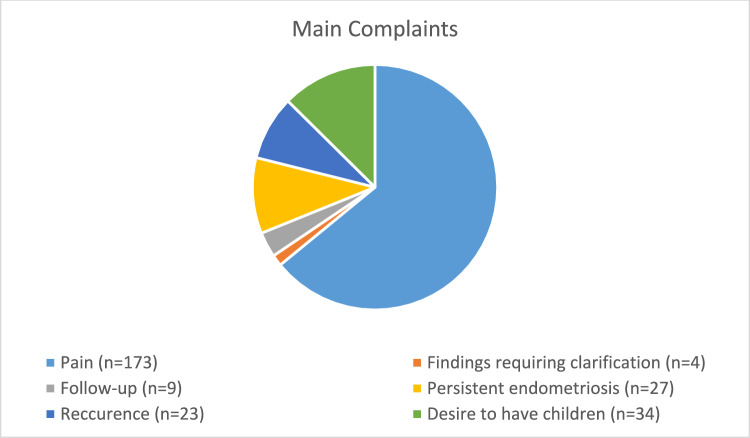
Methods: One hundred and eighty-two patients were asked to complete the German version of the STAI (state anxiety and trait anxiety) questionnaire prior to examination for diagnosis and treatment of pelvic pain or suspected endometriosis. Typical endometriosis symptoms, main complaints, operations, type of endometriosis and planned treatment were analyzed as influencing factors of anxiety in endometriosis patients. We performed linear multiple regression analyses using the forward stepwise method to test which characteristics associated with endometriosis symptoms were associated with trait anxiety and state anxiety.
Results: Analysis of the STAI results showed that higher levels of trait anxiety were found in patients with ovarian endometriosis: t (177) = 3.06, p = 0.003 and in patients with symptoms of dyspareunia: t (177) = 2.36, p < 0.020). On the other hand, patients with recurrent endometriosis showed lower levels of trait anxiety: t (177) = - 2.39, p = 0.018. Significantly higher levels of state anxiety were found in patients with persistent endometriosis: t (177) = - 2.45, p = 0.015 and in women with endometriosis who were indicated for surgical therapy: t (177) = 3.89, p < 0.001.
Conclusions: We were able to show that higher levels of ongoing anxiety in endometriosis patients are associated with dyspareunia and ovarian endometriosis, which may have a negative impact on partnership and desire to have children. On the other hand, patients with persistent endometriosis or a type of disease that requires surgery have higher levels of immediate situational anxiety.
Keywords: Anxiety; Endometriosis; Lower abdominal pain; STAI.
© 2024. The Author(s).
Conflict of interest statement
Declarations. Conflict of interest: The authors declare that they have no conflict of interest. Ethical approval: Participation in the study was voluntary and all procedures were in accordance with the Helsinki Declaration (2013) and its subsequent amendments. The study was approved by the local ethics committee (EK 24-009).
Figures
References
-
- Taylor HS, Kotlyar AM, Flores VA (2021) Endometriosis is a chronic systemic disease: clinical challenges and novel innovations. Lancet 397:839–852. 10.1016/s0140-6736(21)00389-5 - PubMed
-
- Hudelist G, Fritzer N, Thomas A et al (2012) Diagnostic delay for endometriosis in Austria and Germany: causes and possible consequences. Hum Reprod 27:3412–3416. 10.1093/humrep/des316 - PubMed
-
- Chaichian S, Kabir A, Mehdizadehkashi A et al (2017) Comparing the efficacy of surgery and medical therapy for pain management in endometriosis: a systematic review and meta-analysis. Pain Physician 20:185–195 - PubMed
-
- Shafrir AL, Farland LV, Shah DK et al (2018) Risk for and consequences of endometriosis: a critical epidemiologic review. Best Pract Res Clin Obstet Gynaecol 51:1–15. 10.1016/j.bpobgyn.2018.06.001 - PubMed
MeSH terms
LinkOut - more resources
Full Text Sources
Medical
