


Retinoic acid drives surface epithelium fate determination through the TCF7-MSX2 axis
- PMID: 39725818
- PMCID: PMC11671468
- DOI: 10.1007/s00018-024-05525-4
Retinoic acid drives surface epithelium fate determination through the TCF7-MSX2 axis
Abstract
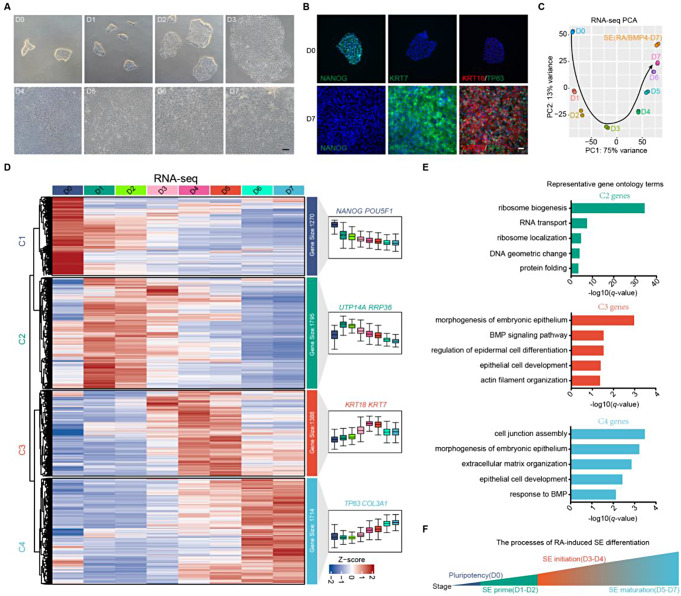
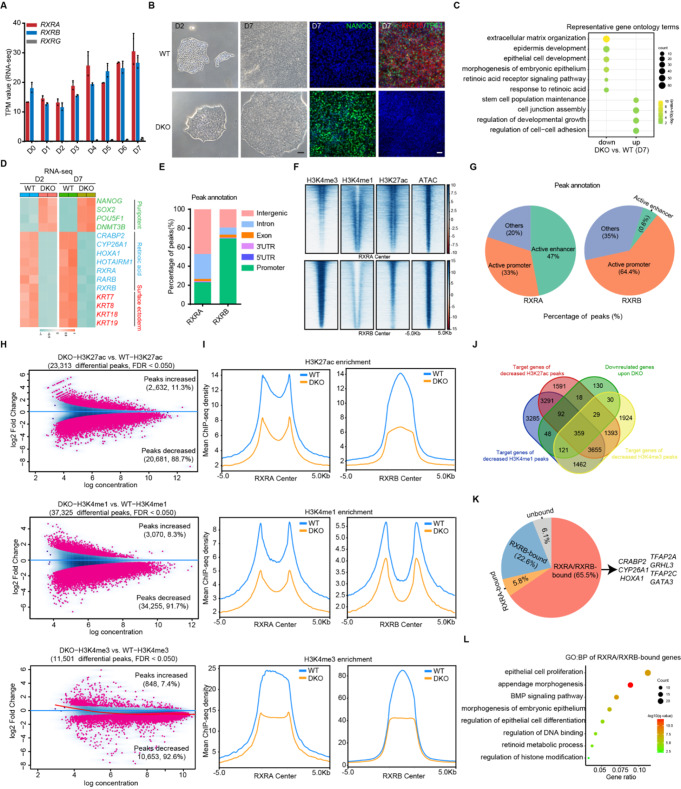
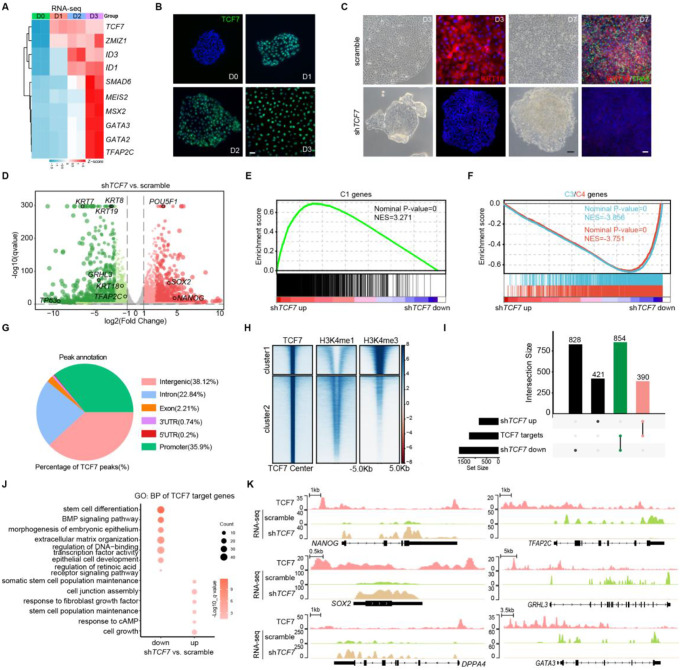
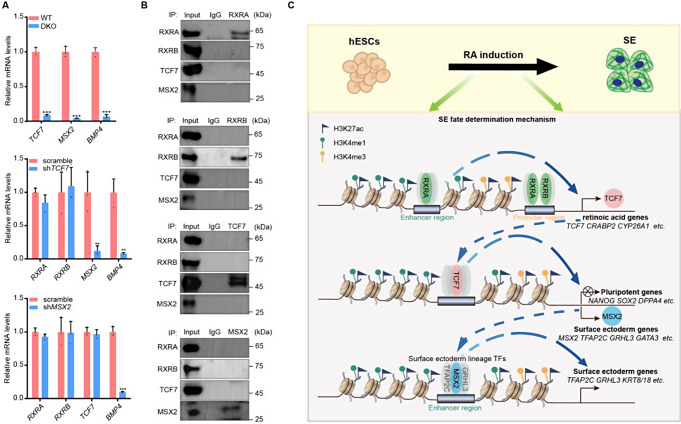
Understanding how embryonic progenitors decode extrinsic signals and transform into lineage-specific regulatory networks to drive cell fate specification is a fundamental, yet challenging question. Here, we develop a new model of surface epithelium (SE) differentiation induced by human embryonic stem cells (hESCs) using retinoic acid (RA), and identify BMP4 as an essential downstream signal in this process. We show that the retinoid X receptors, RXRA and RXRB, orchestrate SE commitment by shaping lineage-specific epigenetic and transcriptomic landscapes. Moreover, we find that TCF7, as a RA effector, regulates the transition from pluripotency to SE initiation by directly silencing pluripotency genes and activating SE genes. MSX2, a downstream activator of TCF7, primes the SE chromatin accessibility landscape and activates SE genes. Our work reveals the regulatory hierarchy between key morphogens RA and BMP4 in SE development, and demonstrates how the TCF7-MSX2 axis governs SE fate, providing novel insights into RA-mediated regulatory principles.
Keywords: MSX2; Retinoic acid; Surface epithelium; TCF7.
© 2024. The Author(s).
Conflict of interest statement
Declarations. Ethical approval: Not applicable. Consent to participate: Not applicable. Consent for publication: The authors declare their consent for this publication. Conflict of interest: The authors declare that they have no competing interests.
Figures


References
-
- Kicheva A, Briscoe J (2023) Control of tissue development by Morphogens. Annu Rev Cell Dev Biol. 10.1146/annurev-cellbio-020823-011522 - PubMed
-
- Sagner A, Briscoe J (2019) Establishing neuronal diversity in the spinal cord: a time and a place. Development 146. 10.1242/dev.182154 - PubMed
-
- Rogers KW, Schier AF (2011) Morphogen gradients: from generation to interpretation. Annu Rev Cell Dev Biol 27:377–407. 10.1146/annurev-cellbio-092910-154148 - PubMed
MeSH terms
Substances
Grants and funding
LinkOut - more resources
Full Text Sources
Molecular Biology Databases
