


Connection, hope, and reciprocal valuation: Experiences of participating in the peer-led course "Recovery is up to you"
- PMID: 39726733
- PMCID: PMC11669148
- DOI: 10.1177/14550725241301193
Connection, hope, and reciprocal valuation: Experiences of participating in the peer-led course "Recovery is up to you"
Abstract
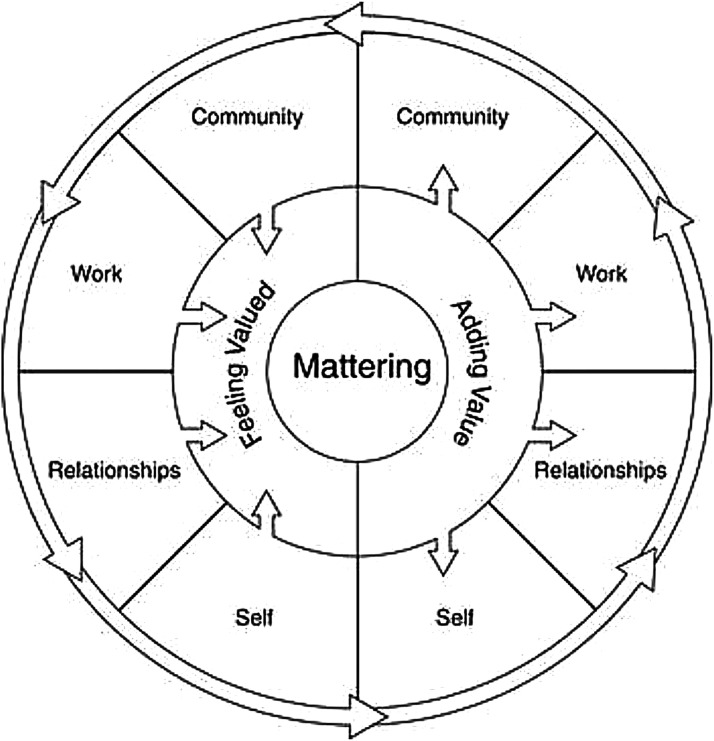
Aim: Peer support is a recommended approach within mental health and substance use policy and practice. The aim of this study is to explore how the peer-led, manual-based course, "Recovery is up to you," developed in the Netherlands, is experienced in a Norwegian context. Method: Qualitative semi-structured individual and group interviews involving eight-course attendees and 12 course leaders, recruited from two community services where the course was implemented. The interviews were analyzed using Tjora's stepwise deductive induction. Prilleltensky's mattering theory was used in the analysis of the results. Results: Both course attendees and leaders described the course as helpful, emphasizing the potential in sharing with equals through fellowship with like-minded people and in this the ability to process shame and access hope. Furthermore, study participants expressed that the course functions as a step in the process to recovery by rebuilding that framework and preparing for life beyond the course, and where the role of course leaders for some of the study participants represented one such step. Using Prilleltensky's concept of mattering, we interpret the participants' experiences of the course as promoting recovery through the processes of feeling valued and adding value, facilitating a "we-culture" that initiates processes regarding the self, relationships, work, and community. Conclusions: "Recovery is up to you" appears to be a relevant and accessible intervention to facilitate recovery processes, and a good method for utilizing peer competence. More research is needed on the utilization of the course in other settings.
Keywords: community services; mattering; peer support; recovery; social recovery.
© The Author(s) 2024.
Conflict of interest statement
The author(s) declared no potential conflicts of interest with respect to the research, authorship, and/or publication of this article.
Figures
References
-
- Bradway M., Nybakke H. L., Ingebrigtsen S. A., Dyb K. (2022). Who are the “Hard-to-Reach” groups in chronic-health and health technology research? A scoping review. Paper presented at the Linköping Electronic Conference Proceedings, Linköping, Sweden.
LinkOut - more resources
Full Text Sources