


Curcumin and Metformin Infinite Coordination Polymer Nanoparticles for Combined Therapy of Diabetic Mice via Intraperitoneal Injections
- PMID: 39728188
- PMCID: PMC11677912
- DOI: 10.3390/jfb15120388
Curcumin and Metformin Infinite Coordination Polymer Nanoparticles for Combined Therapy of Diabetic Mice via Intraperitoneal Injections
Abstract
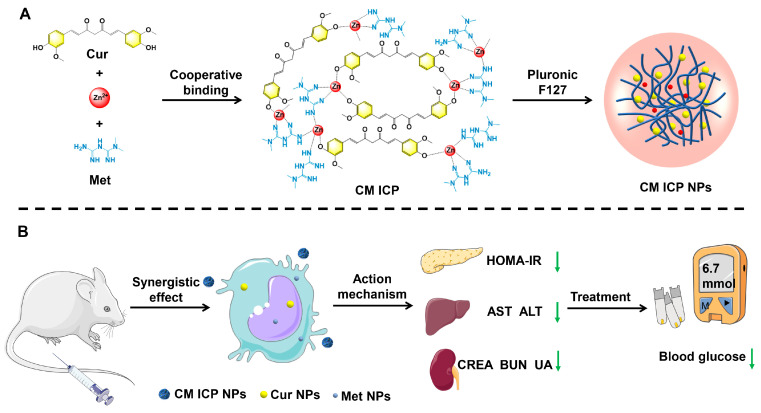
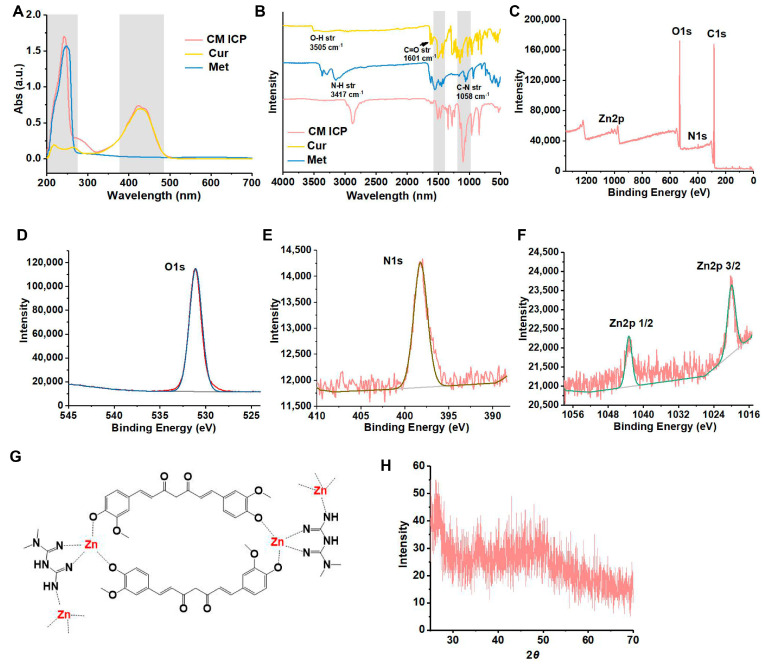
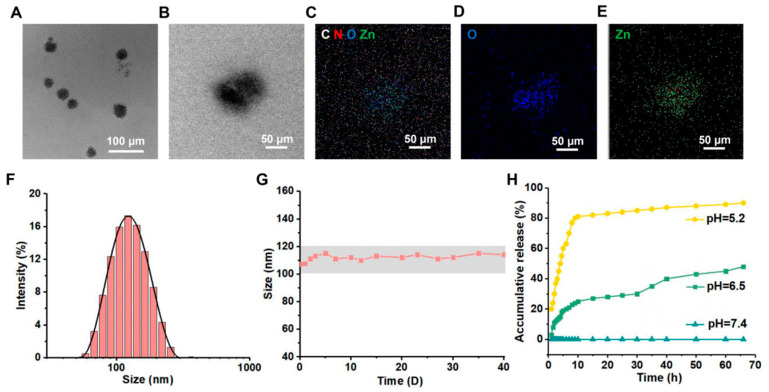
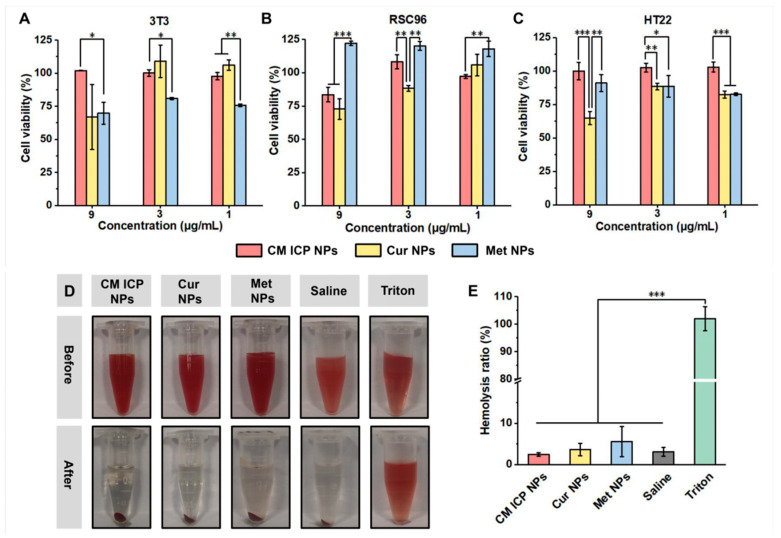
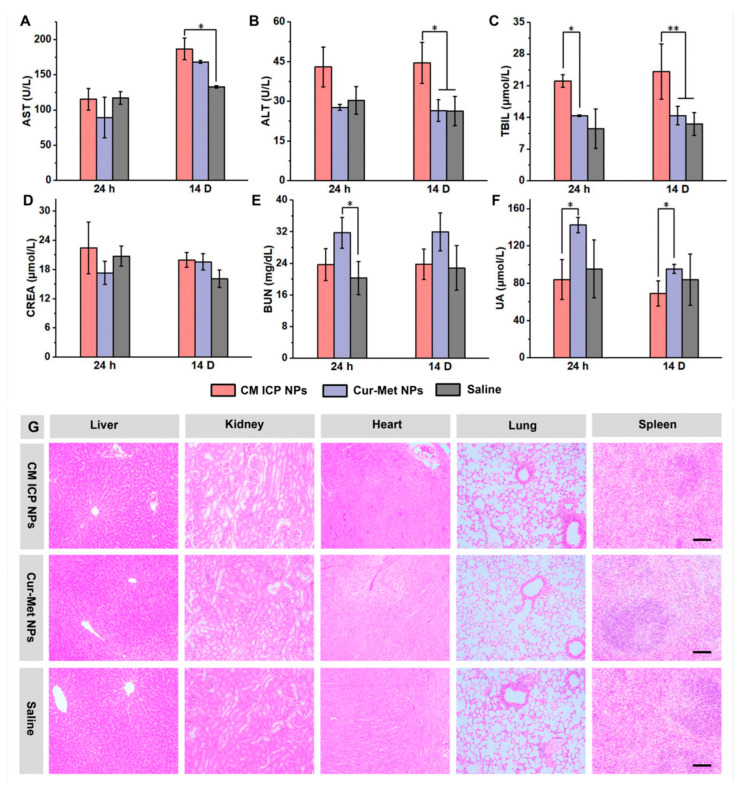
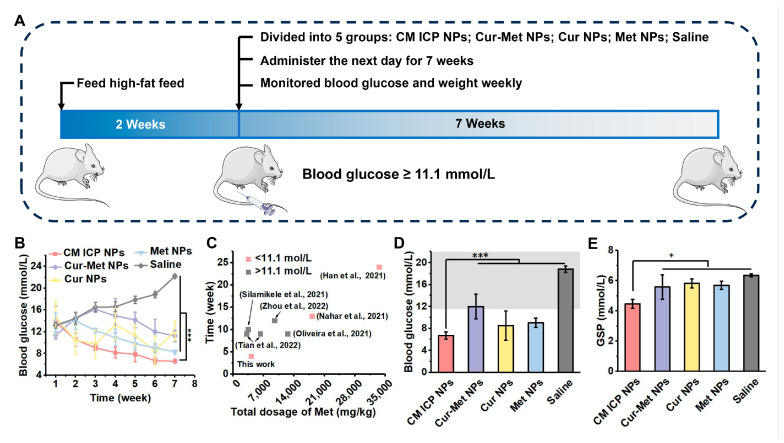
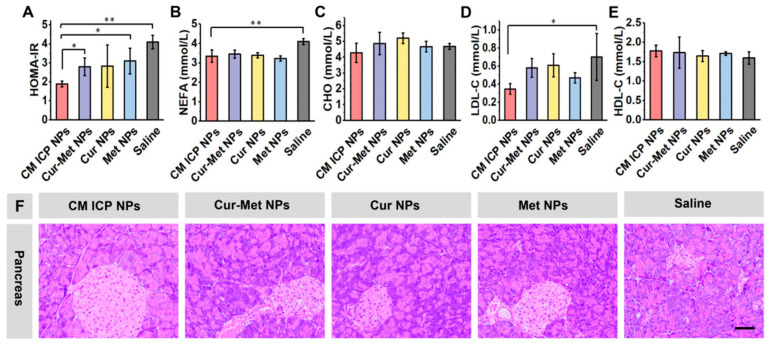
Metformin (Met) is one of the most commonly prescribed first-line drugs for diabetes treatment. However, it has several issues, including low bioavailability, therapeutic platform, and side effects at high doses. In order to improve the therapeutic efficiency of Met, this study proposes a strategy of using Met and curcumin (Cur) to prepare Cur-Zn(II)-Met infinite coordination polymer nanoparticles (CM ICP NPs), and combining this with intraperitoneal injections, for the treatment of diabetic mice. Fourier transform infrared (FTIR) spectroscopy, X-ray photoelectron spectroscopy (XPS), transmission electron microscopy (TEM), nanoparticle analysis, cytotoxicity experiments, and mice experiments were used to investigate structure, properties, and application effects. The results showed that CM ICP NPs exhibit a high drug encapsulation rate (100%), good stability, and an absence of in vivo and in vitro toxicity. The blood glucose level of diabetic mice after treatment was reduced to 6.7 ± 0.65 mmol/L at the seventh week. In terms of therapeutic mechanism, it appears that Met and Cur can synergistically regulate blood glucose in mice from multiple paths. This study provides a promising method for the treatment of diabetes using Met and other drugs.
Keywords: combination therapy; curcumin; diabetes; infinite coordination polymer; metformin; nanoparticles.
Conflict of interest statement
The authors declare no conflicts of interest.
Figures
References
-
- Zhao J.Q., Fan H.X., Wang T., Yu B., Mao S.B., Wang X., Zhang W.J., Wang L.G., Zhang Y., Ren Z.Y., et al. TyG index is positively associated with risk of CHD and coronary atherosclerosis severity among NAFLD patients. Cardiovasc. Diabetol. 2022;21:123. doi: 10.1186/s12933-022-01548-y. - DOI - PMC - PubMed
-
- Awad S.F., Al-Mawali A., Al-Lawati J.A., Morsi M., Critchley J.A., Abu-Raddad L.J. Forecasting the type 2 diabetes mellitus epidemic and the role of key risk factors in Oman up to 2050: Mathematical modeling analyses. J. Diabetes Invest. 2021;12:1162–1174. doi: 10.1111/jdi.13452. - DOI - PMC - PubMed
-
- Hua J.C., Huang B.F., Liu S.S., Sun Z.H. Trends in the burden of type 2 diabetes and its risk factors in Saudi Arabia. J. Endocrinol. Metab. Diabetes S. Afr. 2024;29:30–36. doi: 10.1080/16089677.2024.2311494. - DOI
-
- Kahn S.E. The relative contributions of insulin resistance and beta-cell dysfunction to the pathophysiology of Type 2 diabetes. Diabetologia. 2003;46:3–19. - PubMed
-
- “Metformin clinical application expert consensus” update expert group Expert consensus on the clinical application of metformin. Int. J. Endocrinol. Metab. 2023;43:345–356.
Grants and funding
LinkOut - more resources
Full Text Sources
Miscellaneous
