


Drug-Induced Myocardial Infarction: A Review of Pharmacological Triggers and Pathophysiological Mechanisms
- PMID: 39728296
- PMCID: PMC11678564
- DOI: 10.3390/jcdd11120406
Drug-Induced Myocardial Infarction: A Review of Pharmacological Triggers and Pathophysiological Mechanisms
Abstract
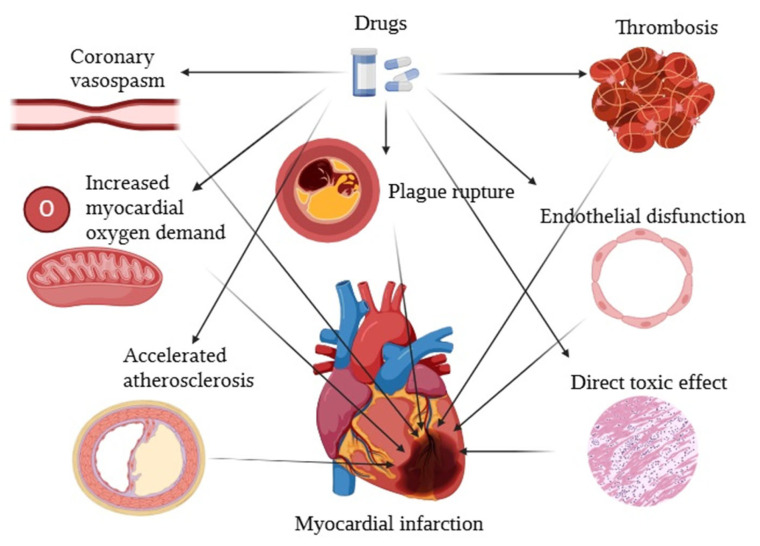
Myocardial infarction (MI) is a significant cardiovascular event caused by the decrease in or complete cessation of blood flow to a portion of the myocardium. It can arise from a variety of etiological factors, including pharmacological triggers. This review aims to explore the diverse drugs and substances that might lead to drug-induced myocardial infarction, focusing on their mechanisms of action and the pathophysiological processes involved. Various established and emerging pharmacological agents that could elevate the risk of myocardial infarction, such as nonsteroidal anti-inflammatory drugs, hormonal therapies, anticoagulants, and antipsychotic medications, are discussed. The role of drug-induced endothelial dysfunction, coronary artery spasm, and thrombosis are presented in order to highlight the underlying mechanisms. This review emphasizes the need for increased awareness among healthcare professionals to mitigate the risks associated with different pharmacological therapies to improve patient outcomes.
Keywords: drugs; myocardial infarction; pathophysiological mechanisms; pharmacological triggers.
Conflict of interest statement
The authors declare no conflicts of interest.
Figures
References
-
- Apple F.S., Jaffe A.S., Collinson P., Mockel M., Ordonez-Llanos J., Lindahl B., Hollander J., Plebani M., Than M., Chan M. IFCC educational materials on selected analytical and clinical applications of high sensitivity cardiac troponin assays. Clin. Biochem. 2015;48:201–203. doi: 10.1016/j.clinbiochem.2014.08.021. - DOI - PubMed
Publication types
LinkOut - more resources
Full Text Sources
