


Childhood Mediterranean Diet Compliance Is Associated with Lower Incidence of Childhood Obesity, Specific Sociodemographic, and Lifestyle Factors: A Cross-Sectional Study in Children Aged 6-9 Years
- PMID: 39728743
- PMCID: PMC11678326
- DOI: 10.3390/pediatric16040102
Childhood Mediterranean Diet Compliance Is Associated with Lower Incidence of Childhood Obesity, Specific Sociodemographic, and Lifestyle Factors: A Cross-Sectional Study in Children Aged 6-9 Years
Abstract
Background: Mediterranean diet (MD) constitutes a commonly examined dietary model. It includes a plethora of bioactive ingredients with strong antioxidant, anti-inflammatory, antithrombotic and anticancer properties. Several substantial studies support strong evidence that MD can exert preventing actions against human morbidity and mortality, promoting human well-being and quality of life. The present study aims to evaluate whether childhood MD compliance may be associated with socio-demographic, anthropometric, and lifestyle factors in children at the age of 6-9 years.
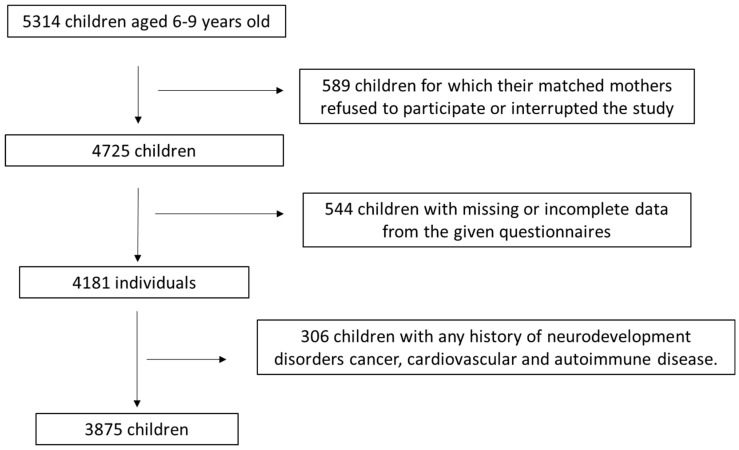
Methods: This is a cross-sectional survey on 3875 children aged 6-9 years old with their matched mothers. Qualified questionnaires were used to evaluate and collect by one-to-one interviews with trained professionals the above data.
Results: Elevated MD adherence was observed only in 22.2% of the enrolled children, while 37.5% of children maintained intermediate MD adherence and 40.3% of children adopted lower MD levels. Children MD compliance was related at an independent manner with maternal education level, childhood anthropometric factors such as Body Mass Index (BMI), Waist circumference to Height ratio (WtHR), quality of life, and exclusively breastfeeding behaviors after adjusting for several possible confounders (p ˂ 0.05).
Conclusions: Elevated MD adherence of children aged 6-9 years old showed a lower obesity of overweight/obesity, including abdominal obesity. A higher maternal educational status and adopting exclusively breastfeeding practices were associated with greater levels of children's MD adherence, promoting their quality of life and well-being. Based on the present results, future prospective surveys need to be performed to evaluate if there is a causality relation concerning this topic.
Keywords: Mediterranean diet; abdominal obesity; anthropometric factors; breastfeeding; childhood obesity; educational status; physical activity; quality of life.
Conflict of interest statement
The authors declare no conflicts of interest.
Figures
References
-
- López-Gil J.F., García-Hermoso A., Sotos-Prieto M., Cavero-Redondo I., Martínez-Vizcaíno V., Kales S.N. Mediterranean Diet-Based Interventions to Improve Anthropometric and Obesity Indicators in Children and Adolescents: A Systematic Review with Meta-Analysis of Randomized Controlled Trials. Adv. Nutr. 2023;14:858–869. doi: 10.1016/j.advnut.2023.04.011. - DOI - PMC - PubMed
-
- Masini A., Dallolio L., Sanmarchi F., Lovecchio F., Falato M., Longobucco Y., Lanari M., Sacchetti R. Adherence to the Mediterranean Diet in Children and Adolescents and Association with Multiple Outcomes: An Umbrella Review. Healthcare. 2024;12:449. doi: 10.3390/healthcare12040449. - DOI - PMC - PubMed
-
- Estruch R., Ros E., Salas-Salvadó J., Covas M.I., Corella D., Arós F., Gómez-Gracia E., Ruiz-Gutiérrez V., Fiol M., Lapetra J., et al. Primary Prevention of Cardiovascular Disease with a Mediterranean Diet Supplemented with Extra-Virgin Olive Oil or Nuts. N. Engl. J. Med. 2018;378:e34. doi: 10.1056/NEJMoa1800389. - DOI - PubMed
LinkOut - more resources
Full Text Sources
