


COVID-19 vaccine acceptance and preference for future delivery among language minority, newcomer, and racialized peoples in Canada: a national cross-sectional and longitudinal study
- PMID: 39729392
- PMCID: PMC11703517
- DOI: 10.1080/07853890.2024.2445777
COVID-19 vaccine acceptance and preference for future delivery among language minority, newcomer, and racialized peoples in Canada: a national cross-sectional and longitudinal study
Abstract
Background: Despite high COVID-19 vaccine coverage in Canada, vaccine acceptance and preferred delivery among newcomers, racialized persons, and those who primarily speak minority languages are not well understood. This national study explores COVID-19 vaccine acceptance, access to vaccines, and delivery preferences among ethnoculturally diverse population groups.
Methods: We conducted two national cross-sectional surveys during the pandemic (Dec 2020 and Oct-Nov 2021). Binary logistic regression analysis investigated the association between newcomer, language, and racialized minority respondents' perceptions and acceptance of COVID-19 vaccines, experiences of discrimination when accessing health services, and sociodemographic characteristics. McNemar-Bowker tests were used to assess changes in responses collected at two time points.
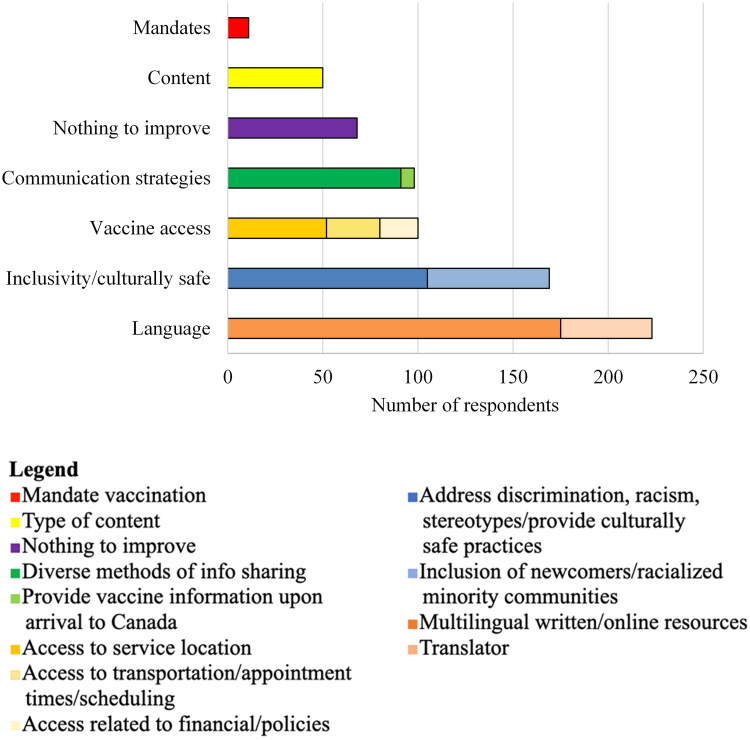
Results: Among 1630 respondents, 30.8% arrived in Canada within the last five years, 87.4% self-identified as a racialized minority, and 37.2% primarily spoke languages other than English or French. Although single dose COVID-19 vaccine uptake was at 92.7% among respondents, 14.8% experienced difficulty accessing vaccines, citing a need for translated resources or multi-lingual personnel. In longitudinal analysis, respondents were increasingly motivated over time to overcome barriers to accessing vaccines (61.4% to 69.6%, p = <.001). Fifty-nine percent (59.9%) of respondents would accept annual vaccination and over half would accept co-administration with routine (56.2%) or influenza (52.3%) vaccines. Experiences of racism/discrimination upon health service access were reported by 12.3% of respondents, who recommended increasing culturally safe practices and community involvement at vaccination sites.
Conclusions: Understanding how newcomers, racialized peoples, and minority language speakers perceive and access COVID-19 vaccines will support vaccination campaigns to optimize equitable access.
Keywords: COVID-19; minority language; newcomer; racialized; vaccination.
Conflict of interest statement
No potential conflict of interest was reported by the authors.
Figures
References
-
- Statistics Canada. Immigrants make up the largest share of the population in over 150 years and continue to shape who we are as Canadians . Statistics Canada [cited 2024 Sept 25]. https://www150.statcan.gc.ca/n1/daily-quotidien/221026/dq221026a-eng.htm.
-
- Government of Canada . 2020 annual report to parliament on immigration; 2019. [cited 2024 Sept 25]. https://www.canada.ca/en/immigration-refugees-citizenship/corporate/publ....
-
- McKeary M, Newbold B.. Barriers to care: the challenges for Canadian refugees and their health care providers. Journal of Refugee Studies. 2010;23(4):523–545. doi: 10.1007/s10903-022-01337-5. - DOI
MeSH terms
Substances
LinkOut - more resources
Full Text Sources
Other Literature Sources
Medical
Research Materials
