


Modern contraceptive utilization and associated factors among street working reproductive age women in Ethiopia: A systematic review and meta-analysis
- PMID: 39729444
- PMCID: PMC11676527
- DOI: 10.1371/journal.pone.0312569
Modern contraceptive utilization and associated factors among street working reproductive age women in Ethiopia: A systematic review and meta-analysis
Abstract
Background: Street women are women, who make their living on the streets by begging, sleeping in the streets, or on the sides of roads. They are the most marginalized and neglected segment of society, with little access to health care, including modern contraception, and a lack of knowledge about health services, particularly in Ethiopia. Therefore, this study aimed to examine modern contraceptive utilization and associated factors among street women.
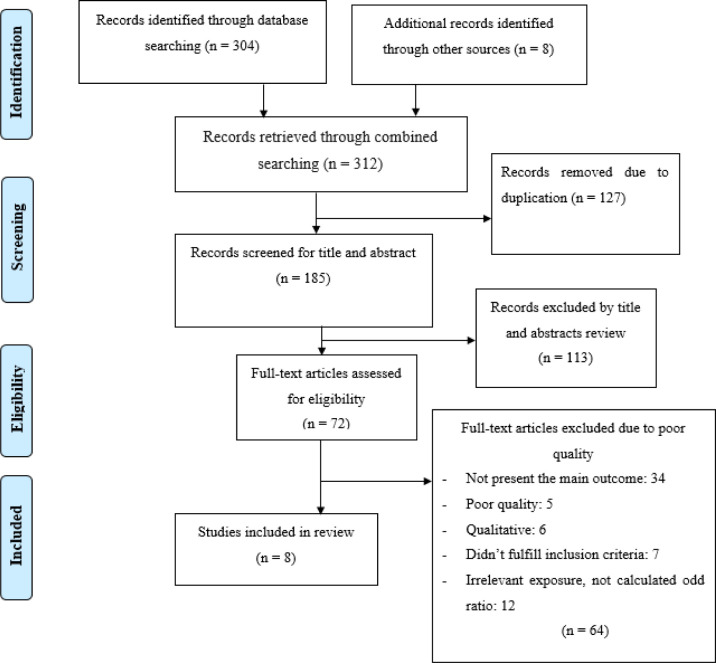
Methods: A systematic review and meta-analysis were conducted on observational community-based studies published from January 2010 up to February 1, 2023. PubMed, Google Scholar, HINAR, Scopus, Web of Sciences, and grey literature were used to search primary studies. We used Microsoft Excel for data entry and extracting data. STATA-17 statistical software was used to analyze the data as well and I2 tests evaluated study heterogeneity. The pooled utilization of the modern contraceptive method was predicted using a random-effect model.
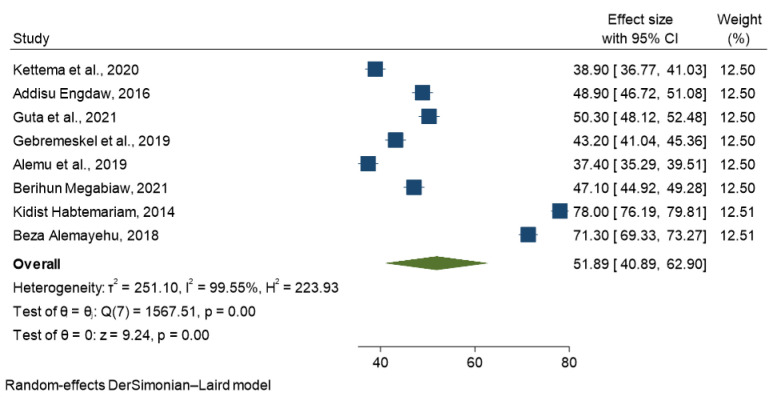
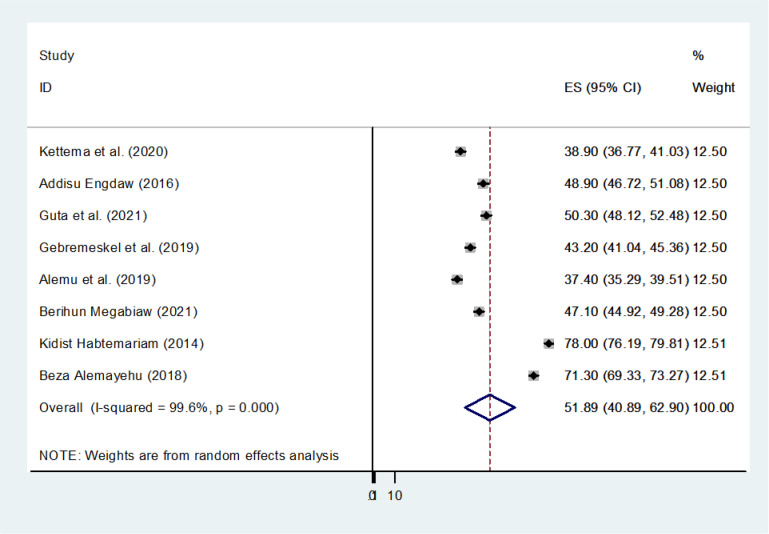
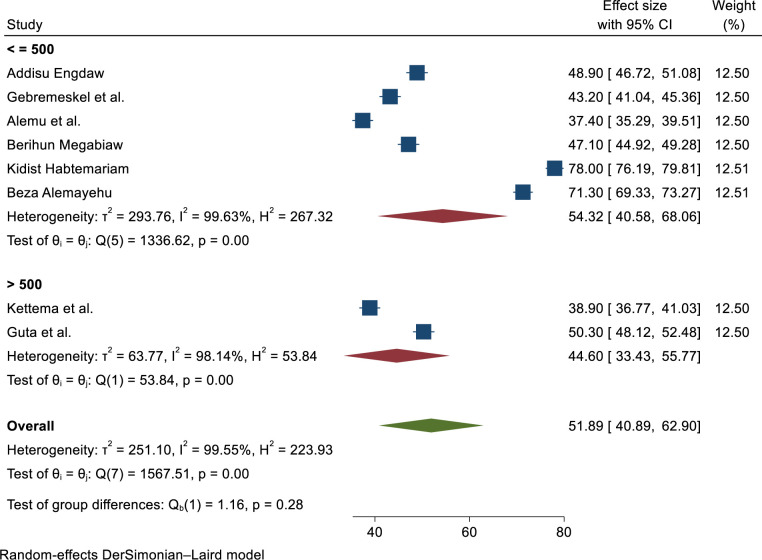
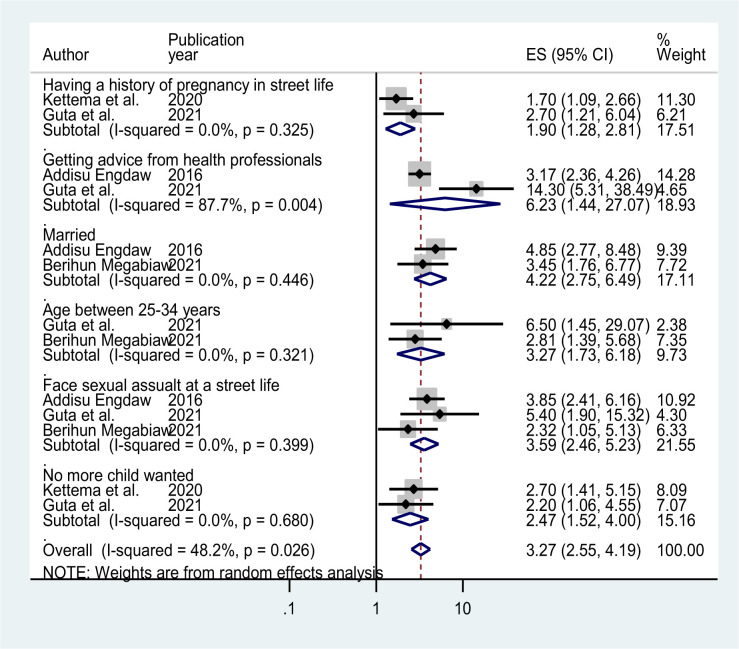
Results: A total of eight studies were included. The pooled prevalence of modern contraceptive utilization was 51.89% (95% CI: 40.89-62.9). Being married (OR = 4.22, 95%CI, 2.75-6.49); facing a history of sexual assault/rape at a street life (OR = 3.59, 95%CI, 2.46-5.23); age between 25-35 years (OR = 3.27, 95%CI, 1.73-6.18), getting advise from the health professionals (OR = 6.23, 95%CI, 1.44-27.07), having a history of pregnancy in street life (OR = 1.90, 95%CI, 1.28-2.81) and no more children wanted (OR = 2.47, 95%CI, 1.52-5.00) were significantly associated with modern contraceptive utilization.
Conclusions: The pooled modern contraceptive utilization was suboptimal. Every concerned body or stakeholder should give more consideration to their lifestyles and living conditions by raising awareness and providing access to contraception.
Copyright: © 2024 Kassa et al. This is an open access article distributed under the terms of the Creative Commons Attribution License, which permits unrestricted use, distribution, and reproduction in any medium, provided the original author and source are credited.
Conflict of interest statement
The authors have declared that no competing interests exist.
Figures
References
-
- Butler AS, Clayton EW. Program Management and Administration. A Review of the HHS Family Planning Program: Mission, Management, and Measurement of Results: National Academies Press (US); 2009. - PubMed
-
- Shah IH. Family planning and reproductive health. Demography. 2010;1:162–84.
-
- Institute EPH, ICF. Ethiopia mini demographic and health survey 2019: key indicators. Rockville, Maryland, USA. 2019.
-
- Foley CL. Pregnancy in the Margins: A Review of the Literature and Introduction of An Attachment-Based Ecotherapy Intervention for Marginalized Expecting Couples. 2023.
Publication types
MeSH terms
LinkOut - more resources
Full Text Sources
