


Factors associated with essential newborn care practice among obstetric care providers in public hospitals in Gamo, Gofa, and Wolayta zones, southern Ethiopia: A facility-based cross-sectional study, 2022
- PMID: 39729474
- PMCID: PMC11676525
- DOI: 10.1371/journal.pone.0314767
Factors associated with essential newborn care practice among obstetric care providers in public hospitals in Gamo, Gofa, and Wolayta zones, southern Ethiopia: A facility-based cross-sectional study, 2022
Abstract
Background: Almost everywhere, neonatal mortality can be decreased with ease if competent obstetricians give the necessary treatment. Unfortunately, observational techniques were not used to examine basic essential newborn care practice among obstetric care providers in Ethiopia. Thus, the purpose of this study was to evaluate factors related to essential newborn care practice using observational techniques among obstetric care providers in public hospitals in the Gamo, Gofa, and Wolayta zones, southern Ethiopia.
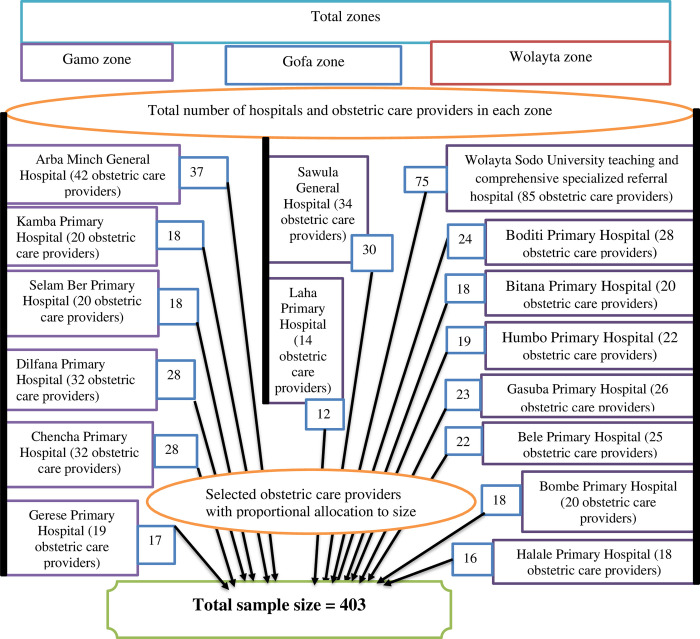
Methods: An institutional-based cross-sectional study carried out from May 15 to June 30, 2022. A simple random sampling method was used. Structured self-administered questionnaires with a clinical observational checklist were used to collect data. Data imported into Epidata version 4.6 and analyzed using the SPSS Version 25. Bivariable and multivariable analyses were used to identify factors associated with essential newborn care practices. An odds ratio with a 95% confidence interval was used to assess the direction and strength of the association.
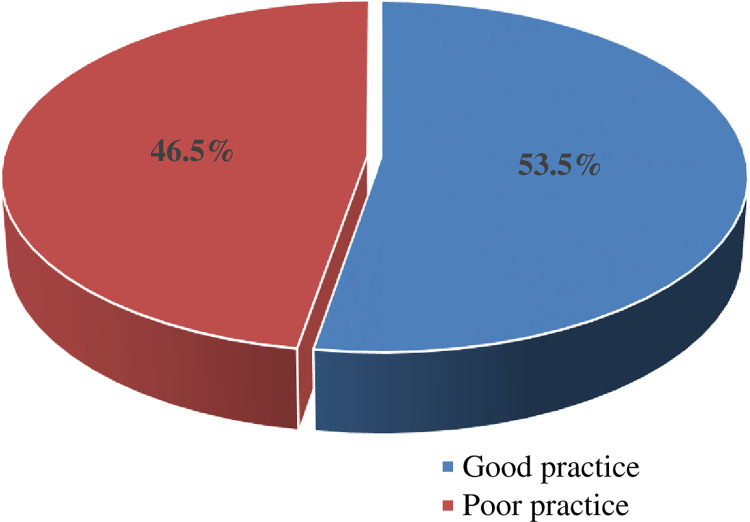
Results: The overall magnitude of good essential newborn care practice among obstetric care providers was 53.5% (95% CI = 49, 58). Factors positively associated with the practice of essential newborn care were having interest on working in delivery room (AOR = 3.16, 95% CI = 1.71,5.83), having no work load (AOR = 2.96, 95% CI = 1.78,4.49), received in-service training (AOR = 3.09, 95% CI = 1.75,5.45), having supportive supervision (AOR = 3.41, 95% CI = 1.25, 9.24), and having good knowledge on essential newborn care (AOR = 3.04, 95% CI = 1.89,4.90).
Conclusion: The observed level of essential newborn care practices among obstetric care providers underscores the necessity for targeted interventions that stimulate interest in delivery room work, effectively manage workloads, and offer comprehensive training along with supportive supervision. By concentrating on these aspects and enhancing providers' knowledge, we can significantly improve essential newborn care practices.
Copyright: © 2024 Salo et al. This is an open access article distributed under the terms of the Creative Commons Attribution License, which permits unrestricted use, distribution, and reproduction in any medium, provided the original author and source are credited.
Conflict of interest statement
The authors have no competing interests.
Figures
References
-
- Olcreate: HEAT_IMNCI_ET. Integrated Management of newborn and Childhood Illness Module: 2. Maternal, Newborn and Child Health [Internet]. 2022. Available from: https://www.open.edu/openlearncreate/mod/oucontent/view.php?id=246
-
- Federal Ministry Of Health (FMOHE). Integrated management of newborn and childhood illness (IMNCI) chart booklet for health workers. Matern child Nutr Dir [Internet]. 2021; Available from: http://moh.gov.et
-
- World Health Organization. Evolution, Implementation and Progress. 2020. 56 p.
-
- Saugstad OD. Reducing global neonatal mortality is possible. Neonatology [Internet]. 2011. Jun [cited 2022 Apr 22];99(4):250–7. Available from: https://pubmed.ncbi.nlm.nih.gov/21088433/ doi: 10.1159/000320332 - DOI - PubMed
MeSH terms
LinkOut - more resources
Full Text Sources
