


Galectin-3 secreted by triple-negative breast cancer cells regulates T cell function
- PMID: 39729650
- PMCID: PMC11742317
- DOI: 10.1016/j.neo.2024.101117
Galectin-3 secreted by triple-negative breast cancer cells regulates T cell function
Abstract
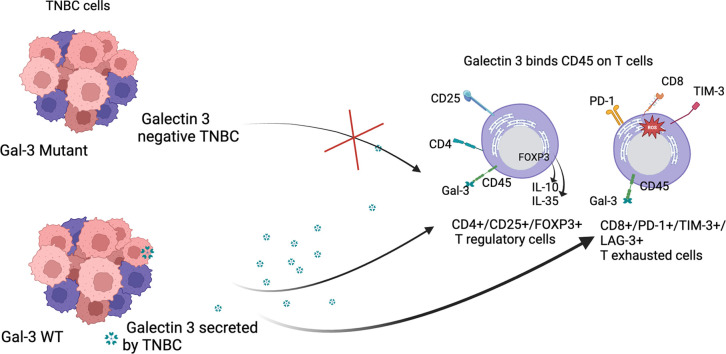
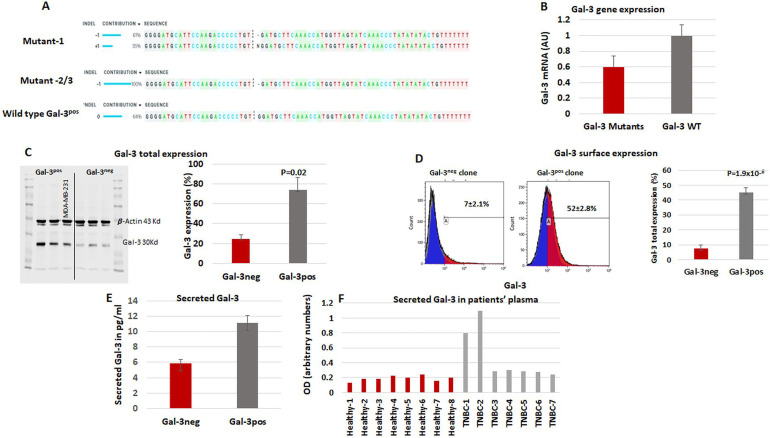
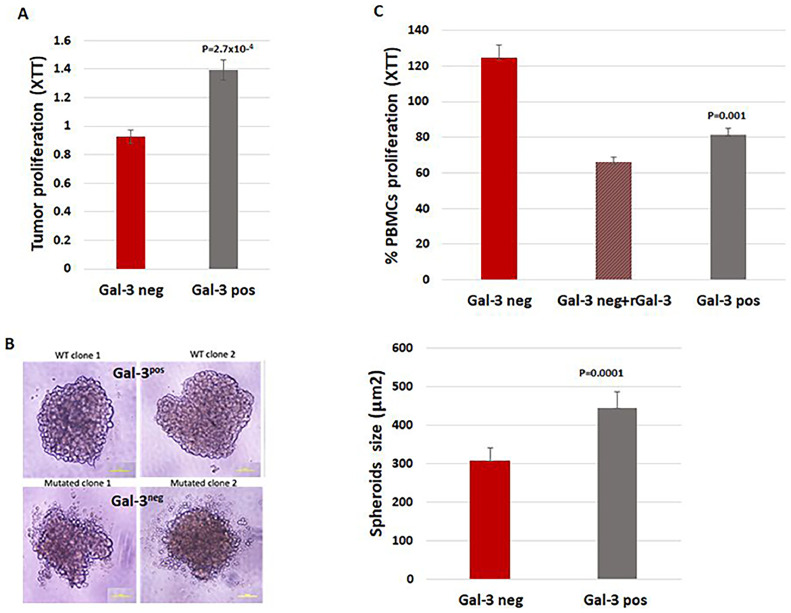
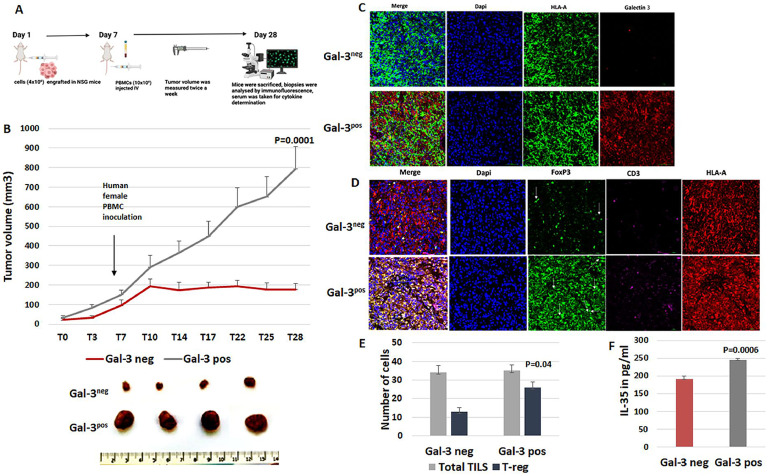
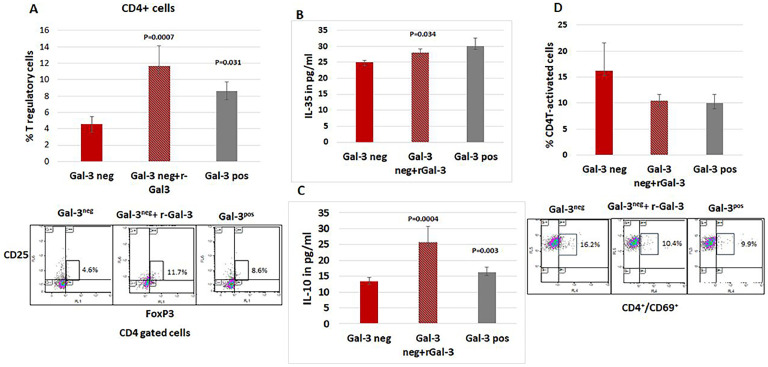
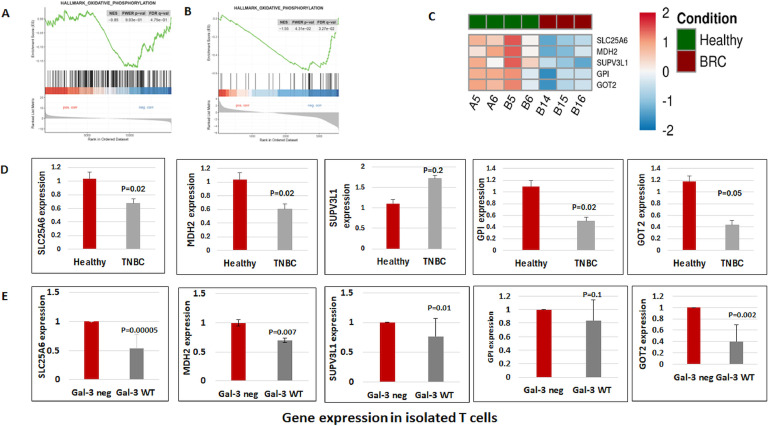
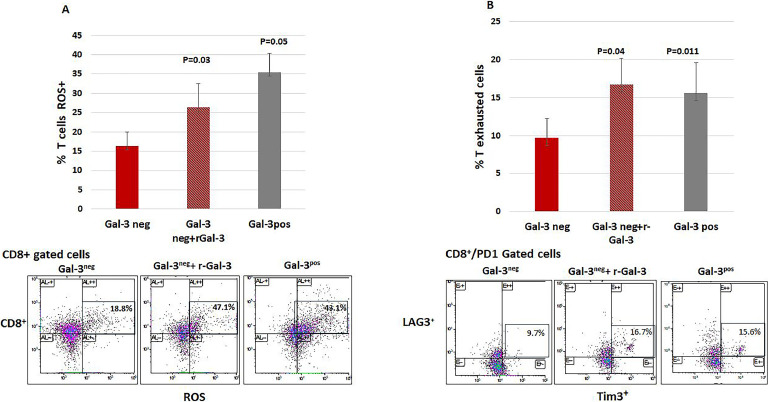
Triple-negative breast cancer (TNBC) is an aggressive subtype that accounts for 10-15 % of breast cancer. Current treatment of high-risk early-stage TNBC includes neoadjuvant chemo-immune therapy. However, the substantial variation in immune response prompts an urgent need for new immune-targeting agents. This requires a comprehensive understanding of TNBC's tumor microenvironment. We recently demonstrated that Galectin-3 (Gal-3) binding protein/Gal-3 complex secreted by TNBC cells induces immunosuppression, through inhibiting CD45 signaling in T cells. Here, we further investigated the interaction between secreted Gal-3 and T cells in TNBC. Using CRISPR/Cas9 gene editing of the TNBC MDA-MB-231 cell-line, we obtained Gal-3 negative(neg) clones. We studied these in an in-vitro model, co-cultured with peripheral blood mononuclear cells (PBMC) to imitate immune-tumor interaction, and in an in-vivo model, when implanted in mice. Gal-3neg tumors in mice had decelerated tumor growth after PBMC inoculation. In contrast, the Gal-3 positive(pos) tumors continued growing despite PBMC inoculation, and tumor T regulatory cell (CD4/FoxP3+) infiltration increased. RNA sequencing of T cells from women with TNBC with elevated plasma levels of Gal-3 revealed significantly lower expression of oxidative phosphorylation genes than in T cells from healthy women. Similarly, in our in-vitro model, the decreased expression of oxidative phosphorylation genes and mitochondrial dysfunction resulted in a significant increase in CD8 intracellular reactive oxygen species. Consequently, T exhausted cells (CD8/PD1/Tim3/Lag3+) significantly increased in PBMC co-cultured with Gal-3pos TNBCs. To conclude, we revealed a novel TNBC-related Gal-3 suppressor mechanism that involved upregulation of CD4 T regulatory and of CD8 T exhausted cells.
Keywords: Galectin-3; Oxidative phosphorylation; T exhausted cells; Triple negative breast cancer.
Copyright © 2024. Published by Elsevier Inc.
Conflict of interest statement
Declaration of competing interest The authors declare that they have no known competing financial interests or personal relationships that could have appeared to influence the work reported in this paper.
Figures
References
-
- Zhang X. Molecular classification of breast cancer. Arch. Pathol. Lab. Med. 2022;147 46-5. - PubMed
-
- Li X X., Yang J., Peng L., Sahin A.A., Huo L., Ward K.C., O'Regan R., Torres M.A., Meisel J.L. Triple-negative breast cancer has worse overall survival and cause-specific survival than non-triple-negative breast cancer. Breast. Cancer Res. Treat. 2017;161:279–287. - PubMed
-
- Leon-Ferre R.A., Goetz M.P. Advances in systemic therapies for triple negative breast cancer. BMJ. 2023;381 - PubMed
Publication types
MeSH terms
Substances
LinkOut - more resources
Full Text Sources
Research Materials
Miscellaneous
