


Little strokes fell big oaks: The use of weak magnetic fields and reactive oxygen species to fight cancer
- PMID: 39729909
- PMCID: PMC11733197
- DOI: 10.1016/j.redox.2024.103483
Little strokes fell big oaks: The use of weak magnetic fields and reactive oxygen species to fight cancer
Abstract
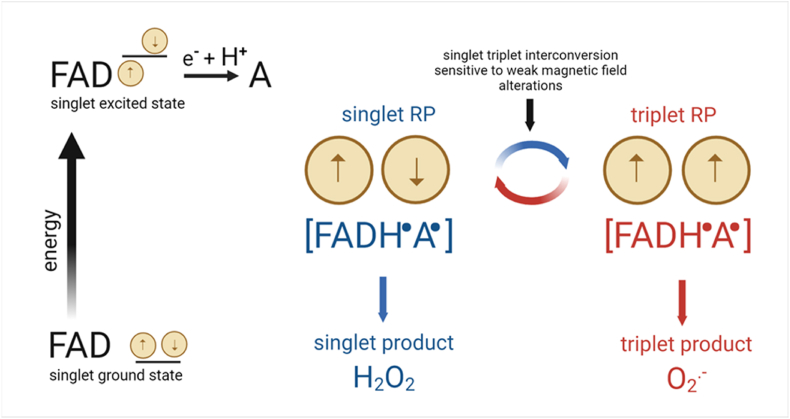
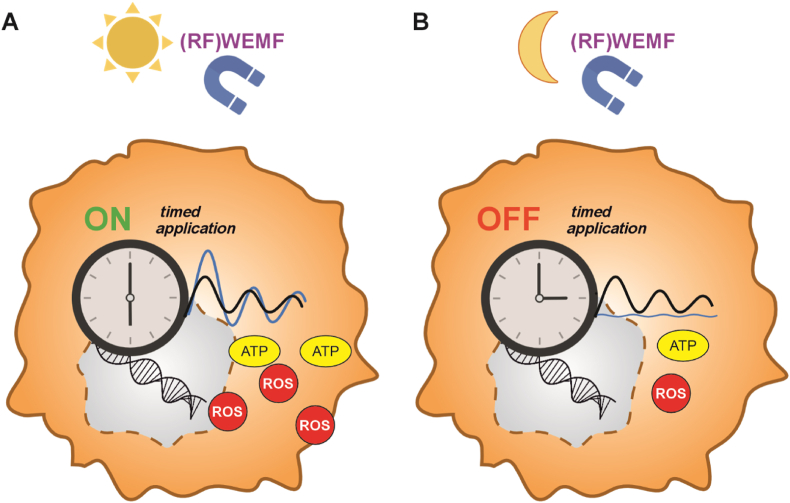
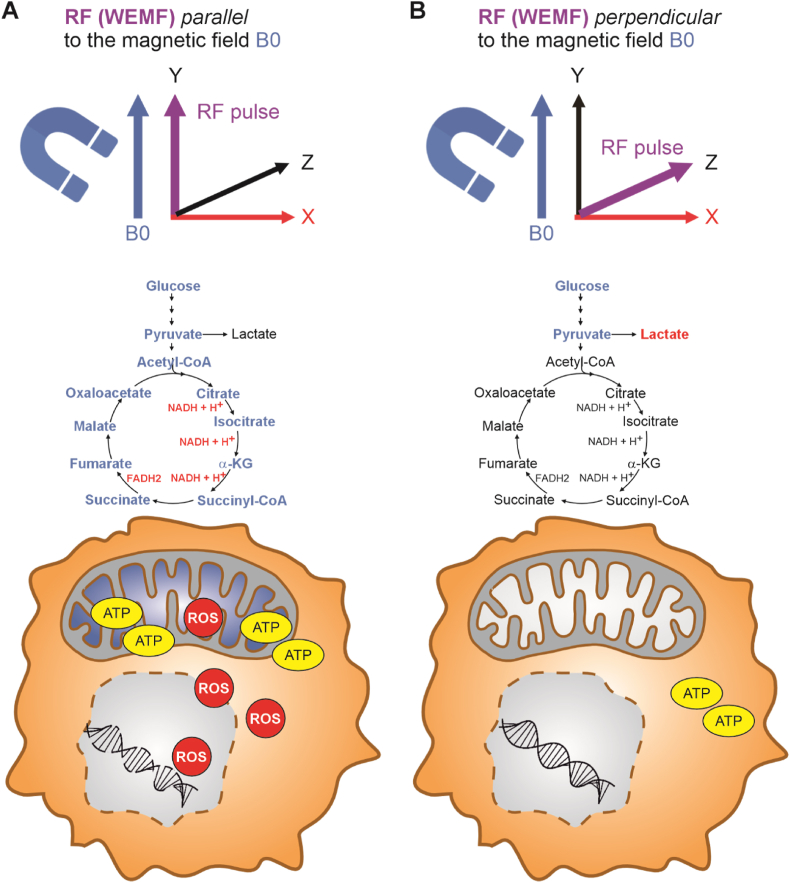
The increase in early-stage cancers, particularly gastrointestinal, breast and kidney cancers, has been linked to lifestyle changes such as consumption of processed foods and physical inactivity, which contribute to obesity and diabetes - major cancer risk factors. Conventional treatments such as chemotherapy and radiation often lead to severe long-term side effects, including secondary cancers and tissue damage, highlighting the need for new, safer and more effective therapies, especially for young patients. Weak electromagnetic fields (WEMF) offer a promising non-invasive approach to cancer treatment. While WEMF have been used therapeutically for musculoskeletal disorders for decades, their role in oncology is still emerging. WEMFs affect multiple cellular processes through mechanisms such as the radical pair mechanism (RPM), which alters reactive oxygen species (ROS) levels, mitochondrial function, and glycolysis, among others. This review explores the potential of WEMF in conjunction with reactive oxygen species as a cancer therapy, highlighting WEMFs selective targeting of cancer cells and its non-ionizing nature, which could reduce collateral damage compared to conventional treatments. In addition, synchronization of WEMF with circadian rhythms may further enhance its therapeutic efficacy, as has been demonstrated in other cancer therapies.
Keywords: Cancer therapy; Circadian rhythm; Hypoxia; Public health; ROS; Radical pair mechanism; Weak magnetic fields.
Copyright © 2024 The Authors. Published by Elsevier B.V. All rights reserved.
Conflict of interest statement
Declaration of competing interest The authors declare the following financial interests/personal relationships which may be considered as potential competing interests:The three studies (Thöni et al., 2021, 2022 and 2024) referenced in this hypothetical paper were financed by MedTec Company, Wetzlar Germany, Project Data Base Number 350088.
Figures
References
-
- Ribelles N., Pascual J., Galvez-Carvajal L., Ruiz-Medina S., Garcia-Corbacho J., Benitez J.C., Dominguez-Recio M.E., Torres E., Oliva L., Zalabardo M., Rueda A., Alba E. Increasing annual cancer incidence in patients age 20-49 Years: a real-data study. JCO Glob. Oncol. 2024;10 doi: 10.1200/GO.23.00363. - DOI - PMC - PubMed
-
- Zhao J., Xu L., Sun J., Song M., Wang L., Yuan S., Zhu Y., Wan Z., Larsson S., Tsilidis K., Dunlop M., Campbell H., Rudan I., Song P., Theodoratou E., Ding K., Li X. Global trends in incidence, death, burden and risk factors of early-onset cancer from 1990 to 2019. BMJ Oncol. 2023;2:49. doi: 10.1136/BMJONC-2023-000049. - DOI
-
- Rock C.L., Thomson C., Gansler T., Gapstur S.M., McCullough M.L., Patel A.V., Andrews K.S., Bandera E.V., Spees C.K., Robien K., Hartman S., Sullivan K., Grant B.L., Hamilton K.K., Kushi L.H., Caan B.J., Kibbe D., Black J.D., Wiedt T.L., McMahon C., Sloan K., Doyle C. American Cancer Society guideline for diet and physical activity for cancer prevention. CA A Cancer J. Clin. 2020;70:245–271. doi: 10.3322/CAAC.21591. - DOI - PubMed
Publication types
MeSH terms
Substances
LinkOut - more resources
Full Text Sources
Medical
