


Temporal dynamics in the composition of metabolically active bacteria and fungi in the ileo-cecal lymph nodes of suckling and newly weaned piglets
- PMID: 39730603
- PMCID: PMC11680871
- DOI: 10.1038/s41598-024-81227-y
Temporal dynamics in the composition of metabolically active bacteria and fungi in the ileo-cecal lymph nodes of suckling and newly weaned piglets
Abstract
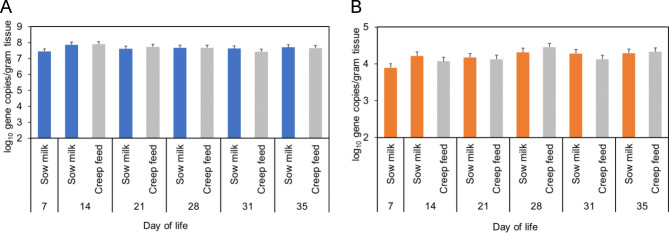
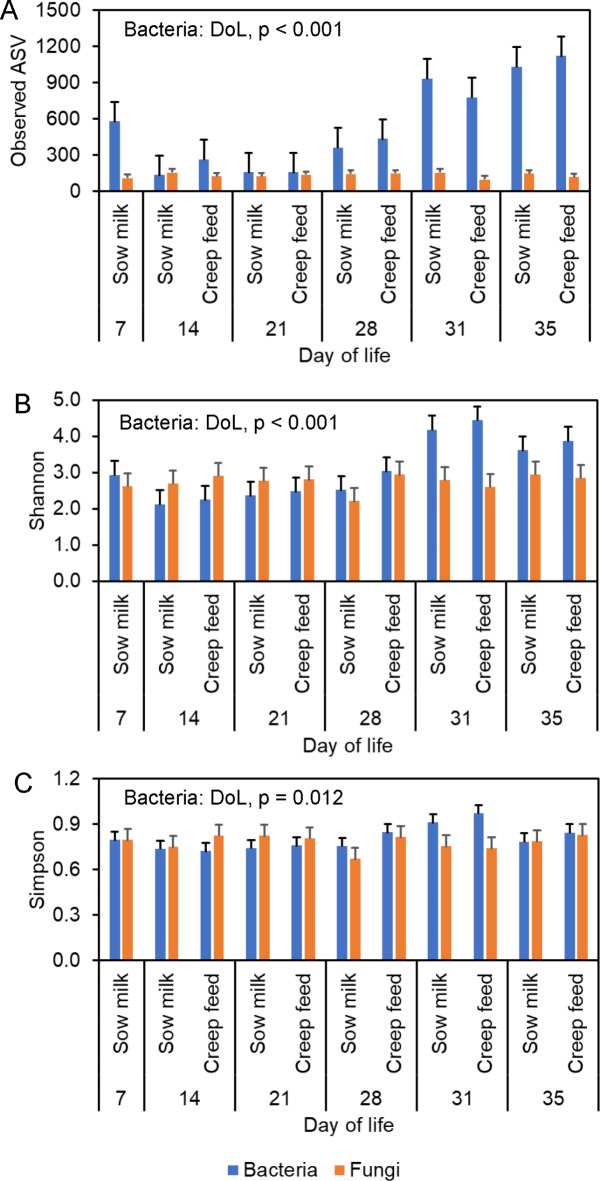
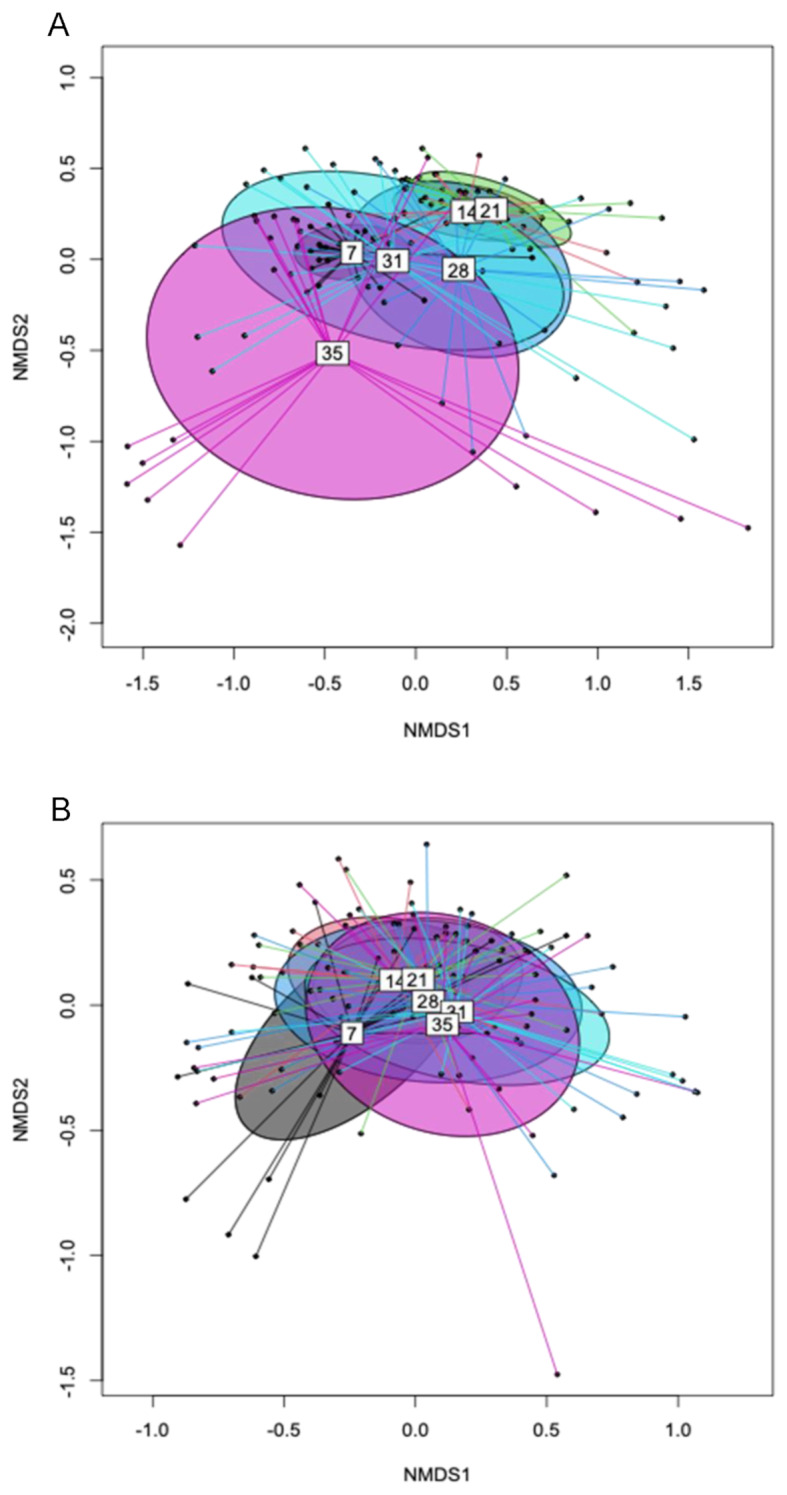
The early microbial colonization of the porcine gut is an important priming factor for gut and immune development. Nevertheless, little is known about the composition of microbes that translocate into the ileo-cecal lymph nodes (ICLN) in the neonatal phase. This study aimed to characterize age- and nutrition-related changes in the metabolically active bacterial and fungal composition of the ICLN in suckling and newly weaned piglets. Ten litters received only sow milk, while ten litters had access to creep feed from day of life (DoL) 10. Weaning occurred on DoL28. The ICLN were collected from 10 piglets/feeding group on each sampling day (DoL7, 14, 21, 28, 31 and 35) for RNA isolation, transcription into complementary DNA for 16 S rRNA and ITS2 amplicon sequencing. Age and weaning influenced the microbiome in the ICLN more than the nutrition during the suckling phase. Species richness and alpha-diversity of the bacterial but not fungal communities were increased on DoL7 and postweaning. Potential modes of action may have been linked to gut permeability at these ages and selective sampling by immune cells. Potential selective transfer of microbes may explain the dominance of Lactobacillus and Limosilactobacillus in the ICLN. Piglets that only drank sow milk comprised more Bacteroides in their ICLN on DoL35 compared to the creep fed piglets. Especially the role of fungi in the ICLN, including their mechanisms for translocation survival, needs further attention, as we detected metabolically active mold fungi and plant pathogens (e.g., Fusarium, Alternaria and Blumeria) in the ICLN.
Keywords: Bacteriome; Ileo-cecal lymph nodes; Microbial translocation; Mycobiome; Neonatal piglets; Weaning.
© 2024. The Author(s).
Conflict of interest statement
Declarations. Ethical approval: All procedures involving animal handling and treatment were approved by the institutional ethics committee of the University of Veterinary Medicine Vienna and the National authority according to the Law for Animal Experiments, Tierversuchsgesetz (BMWFW- 68.205/00936- V3b/2019). The pig experiment was performed in accordance with the university and national regulations and complied to the ARRIVE guidelines. Competing interests: The authors declare no competing interests.
Figures


References
-
- Metzler-Zebeli, B. U. Porcine gut microbiota and host interactions during the transition from the suckling to post-weaning phase. In: Gut Microbiota, Immunity, and Health in Production Animals, (eds Kogut, M. H. & Zhang, G.) Springer International Publishing: Cham, Switzerland, 10.1007/978-3-030-90303-9. (2022).
MeSH terms
Substances
Grants and funding
LinkOut - more resources
Full Text Sources
Medical
