


CDUNeXt: efficient ossification segmentation with large kernel and dual cross gate attention
- PMID: 39730708
- PMCID: PMC11681111
- DOI: 10.1038/s41598-024-82199-9
CDUNeXt: efficient ossification segmentation with large kernel and dual cross gate attention
Abstract
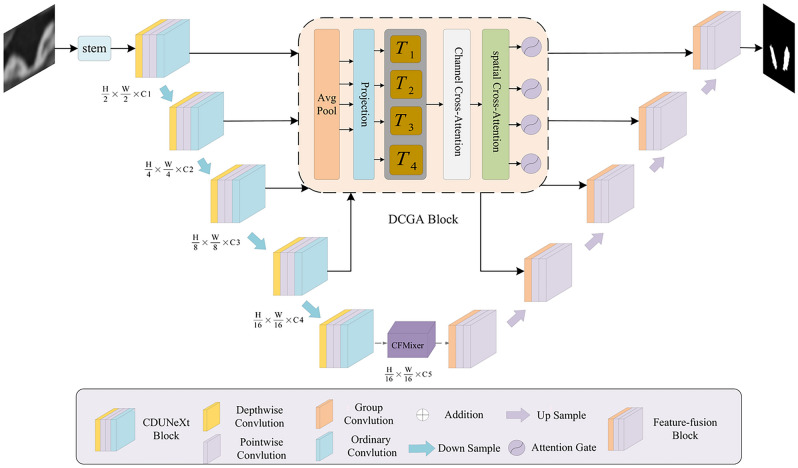
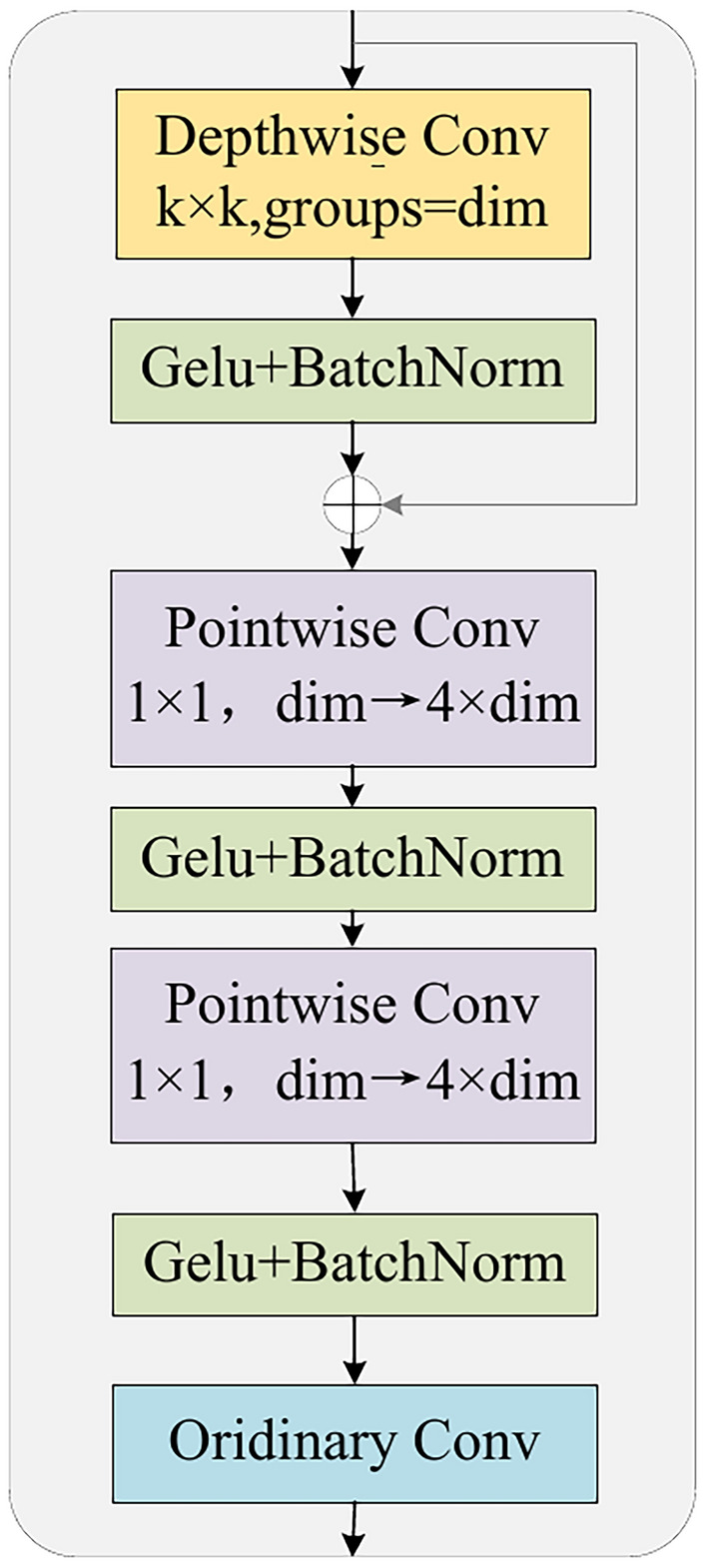
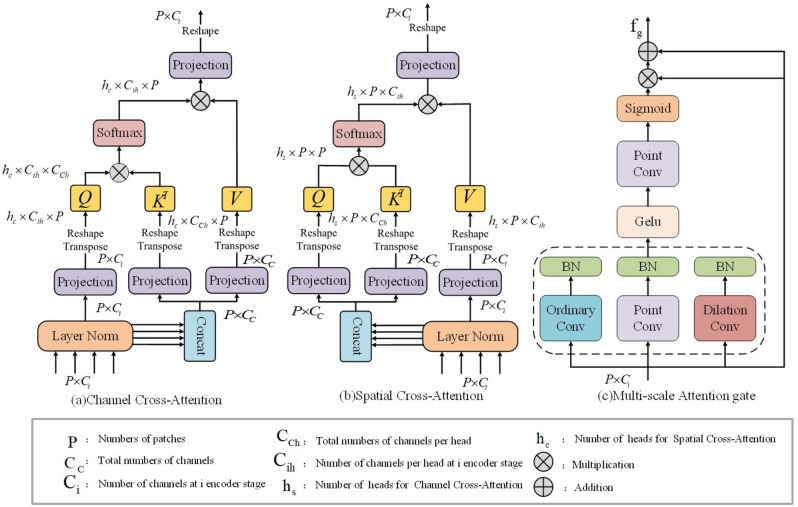
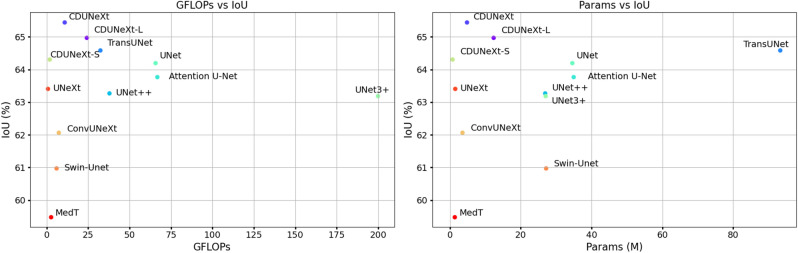
Ossification of the ligamentum flavum (OLF) is the main causative factor of spinal stenosis, but how to accurately and efficiently identify the ossification region is a clinical pain point and an urgent problem to be solved. Currently, we can only rely on the doctor's subjective experience for identification, with low efficiency and large error. In this study, a deep learning method is introduced for the first time into the diagnosis of ligamentum flavum ossificans, we proposed a lightweight, automatic and efficient method for identifying ossified regions, called CDUNeXt. By designing lightweight module structures, utilizing large-kernel convolutions to extracts the long-distance dependencies of different features of the image, and adopting dual-cross-gate-attention(DCGA) to sequentially capture the channel and spatial dependencies so as to fast and accurate segmentation while maintaining fewer parameters and lower complexity. Experiments show that CDUNeXt achieves the best segmentation performance with an optimal balance of lighter weights and less computational cost compared to existing methods. This work fills the gap in the application of deep learning techniques in the diagnosis of ligamentum flavum ossificans, contributes to the realization of lightweight medical image segmentation networks and lays the foundation for subsequent research.
Keywords: Deep learning; Dual cross gate attention; Large kernel convolution; Ossification of the ligamentum flavum.
© 2024. The Author(s).
Conflict of interest statement
Competing interests: The authors declare no competing interests.
Figures
References
-
- Inamasu, J., Guiot, B. H. & Sachs, D. C. Ossification of the posterior longitudinal ligament: An update on its biology, epidemiology, and natural history. Neurosurgery58(1027–39), 1027–1039 (2006). - PubMed
-
- Ikegawa, S. Updates on ossification of posterior longitudinal ligament. Genetic approach to the susceptibility genes for ossification of posterior longitudinal ligament of the spine (OPLL) and for its molecular pathogenesis. Clin. Calcium19, 1457–61 (2009). - PubMed
-
- Aizawa, T. et al. Thoracic myelopathy caused by ossification of the ligamentum flavum: Clinical features and surgical results in the Japanese population. J. Neurosurg-Spine.5, 514–519 (2006). - PubMed
-
- Sanghvi, A. V., Chhabra, H. S., Mascarenhas, A. A., Mittal, V. K. & Sangondimath, G. M. Thoracic myelopathy due to ossification of ligamentum flavum: A retrospective analysis of predictors of surgical outcome and factors affecting preoperative neurological status. Eur. Spine J.20, 205–215 (2011). - PMC - PubMed
-
- Lee, B. J., Park, J. H., Jeon, S. R., Rhim, S. C. & Roh, S. W. Clinically significant radiographic parameter for thoracic myelopathy caused by ossification of the ligamentum flavum. Eur. Spine J.28, 1846–1854 (2019). - PubMed
MeSH terms
Grants and funding
- 2022-PUMCH-A-121/National High Level Hospital Clinical Research Funding
- 2022-PUMCH-A-121/National High Level Hospital Clinical Research Funding
- 2022-PUMCH-A-121/National High Level Hospital Clinical Research Funding
- 2022-PUMCH-A-121/National High Level Hospital Clinical Research Funding
- 2022-PUMCH-A-121/National High Level Hospital Clinical Research Funding
- 2022-PUMCH-A-121/National High Level Hospital Clinical Research Funding
- 2022-I2M-C&T-B-035/CAMS Innovation Fund for Medical Sciences
- 2022-I2M-C&T-B-035/CAMS Innovation Fund for Medical Sciences
- 2022-I2M-C&T-B-035/CAMS Innovation Fund for Medical Sciences
- 2022-I2M-C&T-B-035/CAMS Innovation Fund for Medical Sciences
- 2022-I2M-C&T-B-035/CAMS Innovation Fund for Medical Sciences
- 2022-I2M-C&T-B-035/CAMS Innovation Fund for Medical Sciences
LinkOut - more resources
Full Text Sources
Miscellaneous
