


Comparison of the effectiveness of a serious game and pre-recorded lecture in diagnosis and treatment planning of oral lesions for dental students
- PMID: 39730901
- PMCID: PMC11680807
- DOI: 10.1038/s41598-024-83433-0
Comparison of the effectiveness of a serious game and pre-recorded lecture in diagnosis and treatment planning of oral lesions for dental students
Abstract
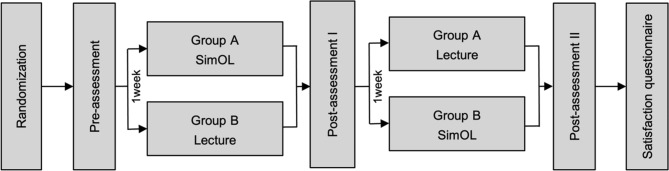
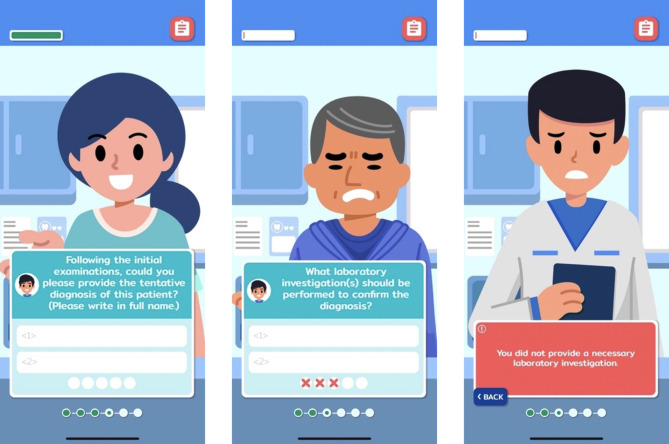
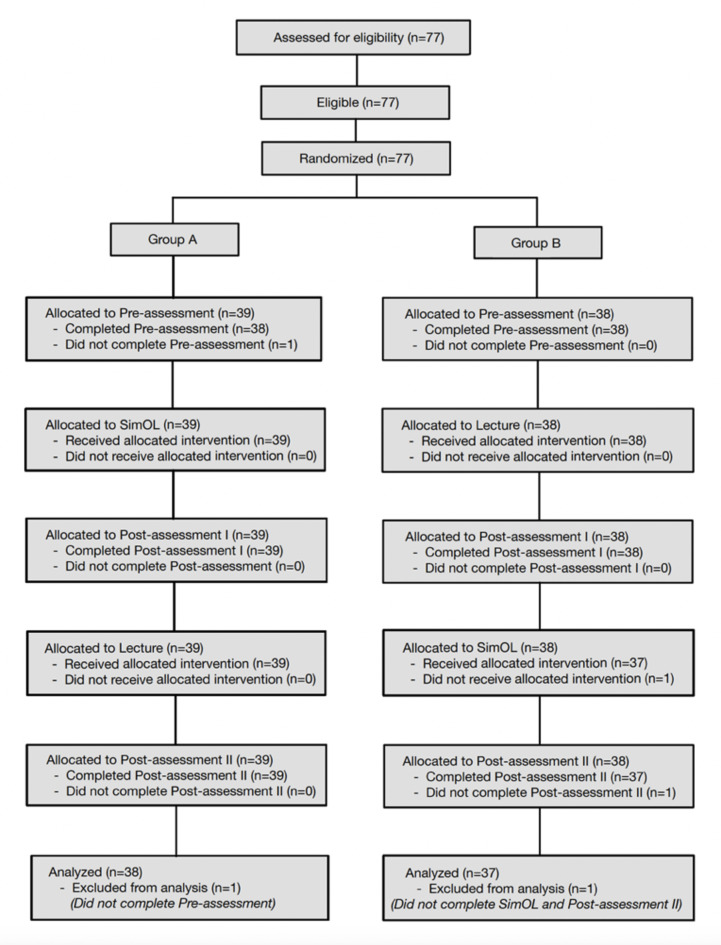
This research evaluated the effectiveness of an online simulation-based serious game as a learning tool in diagnosis and treatment planning for oral lesions (SimOL) in comparison to a pre-recorded lecture-based approach and to determine its appropriate integration into the undergraduate dental curriculum. A crossover randomized control trial was conducted with a cohort of 77 dental undergraduates. They were randomly assigned into two groups. Group A underwent SimOL followed by a pre-recorded passive lecture, whereas Group B experienced the converse learning sequence. Pre-assessment, Post-assessment I, and Post-assessment II were administered to evaluate knowledge improvement, along with a satisfaction questionnaire to gather learner perceptions. Data were analyzed using descriptive statistics, independent t-test, and repeated measures ANOVA with the Bonferroni post-hoc test. With two dropouts, this research included 75 students (Group A: n = 38 and Group B: n = 37). The results demonstrated statistically significant score differences across the three assessments in both groups. Significant improvements in assessment scores were observed after the initial instructional approaches in both groups (P < 0.001). However, the additional SimOL or lecture did not significantly enhance Post-assessment II scores in either group (P > 0.05). No statistically significant score differences were found between Group A and Group B in all assessments (P > 0.05). Participants held a positive perception of SimOL. These findings demonstrated the effectiveness of SimOL in enhancing knowledge related to the diagnosis and treatment planning of oral lesions at a level equivalent to that of a pre-recorded lecture, highlighting its potential as an interactive learning tool in dental education.
Keywords: Dental education; Interactive learning; Learning design; Serious game; Technology-enhanced learning.
© 2024. The Author(s).
Conflict of interest statement
Declarations. Competing interests: The authors declare no competing interests.
Figures
References
-
- Mighell, A. J. et al. Oral medicine for undergraduate dental students in the United Kingdom and Ireland—A curriculum. Eur. J. Dent. Educ.22 (4), e661–e668 (2018). - PubMed
-
- Bajonaid, A. M., Park, S. E. & Villa, A. Oral medicine education in predoctoral programs in US dental schools. J. Dent. Educ.86 (7), 846–852 (2022). - PubMed
-
- Friedman, C. P. The marvelous medical education machine or how medical education can be `unstuck’ in time. Med. Teach.22, 496–502 (2000). - PubMed
-
- Raes, A., Detienne, L., Windey, I. & Depaepe, F. A systematic literature review on synchronous hybrid learning: Gaps identified. Learn. Environ. Res.23 (3), 269–290 (2020).
Publication types
MeSH terms
LinkOut - more resources
Full Text Sources
