


Comparative transcriptome analysis and heterologous overexpression indicate that the ZjZOG gene may positively regulate the size of jujube fruit
- PMID: 39731028
- PMCID: PMC11681679
- DOI: 10.1186/s12870-024-05997-3
Comparative transcriptome analysis and heterologous overexpression indicate that the ZjZOG gene may positively regulate the size of jujube fruit
Abstract
Background: Fruit size is a crucial economic trait that impacts the quality of jujube (Ziziphus jujuba), however, research in this area remains limited. This study utilized two jujube cultivars with similar genetic backgrounds but differing fruit sizes to investigate the regulatory mechanisms affecting fruit size through cytological observations, transcriptome sequencing, and heterologous overexpression.
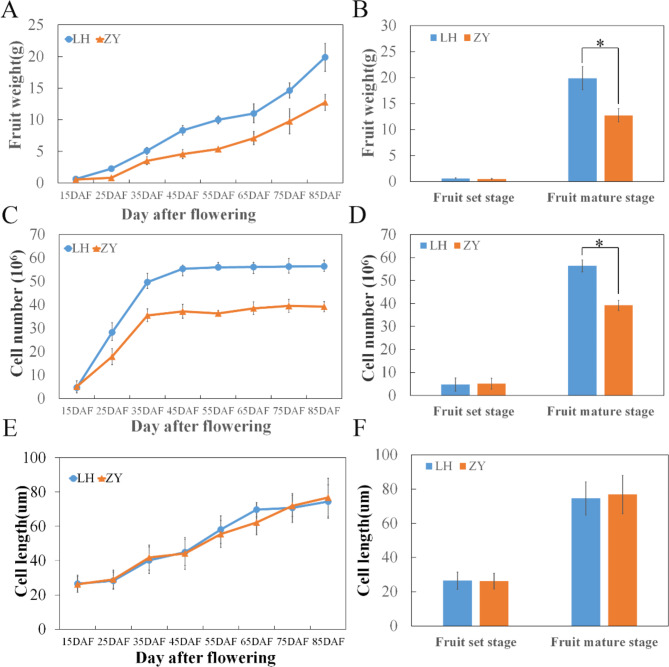
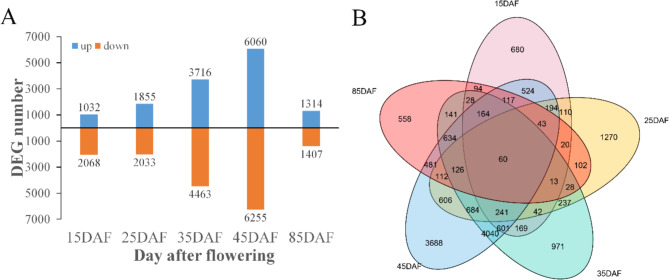
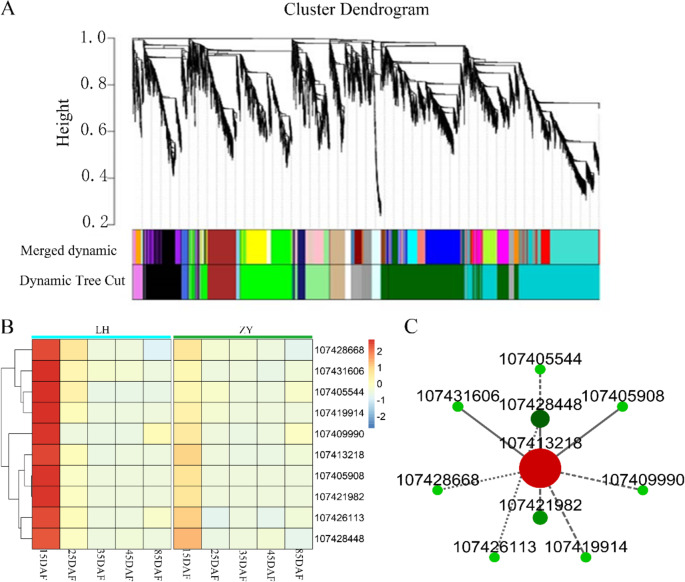
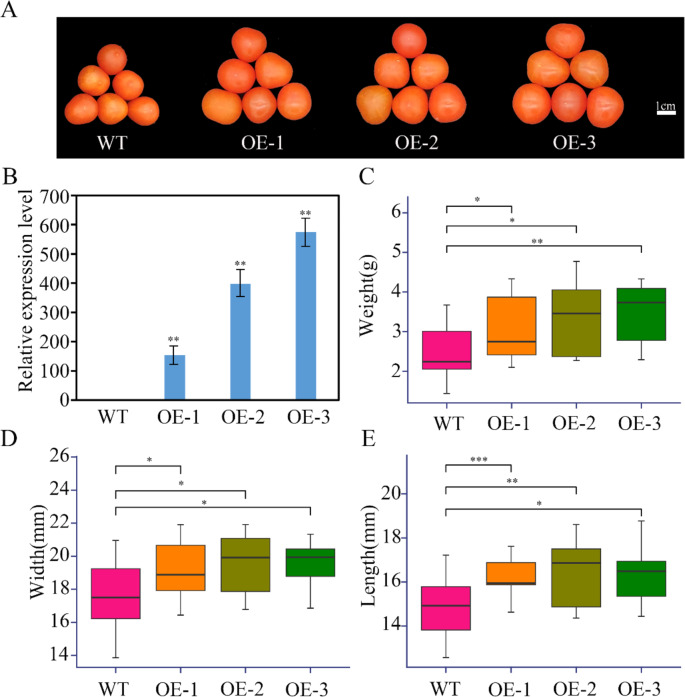
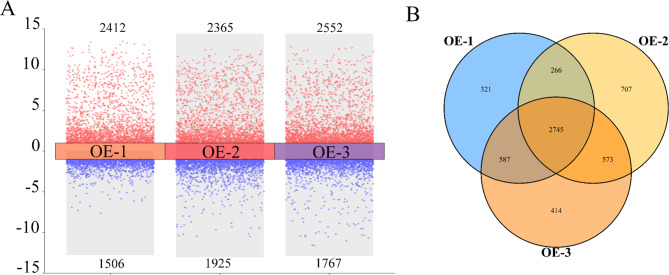
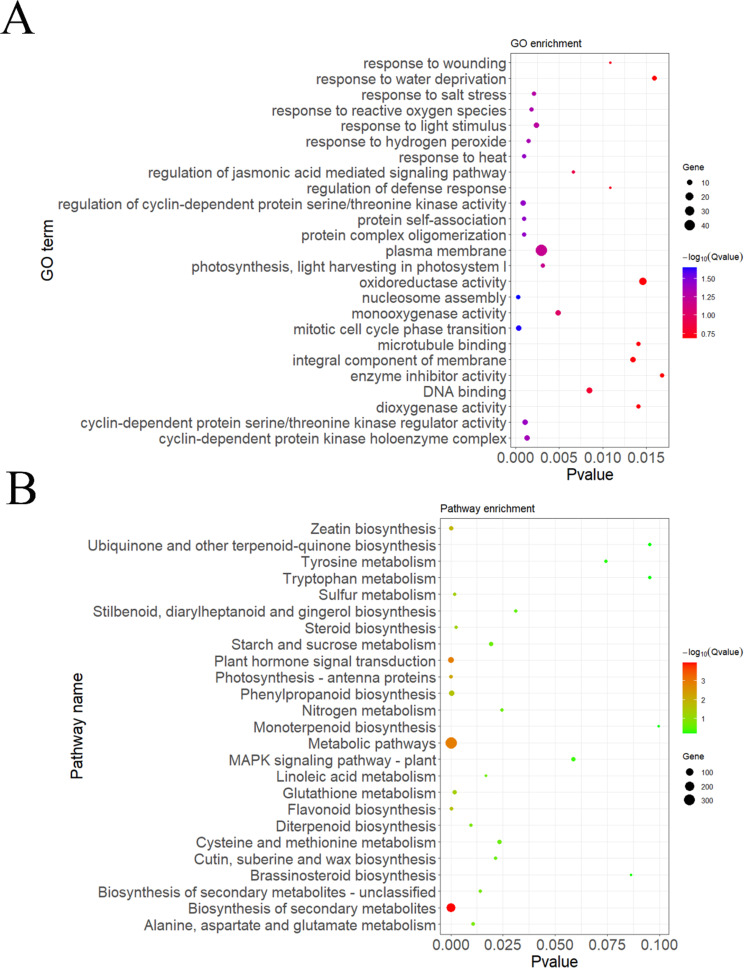
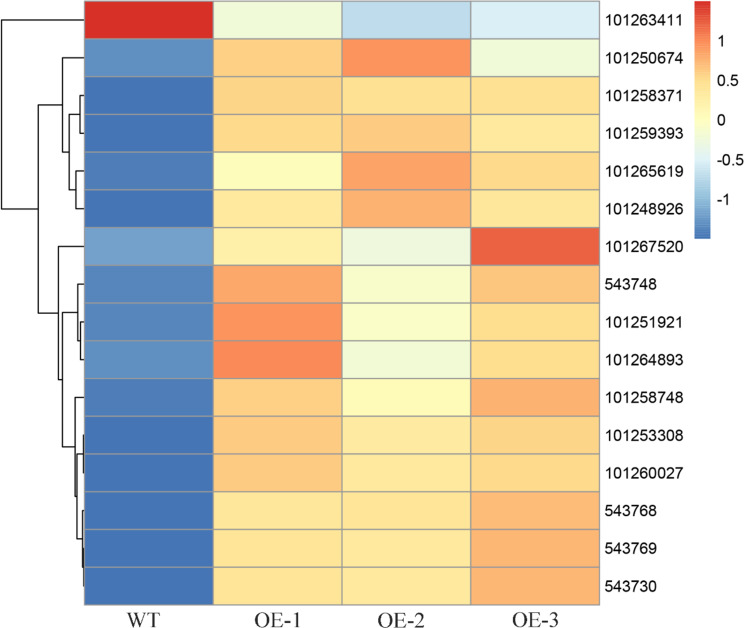
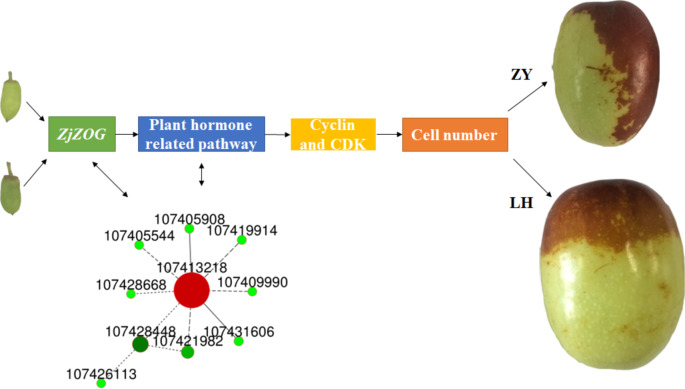
Results: The findings reveal that variations in mesocarp cell numbers during early fruit development significantly influence final fruit size. Comparative transcriptome sequencing identified 16,778 differentially expressed genes across five developmental stages. Co-expression network analysis identified 16 co-expression modules. KEGG enrichment analysis of these modules indicated the significant role of plant hormone-related pathways in fruit development. A detailed analysis of the 'sky blue' module revealed candidate genes associated with the regulation of mesocarp cells, leading to the construction of a regulatory network. Heterologous overexpression of the candidate gene ZjZOG in tomato confirmed its positive role in fruit size enhancement. Transcriptomic analysis of these overexpression lines further validated the regulatory network and identified reliable candidate genes for fruit size control.
Conclusion: This study provides valuable insights into the regulatory mechanisms of fruit size, which may facilitate the breeding of larger jujube cultivars.
Keywords: Ziziphus jujuba; ZjZOG; Fruit size; Transcriptomics.
© 2024. The Author(s).
Conflict of interest statement
Declarations. Ethics approval and consent to participate: Not applicable. Consent for publication: Not applicable. Competing interests: The authors declare no competing interests.
Figures
References
-
- Olmstead JW, Iezzoni AF, Whiting MD. Genotypic differences in sweet cherry fruit size are primarily a function of cell number. J Am Soc Hort Sci. 2007;132(5):697–703. 10.21273/JASHS.132.5.697.
-
- Li Y, Zhang Z, Sun G. Changes in cell number and cell size during pineapple (Ananas comosus L.) fruit development and their relationship with fruit size. Aust J Bot. 2010;58(8):673–8. 10.1071/BT10225.
-
- Hammami SB, Manrique T, Rapoport HF. Cultivar-based fruit size in olive depends on different tissue and cellular processes throughout growth. Sci Hort. 2011;130(2):445–51. 10.1016/j.scienta.2011.07.018.
Publication types
MeSH terms
Substances
Grants and funding
- 242102110278/Scientific and technological breakthrough in Henan Province
- NO.31800559/National Natural Science Foundation of China under Grant
- 2022YFD2200404/National Key Research and Development Program of China
- 2022XACX1100/National XA Science and Technology innovation project
- 'Guike'AB16380060/the grants of Science and Technology Major Project of Guangxi
LinkOut - more resources
Full Text Sources
