


Assessment of knowledge, attitudes, and practices regarding air pollution among traffic polices in Dhaka city, Bangladesh: a cross-sectional study
- PMID: 39731081
- PMCID: PMC11673892
- DOI: 10.1186/s12889-024-21086-4
Assessment of knowledge, attitudes, and practices regarding air pollution among traffic polices in Dhaka city, Bangladesh: a cross-sectional study
Abstract
Background: The increasing number of motor vehicles in Dhaka city is contributing to a rise in air pollution. Prolonged exposure to vehicle emissions has led to various health issues for everyone, but traffic policies might be particularly affected. This study aims to evaluate their knowledge, attitudes, and practices regarding air pollution, with the goal of raising awareness and promoting healthier practices to mitigate the adverse effects of pollution.
Methodology: A cross-sectional survey was carried out from January to March 2023 across five zones in Dhaka City, Bangladesh. Using a convenience sampling method, 401 male participants with a mean age = 39.24 ± 6.25 years were recruited. The survey employed a semi-structured questionnaire that covered informed consent, socio-demographic data, and included sections on knowledge (9 items), attitudes (6 items), and practices (7 items) related to air pollution and its health effects. Data analysis was conducted with Microsoft Excel (version 2019), SPSS (version 25.0), and STATA (version 15.0).
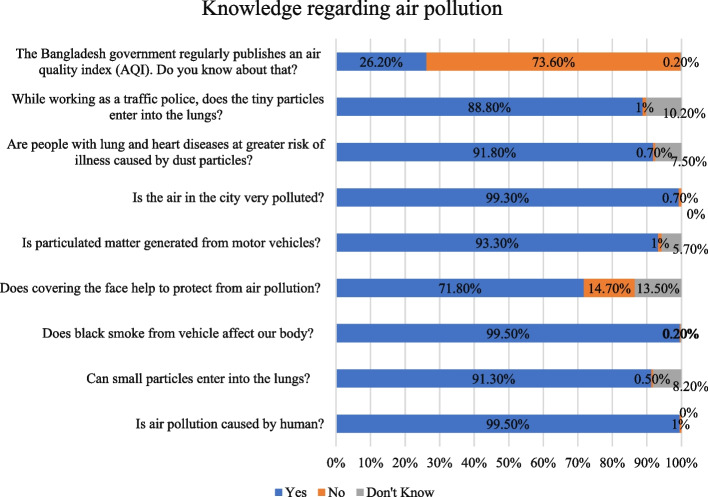
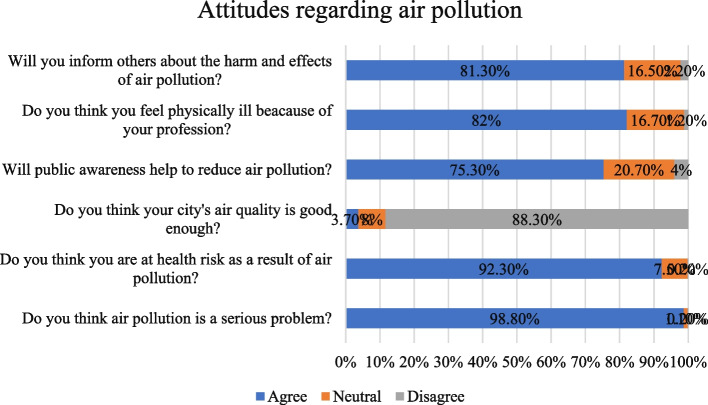
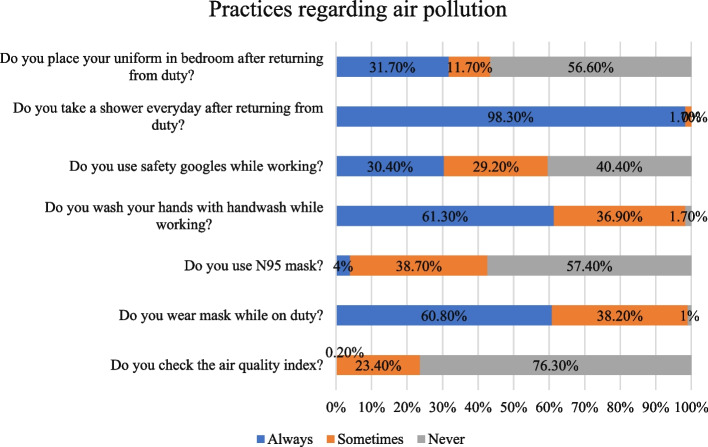
Result: The average scores for knowledge, attitudes, and practices were 7.62 out of 9, 11.06 out of 18, and 14.53 out of 21, respectively. Higher knowledge scores were associated with education (p < 0.001), higher monthly family income (p < 0.001), and having 15 or fewer years of work experience (p = 0.040). Attitudes were positively linked to education (p < 0.001), higher income (p < 0.001), working in the same area for over a year (p < 0.001), asthma (p = 0.042), cardiovascular diseases (p = 0.027), and coughing symptoms (p < 0.001). Practices were positively influenced by lower income (p = 0.031), absence of breathing problems/asthma (p = 0.023), and absence of coughing symptoms (p < 0.001).
Conclusion: This study suggests that education, income, and work experience are likely influential factors shaping knowledge, attitudes, and practices regarding air pollution. There appears to be a probable association between prolonged exposure to air pollution and an increased risk of respiratory, cardiovascular, and eye problems among Dhaka's traffic police. The authors anticipate that implementing stricter air quality regulations, promoting the use of protective gear, conducting regular health check-ups, and raising public awareness could significantly reduce these health risks.
Keywords: Air pollution; CVD; Optical problem; Respiratory problem; Traffic police.
© 2024. The Author(s).
Conflict of interest statement
Declarations. Ethics approval and consent to participate: The Biosafety, Biosecurity, and Ethical Clearance Committee of Jahangirnagar University, Savar, Dhaka-1342, Bangladesh, validated and approved the study protocol. The Helsinki Declaration along with additional rules relevant to human research were strictly adhered to in all study procedures. All respondents expressed their informed consent after receiving comprehensive details about the study’s objectives, methods, and confidentiality provisions. Numerical codes are being used for the anonymous gathering and interpreting of data. Consent for publication: Not applicable. Competing interests: The authors declare no competing interests.
Figures
References
-
- Ahmed S, Akter QS, Eva H, Bhowmik M. Effect of air pollution on FVC, FEV 1 and FEV 1 /FVC% in traffic police Shahriar Ahmed. J Bangladesh Soc Physiol. 2014;11(2):39–42. 10.3329/jbsp.v11i2.30647.
-
- WHO. “Air pollution.” Available: https://www.who.int/news-room/fact-sheets/detail/household-air-pollution....
-
- Khandker S, Ahmad A, Mcgushin A, Abelsohn A. Air Pollution in Bangladesh and Its Consequences. 2022. 10.21203/rs.3.rs-1184779/v1
-
- Mahmood SAI. Air pollution kills 15,000 Bangladeshis each year: The role of public administration and government’s integrity. J Public Adm Policy Res. 2011;3(5):129.
MeSH terms
Substances
LinkOut - more resources
Full Text Sources
Medical
