


The influence of obesogenic environments on diet self-efficacy and physical activity among healthcare workers: a multicenter study
- PMID: 39731154
- PMCID: PMC11681635
- DOI: 10.1186/s41043-024-00733-x
The influence of obesogenic environments on diet self-efficacy and physical activity among healthcare workers: a multicenter study
Abstract
Background: The aim of the study was to determine the level of dietary self-efficacy, physical activity and obesogenic environment in several districts of Istanbul and to examine the relationship between them.
Methods: In this cross-sectional study, a questionnaire was administered to primary health care workers working in three different districts of Istanbul. Sociodemographic questions, Dieting Self-Efficiency Scale (DSES), The Assessment of the Obesogenic Environment Scale (AOES), and International Physical Activity Questionnaire (IPAQ) were used in the survey. p < 0.05 was determined as the level of statistical significance.
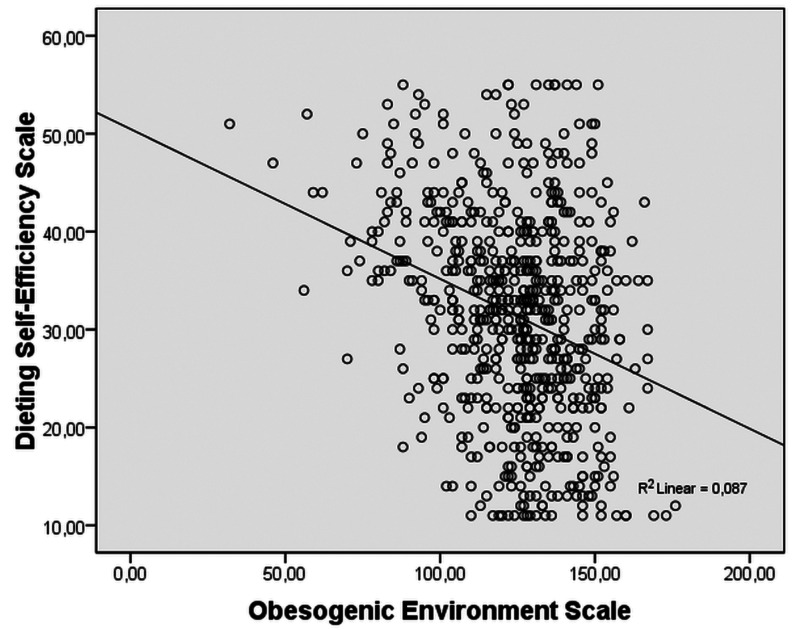
Results: A total of 639 healthcare workers responded to the study. The median age of the participants was 39.0 years (min-max: 21.0-67.0). Male and single participants had significantly higher DSES scores (p = 0.014, p = 0.016, respectively). Male participants and those with lower income and education level had significantly higher scores on the AOES (p = 0.025, p = 0.024 and p = 0.024, respectively). According to the IPAQ, 56.8% (n = 283) of the participants were minimally physically active, 29.7% (n = 148) were inactive and 13.5% (n = 67) were very active. Those who were physically minimally active and very active had significantly higher DSES scores and significantly lower AOES scores than those who were inactive (p < 0.001 and p = 0.011). There was a significant negative correlation between the DSES and AOES (r=-0.263, p < 0.001).
Conclusion: In this study, the evaluation of the concepts of dietary self-efficacy, physical activity level and obesogenic environment in healthcare professionals, who can be role models in the society, may contribute to the studies and intervention strategies for the whole society.
Keywords: Diet; Healthcare workers; Obesogenic environment; Physical activity; Self-efficacy.
© 2024. The Author(s).
Conflict of interest statement
Declarations. Ethical approval and consent to participate: The authors assert that all procedures contributing to this work comply with the ethical standards of the relevant national and institutional committees on human experimentation and with the Helsinki Declaration of 1975, as revised in 2008. Ethics committee approval was obtained from Istanbul Medipol University (date: 18.04.2024, decision number: 408). Informed consent to participate was obtained from all of the participants. Consent for publication: Not applicable. Competing interests: The authors declare no competing interests.
Figures
References
-
- World Health Organization. Ten threats to global health in 2019. Available from: https://www.who.int/news-room/spotlight/ten-threats-to-global-health-in-...
-
- World Health Organization. Obesity and overweight. Available from: https://www.who.int/news-room/fact-sheets/detail/obesity-and-overweight
-
- Şahin M, Şahin U, Calapoğlu M. Obezitenin Genetiği. Med J SDU. 2023;30(4):754–62. - DOI
Publication types
MeSH terms
LinkOut - more resources
Full Text Sources
Medical
