Contribution of domestic animals' feces to the occurrence of diarrhoea among children aged 6-48 months in Sidama region, Ethiopia: a laboratory-based matched case-control study
- PMID: 39732476
- PMCID: PMC11683945
- DOI: 10.1136/bmjgh-2024-016694
Contribution of domestic animals' feces to the occurrence of diarrhoea among children aged 6-48 months in Sidama region, Ethiopia: a laboratory-based matched case-control study
Abstract
Background: In developing countries, due to improper management of domestic animals' exposures, under-five (U5) children have been affected by diarrhoea. However, there is no evidence that shows the presence of diarrhoea-causing pathogens in the faeces of U5 children and animals residing in the same houses in the Sidama region, Ethiopia.
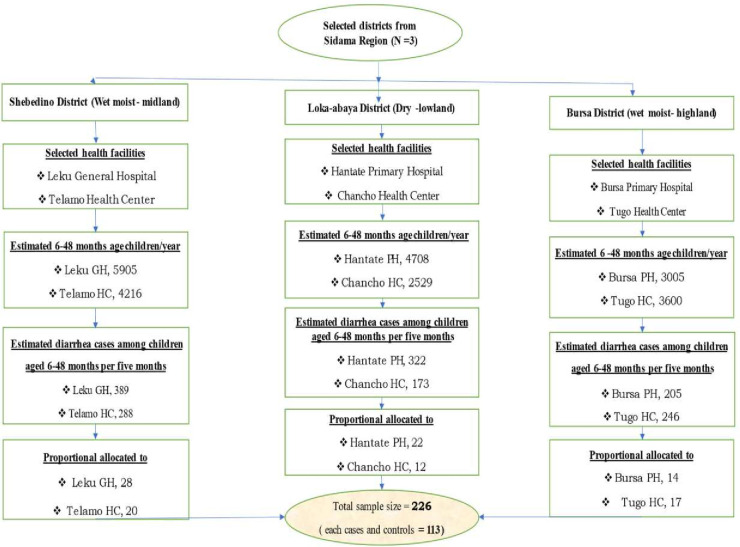
Methods: A laboratory-based matched case-control study was conducted on children aged 6-48 months in the Sidama region of Ethiopia from February to June 2023. The study enrolled 113 cases, and 113 controls visited the selected health facilities during the study period. Faecal specimens from the case and control children and domestic animals were collected using transport media. Data were collected at children-residing homes by interviewing caretakers using the KoboCollect application. The presence of diarrhoea-causing pathogens (Campylobacteria, Escherichia coli, non-typhoidal salmonella, Shigella and Cryptosporidium) was detected using culture media, biochemical tests, gram stain, catalase and oxidase tests. The diarrhoea risk factors were identified using conditional logistic regressions and the random forest method using R.4.3.2.
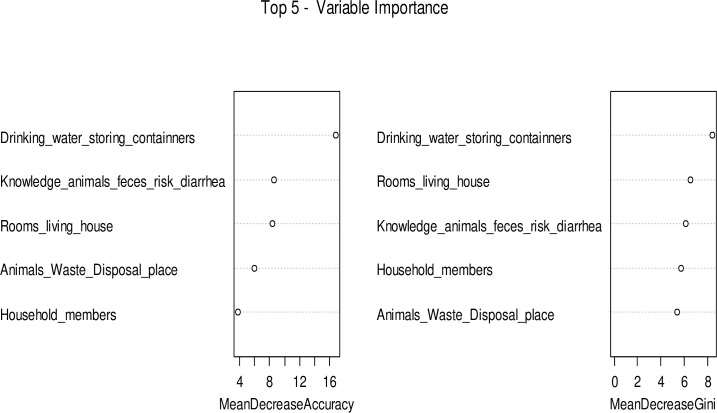
Results: Of the faecal specimens diagnosed, 250 (64.1%) tested positive for one or more pathogens. Faecal specimens from chickens tested more positive for E. coli and Campylobacteria. Of the pairs of faecal specimens taken from case children and animals living in the same house, 104 (92%) tested positive for one or more similar pathogens. Among the factors, disposing of animal waste in an open field, storing drinking water in uncovered containers, caretakers poor knowledge about the animals' faeces as a risk factor for diarrhoea and ≤2 rooms in the living house were significantly associated with diarrhoea.
Conclusion: The finding shows that diarrhoea-causing pathogens are transmitted from domestic animals' faeces to children aged 6-48 months in the Sidama region. The improper management of animals' faeces and related factors were the predominant risk factors for diarrhoea.
Keywords: Child health; Environmental health; Global Health; Hygiene; Public Health.
© Author(s) (or their employer(s)) 2024. Re-use permitted under CC BY-NC. No commercial re-use. See rights and permissions. Published by BMJ Group.
Conflict of interest statement
Competing interests: None declared.
Figures
References
-
- World Health Organization Diarrhoea disease. 2024. [15-Feb-2024]. https://www.who.int/news-room/fact-sheets/detail/diarrhoeal-disease Available. Accessed.
-
- UNICEF . UNICEF; 2021. Diarrhoea - unicef data.https://ourworldindata.org/childhood-diarrheal-diseases Available.
-
- Halemariam D. Sidama Region Health Bureau; 2022. Regional health profile and under-five diarrheal disease report.
MeSH terms
LinkOut - more resources
Full Text Sources
Medical