


Evaluation of population immunity against SARS-CoV-2 variants, EG.5.1, FY.4, BA.2.86, JN.1, JN.1.4, and KP.3.1.1 using samples from two health demographic surveillance systems in Kenya
- PMID: 39732637
- PMCID: PMC11682625
- DOI: 10.1186/s12879-024-10367-3
Evaluation of population immunity against SARS-CoV-2 variants, EG.5.1, FY.4, BA.2.86, JN.1, JN.1.4, and KP.3.1.1 using samples from two health demographic surveillance systems in Kenya
Abstract
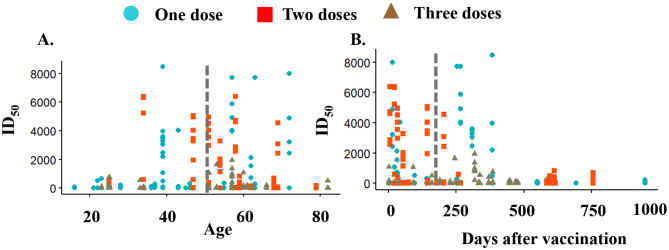
Increased immune evasion by emerging and highly mutated SARS-CoV-2 variants is a key challenge to the control of COVID-19. The majority of these mutations mainly target the spike protein, allowing the new variants to escape the immunity previously raised by vaccination and/or infection by earlier variants of SARS-CoV-2. In this study, we investigated the neutralizing capacity of antibodies against emerging variants of interest circulating between May 2023 and October 2024 using sera from representative samples of the Kenyan population. From our genomics data, we identified the most prevalent Kenyan and global variants and performed pseudoviruses neutralization assays with the most recent SARS-CoV-2 variants. Our data show that antibodies from individuals in the general population in Kenya were less effective against the recent prevalent SARS-CoV-2 omicron variants (i.e. EG.5.1, FY.4, BA.2.86, JN.1, JN.1.4, and KP.3.1.1) compared to the ancestral wildtype strain. Although there was increased neutralization following multiple doses of vaccine, antibodies from > 40% of the vaccinated individuals did not neutralize the omicron variants, suggesting that individuals were susceptible to infection by these variants.
Keywords: Neutralization; Population immunity; SARS-CoV-2 variants; Vaccination.
© 2024. The Author(s).
Conflict of interest statement
Declarations. Ethical approval: This study was approved by the Scientific and Ethics Review Unit (SERU) of the Kenya Medical Research Institute (SERU ID: 4085 and 4807). Written informed consent was obtained from participants for the collection, storage, and further use of their sample sets in the research. Consent for publication: Not applicable. Competing interests: The authors declare no competing interests.
Figures


References
MeSH terms
Substances
Supplementary concepts
Grants and funding
LinkOut - more resources
Full Text Sources
Medical
Miscellaneous
