


Ultrasound characteristics and risk factors of female patients with pelvic varicose veins and concomitant chronic pelvic pain
- PMID: 39733829
- PMCID: PMC12014293
- DOI: 10.1016/j.jvsv.2024.102165
Ultrasound characteristics and risk factors of female patients with pelvic varicose veins and concomitant chronic pelvic pain
Abstract
Objective: The study aims to elucidate clinical and ultrasonographic characteristics of female patients diagnosed with pelvic varicose veins (PVVs) and to assess potential risk factors associated with incidences of chronic pelvic pain (CPP) in this population.
Methods: Clinical and ultrasound data were retrospectively collected from female patients with PVVs at Beijing Shijitan Hospital between December 2017 and October 2022. Patient cohorts were divided into two groups based on whether they had been experiencing non-periodic pelvic pain over 6 months, consistent with the symptoms of CPP. Comparative analyses were conducted between the two groups, utilizing both univariate and multivariate logistic regression methodologies to identify risk factors for CPP.
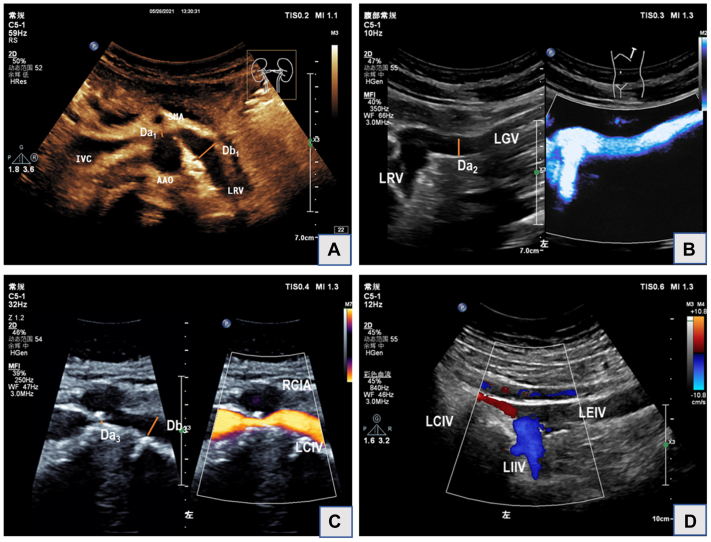
Results: The study included a total of 236 patients: 89 patients in the CPP group and 147 patients in the non-CPP group. No statistically significant differences were found between the two groups with regard to demographic parameters including age, height, weight, age of menarche, and number of pregnancies and births. However, the CPP group showed a higher menstrual volume score and a greater incidence of varicose veins, coupled with a lower body mass index. Transabdominal ultrasonography revealed that patients with CPP had a significantly larger diameter in the left ovarian vein (LOV) (6.2 ± 1.9 mm vs 5.0 ±2.3 mm; P < .05), and a higher prevalence of left internal iliac vein incompetence (21.3% vs 8.8%). Moreover, positive rates for LOV incompetence were markedly higher (94.4% vs 23.1%; P < .05), even in the absence of left common iliac vein compression and nutcracker phenomenon. Multivariate logistic regression analysis discerned that the LOV reflux (odds ratio [OR], 9.102; 95% confidence interval [CI], 4.578-18.099; P < .05), lower body mass index (OR, 0.646; 95% CI, 0.502-0.83; P < .05), elevated menstrual bleeding (OR, 1.182; 95% CI, 1.131-1.234; P < .05), and concomitant varicose veins (OR, 3.140; 95% CI, 1.067-9.273; P < .05) are independent risk factors for the manifestations of CPP in our patient cohorts.
Conclusions: Ultrasonography serves as an efficacious modality for evaluating abdomino-pelvic vascular pathology in patients with PVVs. Notably, LOV and internal iliac vein incompetence emerge as independent risk factors for CPP, thus offering a pivotal point of reference for clinical diagnosis and therapeutic management of PVVs.
Keywords: Chronic pelvic pain; Pelvic venous reflux; Risk factor; Ultrasound.
Copyright © 2024 The Author(s). Published by Elsevier Inc. All rights reserved.
Conflict of interest statement
Disclosures None.
Figures
References
-
- Lamvu G., Carrillo J., Ouyang C., Rapkin A. Chronic pelvic pain in women: a review. JAMA. 2021;325:2381–2391. - PubMed
-
- Richet M.A. Chamerot Libraire Editeur; 1875. Traité pratique d'anatomie médico-chirurgicale.
-
- Bora A., Avcu S., Arslan H., Adali E., Bulut M.D. The relation between pelvic varicose veins and lower extremity venous insufficiency in women with chronic pelvic pain. J Belg Radiol. 2012;95:215–221. - PubMed
MeSH terms
LinkOut - more resources
Full Text Sources
Medical
