


Bibliometrics of trends in global research on the roles of stem cells in myocardial fibrosis therapy
- PMID: 39734477
- PMCID: PMC11669986
- DOI: 10.4252/wjsc.v16.i12.1086
Bibliometrics of trends in global research on the roles of stem cells in myocardial fibrosis therapy
Abstract
Background: Myocardial fibrosis, a condition linked to several cardiovascular diseases, is associated with a poor prognosis. Stem cell therapy has emerged as a potential treatment option and the application of stem cell therapy has been studied extensively. However, a comprehensive bibliometric analysis of these studies has yet to be conducted.
Aim: To map thematic trends, analyze research hotspots, and project future directions of stem cell-based myocardial fibrosis therapy.
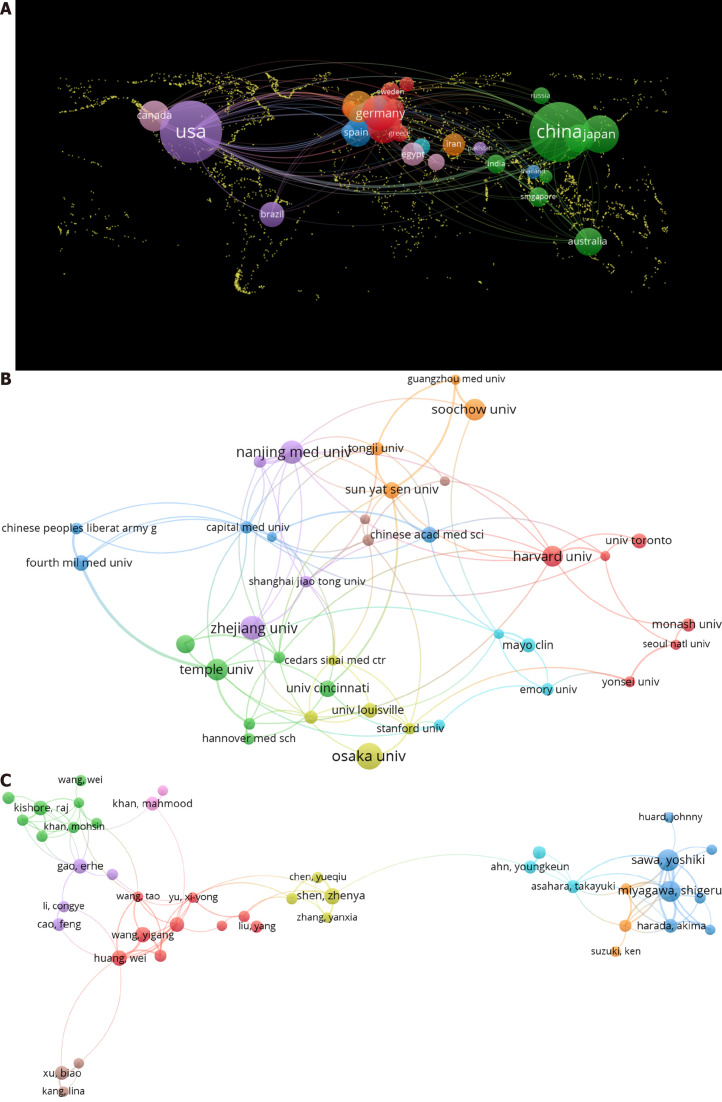
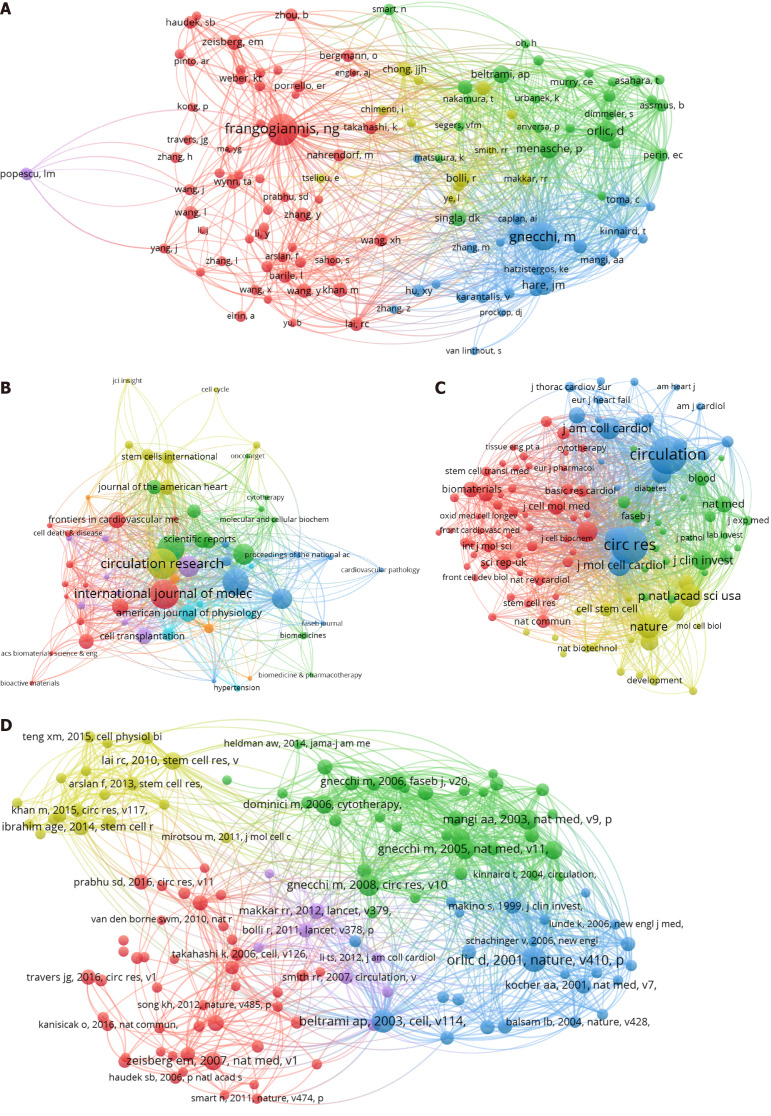
Methods: We conducted a bibliometric and visual analysis of studies in the Web of Science Core Collection using VOSviewer and Microsoft Excel. The dataset included 1510 articles published between 2001 and 2024. Countries, organizations, authors, references, keywords, and co-citation networks were examined to identify evolving research trends.
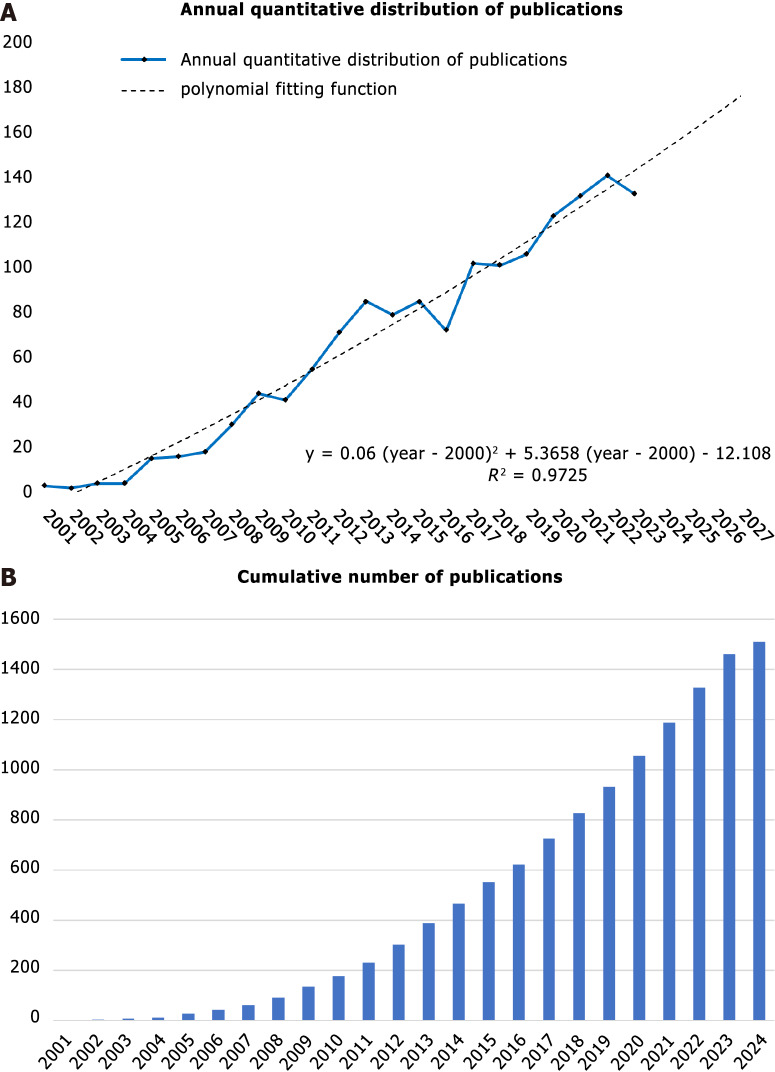
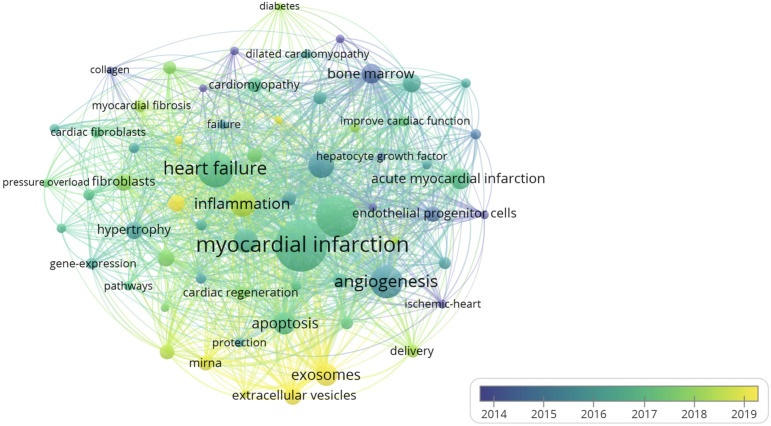
Results: Our findings revealed a steady increase in the number of publications, with a projected increase to over 200 publications annually by 2030. Initial research focused on stem cell-based therapy, particularly for myocardial infarction and heart failure. More recently, there has been a shift toward cell-free therapy, involving extracellular vesicles, exosomes, and microRNAs. Key research topics include angiogenesis, inflammation, apoptosis, autophagy, and oxidative stress.
Conclusion: This analysis highlights the evolution of stem cell therapies for myocardial fibrosis, with emerging interest in cell-free approaches. These results are expected to guide future scientific exploration and decision-making.
Keywords: Bibliometrics; Cardiovascular diseases; Myocardial fibrosis; Stem cells; VOSviewer.
©The Author(s) 2024. Published by Baishideng Publishing Group Inc. All rights reserved.
Conflict of interest statement
Conflict-of-interest statement: All the authors report no relevant conflicts of interest for this article.
Figures
References
-
- Perk J. The 2016 version of the European Guidelines on Cardiovascular Prevention. Eur Heart J Cardiovasc Pharmacother. 2017;3:9–10. - PubMed
-
- Roth GA, Mensah GA, Johnson CO, Addolorato G, Ammirati E, Baddour LM, Barengo NC, Beaton AZ, Benjamin EJ, Benziger CP, Bonny A, Brauer M, Brodmann M, Cahill TJ, Carapetis J, Catapano AL, Chugh SS, Cooper LT, Coresh J, Criqui M, DeCleene N, Eagle KA, Emmons-Bell S, Feigin VL, Fernández-Solà J, Fowkes G, Gakidou E, Grundy SM, He FJ, Howard G, Hu F, Inker L, Karthikeyan G, Kassebaum N, Koroshetz W, Lavie C, Lloyd-Jones D, Lu HS, Mirijello A, Temesgen AM, Mokdad A, Moran AE, Muntner P, Narula J, Neal B, Ntsekhe M, Moraes de Oliveira G, Otto C, Owolabi M, Pratt M, Rajagopalan S, Reitsma M, Ribeiro ALP, Rigotti N, Rodgers A, Sable C, Shakil S, Sliwa-Hahnle K, Stark B, Sundström J, Timpel P, Tleyjeh IM, Valgimigli M, Vos T, Whelton PK, Yacoub M, Zuhlke L, Murray C, Fuster V GBD-NHLBI-JACC Global Burden of Cardiovascular Diseases Writing Group. Global Burden of Cardiovascular Diseases and Risk Factors, 1990-2019: Update From the GBD 2019 Study. J Am Coll Cardiol. 2020;76:2982–3021. - PMC - PubMed
-
- Liu C, Du L, Wang S, Kong L, Zhang S, Li S, Zhang W, Du G. Differences in the prevention and control of cardiovascular and cerebrovascular diseases. Pharmacol Res. 2021;170:105737. - PubMed
LinkOut - more resources
Full Text Sources
