


Lotus seed (Nelumbinis semen) extract: anticancer potential and chemoprofiling by in vitro, in silico and GC-MS studies
- PMID: 39734578
- PMCID: PMC11671802
- DOI: 10.3389/fchem.2024.1505272
Lotus seed (Nelumbinis semen) extract: anticancer potential and chemoprofiling by in vitro, in silico and GC-MS studies
Abstract
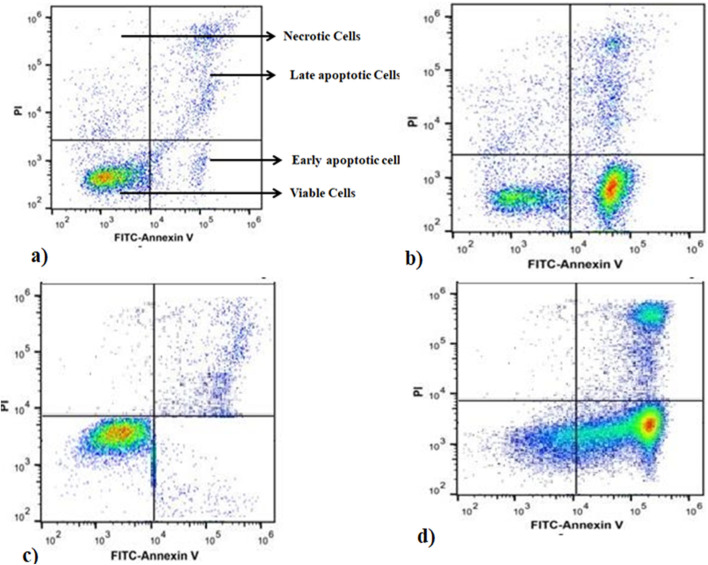
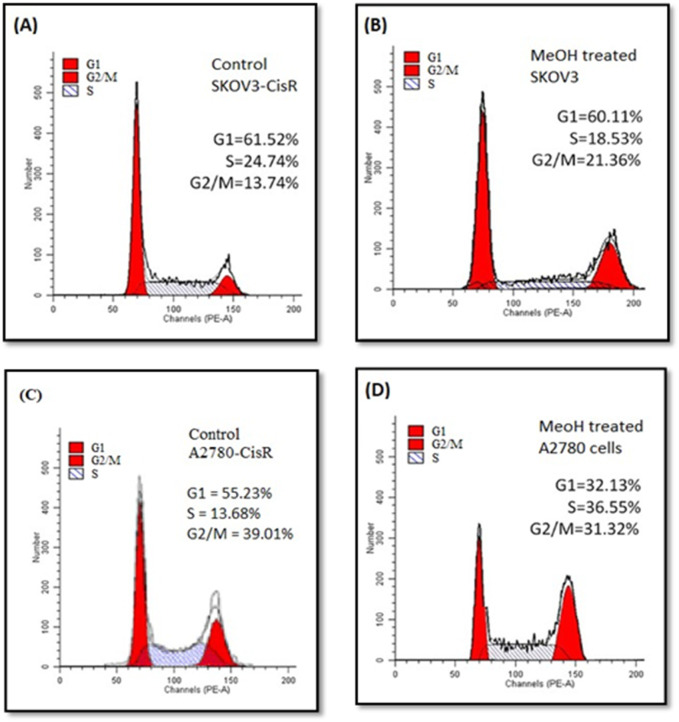
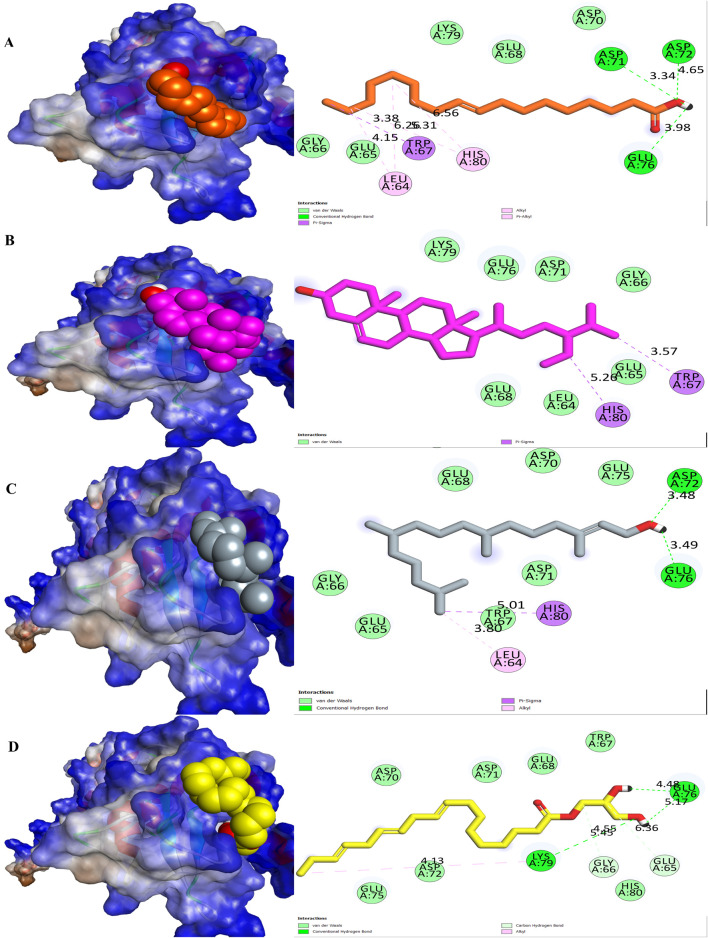
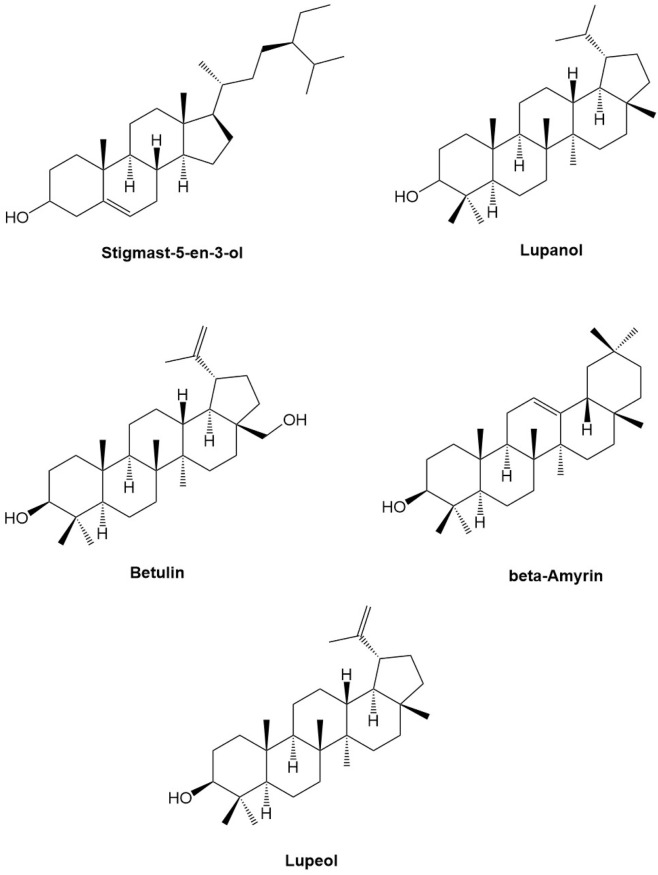
Lotus seeds, also known as Nelumbinis semen, has been utilized for over 7,000 years as vegetable, functional food and medicine. In this study, we primarily investigated the anticancer effects of lotus seed extracts, particularly of the methanolic extract (MELS) on cell proliferation inhibition, apoptosis induction and cell cycle arrest in ovarian cancer cell lines. Further, we studied the phytochemical composition of the MELS by gas chromatography-mass spectrometry (GC-MS) analysis. Additionally, molecular docking was performed in order to substantiate the in vitro anticancer effect by in silico inhibitory study of human survivin protein. Our in vitro study demonstrated significant inhibition of SKOV3 (IC50: 79.73 ± 0.91), A2780 (IC50: 100.18 ± 2.42), SKOV3-CisR (IC50: 115.87 ± 2.2) and A2780-CisR (IC50: 138.86 ± 2.46) cells by MELS, compared to acetone, petroleum ether, n-hexane extracts, and the standard drug, cisplatin. Furthermore, MELS resulted in a substantial increase in apoptosis cell count to 78% in A2780-CisR cells and 82% in SKOV3-CisR cells, whereas a significant reduction in the G1 and G2/M phases of cells treated with MELS when compared to the control group. To identify the potential phytocompounds present in the MELS, we conducted GC-MS analysis, which led to the identification of 14 compounds. Molecular docking analysis revealed that oleic acid, stigmast-5-en-3-ol, phytol and glyceryl linolenate exhibited remarkable binding affinities of -6.1, -5.9, -5.8 and -5.6 kcal/mol, respectively against survivin. Our findings suggest that certain phytochemicals presented above found in MELS may have therapeutic potential for management of ovarian cancer.
Keywords: GC-MS; anticancer; chemoprofiling; lotus seeds; methanolic extract; molecular docking; phytochemicals.
Copyright © 2024 Mallela, Rudrapal, Prasanth, Pasala, Bendale, Bhattacharya, Aldosari and Khan.
Conflict of interest statement
The authors declare that the research was conducted in the absence of any commercial or financial relationships that could be construed as a potential conflict of interest.
Figures
Similar articles
-
LC-MS/MS, GC-MS and molecular docking analysis for phytochemical fingerprint and bioactivity of Beta vulgaris L.Sci Rep. 2024 Mar 29;14(1):7491. doi: 10.1038/s41598-024-58338-7. Sci Rep. 2024. PMID: 38553576 Free PMC article.
-
Phytochemical profiling and anticancer potential of gardenia latifolia extracts against arsenic trioxide induced liver fibrosis in rat model.Front Pharmacol. 2024 Aug 30;15:1389024. doi: 10.3389/fphar.2024.1389024. eCollection 2024. Front Pharmacol. 2024. PMID: 39281276 Free PMC article.
-
Metabolomics and Anticancer Potential of the Aerial Parts of Dryopteris ramosa against Cancerous Cell Lines Assisted with Advanced Computational Approaches.Curr Pharm Des. 2025;31(10):797-820. doi: 10.2174/0113816128349549241025150229. Curr Pharm Des. 2025. PMID: 39698882
-
In-vitro Antioxidant, In-vitro and In-silico Ovarian Anticancer Activity (Ovarian Cancer Cells-PA1) and Phytochemical Analysis of Cissus quadrangularis L. Ethanolic Extract.Comb Chem High Throughput Screen. 2024;27(10):1504-1512. doi: 10.2174/0113862073255558230926114444. Comb Chem High Throughput Screen. 2024. PMID: 37818574
-
Low expression of FXYD5 reverses the cisplatin resistance of epithelial ovarian cancer cells.Histol Histopathol. 2021 May;36(5):535-545. doi: 10.14670/HH-18-310. Epub 2021 Feb 11. Histol Histopathol. 2021. PMID: 33570156
Cited by
-
Occurrence and Diversity of Fungi and Their Mycotoxin Production in Common Edible and Medicinal Substances from China.J Fungi (Basel). 2025 Mar 10;11(3):212. doi: 10.3390/jof11030212. J Fungi (Basel). 2025. PMID: 40137250 Free PMC article.
References
-
- Altameme H. J., Hameed I. H., Idan S. A., Hadi M. Y. (2015). Biochemical analysis of Origanum vulgare seeds by fourier-transform infrared (FT-IR) spectroscopy and gas chromatography-mass spectrometry (GC-MS). J. Pharmacogn. Phytotherapy. 10.5897/jpp2015.0362 - DOI
-
- Archana V. P., Armaković S. J., Armaković S., Celik I., Bhagyasree J. B., Babu K. D., et al. (2023). Exploring the structural, photophysical and optoelectronic properties of a diaryl heptanoid curcumin derivative and identification as a SARS-CoV-2 inhibitor. J. Mol. Struct. 1281, 135110. 10.1016/j.molstruc.2023.135110 - DOI - PMC - PubMed
-
- Baru Venkata R., Prasanth D. S. N. B. K., Pasala P. K., Panda S. P., Tatipamula V. B., Mulukuri S., et al. (2023). Utilizing Andrographis paniculata leaves and roots by effective usage of the bioactive andrographolide and its nanodelivery: investigation of antikindling and antioxidant activities through in silico and in vivo studies. Front. Nutr. 10, 1185236. 10.3389/fnut.2023.1185236 - DOI - PMC - PubMed
LinkOut - more resources
Full Text Sources
Research Materials
Miscellaneous
