


Efficacy of Bisphosphonates in Reducing Fracture Risk Among Postmenopausal Women With Osteoporosis
- PMID: 39735152
- PMCID: PMC11671770
- DOI: 10.7759/cureus.74542
Efficacy of Bisphosphonates in Reducing Fracture Risk Among Postmenopausal Women With Osteoporosis
Abstract
Background: Postmenopausal women are often affected by osteoporosis, a disorder that lowers bone density, increases the risk of fractures, and has a major negative influence on quality of life.
Objective: This study aimed to assess the efficacy of bisphosphonates in reducing fracture risk among postmenopausal women with osteoporosis by analyzing their impact across various fracture sites, treatment durations, and patient subgroups.
Methodology: A retrospective cohort research was conducted between January 2021 and December 2022 at Hayatabad Medical Complex (HMC), Peshawar. Women 50 years of age and older who had been diagnosed with osteoporosis (BMD T-score < -2.5) and receiving bisphosphonates for at least a year were included in the research. We gathered information on treatment adherence, fracture history, and demographics. SPSS version 25 was used to conduct statistical studies, such as logistic regression and paired t-tests.
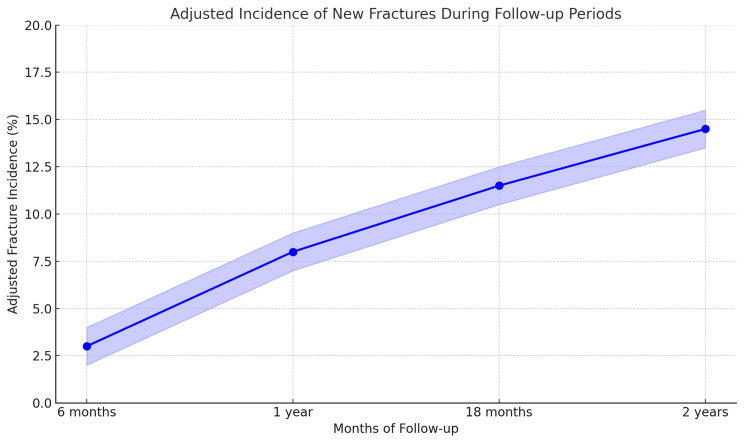
Results: A total of 323 participants were included, with a mean age of 65.40 ± 8.20 years. The incidence of new fractures decreased significantly from 121 patients (37.48%) before therapy to 48 patients (14.85%) post-therapy (p < 0.0001), demonstrating the efficacy of bisphosphonates in fracture prevention. Notably, the most common fracture types were vertebral fractures in 49 patients (15.18%) and hip fractures in 42 patients (12.99%). Logistic regression analysis indicated that age (OR 1.05, 95% CI: 1.02 - 1.09) and baseline BMD T-score (OR 0.78, 95% CI: 0.67 - 0.90) were significantly associated with fracture risk reduction, highlighting the importance of these factors in treatment outcomes.
Conclusion: The significance of bisphosphonates in clinical therapy is highlighted by their ability to successfully lower fracture risk in postmenopausal women with osteoporosis.
Keywords: bisphosphonates; bone mineral density; fracture risk; osteoporosis; postmenopausal women.
Copyright © 2024, Ullah et al.
Conflict of interest statement
Human subjects: Consent for treatment and open access publication was obtained or waived by all participants in this study. Ethics Review Committee of Hayatabad Medical Complex (HMC), Peshawar issued approval 216/OD/HMC/2020. This is to certify that ethical approval (Approval Number: 216/OD/HMC/2020) has been granted for the research project titled "Efficacy of Bisphosphonates in Reducing Fracture Risk Among Postmenopausal Women with Osteoporosis". The approval confirms adherence to all required ethical standards for conducting this study. Animal subjects: All authors have confirmed that this study did not involve animal subjects or tissue. Conflicts of interest: In compliance with the ICMJE uniform disclosure form, all authors declare the following: Payment/services info: All authors have declared that no financial support was received from any organization for the submitted work. Financial relationships: All authors have declared that they have no financial relationships at present or within the previous three years with any organizations that might have an interest in the submitted work. Other relationships: All authors have declared that there are no other relationships or activities that could appear to have influenced the submitted work.
Figures
References
-
- Postmenopausal osteoporosis. Eastell R, O'Neill TW, Hofbauer LC, Langdahl B, Reid IR, Gold DT, Cummings SR. Nat Rev Dis Primers. 2016;2:16069. - PubMed
-
- Hip fractures among the elderly: causes, consequences and control. Marks R, Allegrante JP, MacKenzie CR, Lane JM. Ageing Res Rev. 2003;2:57–93. - PubMed
LinkOut - more resources
Full Text Sources