


Subseasonal Prediction of Heat-Related Mortality in Switzerland
- PMID: 39735735
- PMCID: PMC11669574
- DOI: 10.1029/2024GH001199
Subseasonal Prediction of Heat-Related Mortality in Switzerland
Abstract
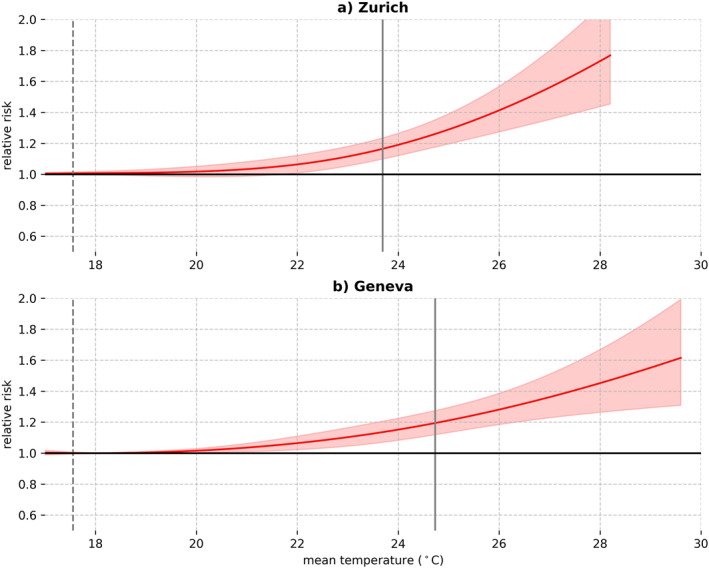
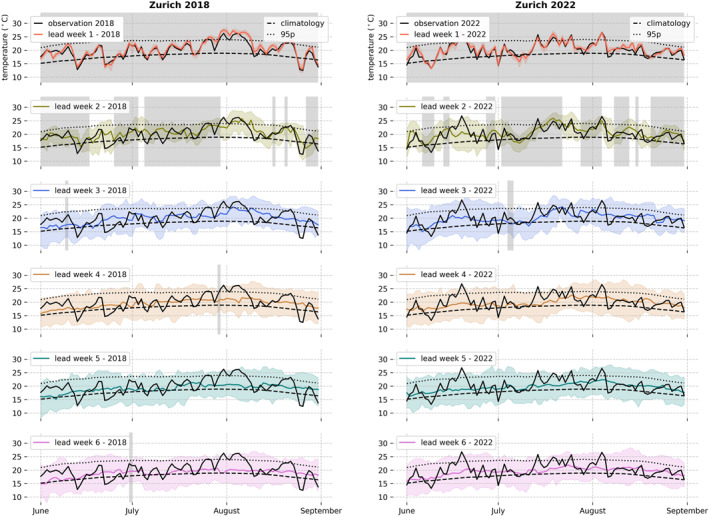
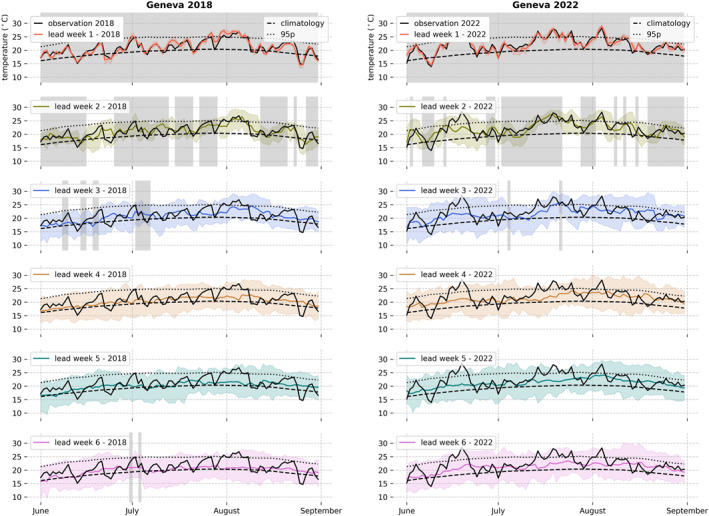
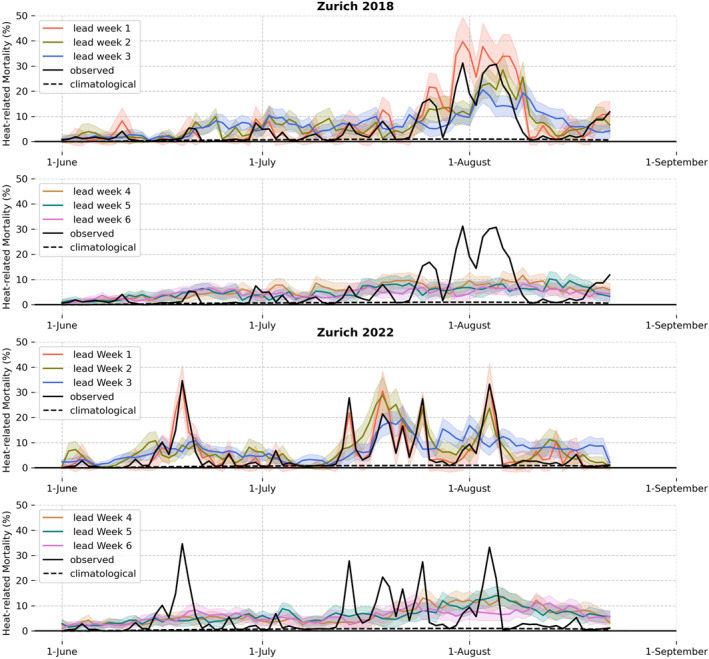
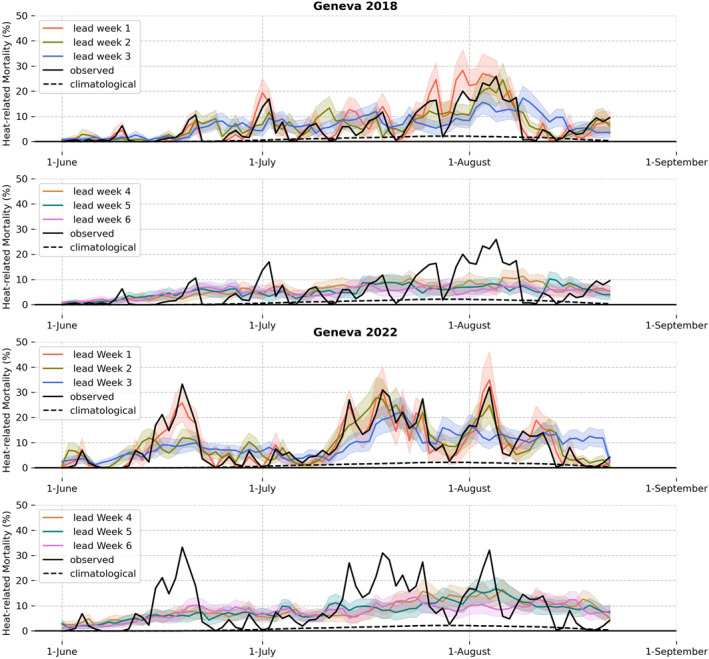
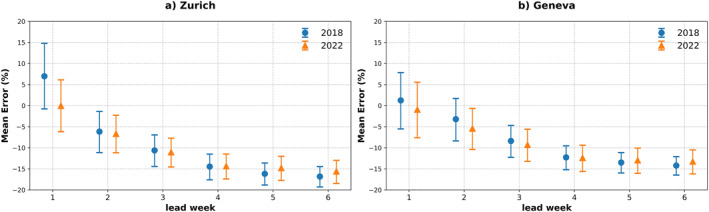
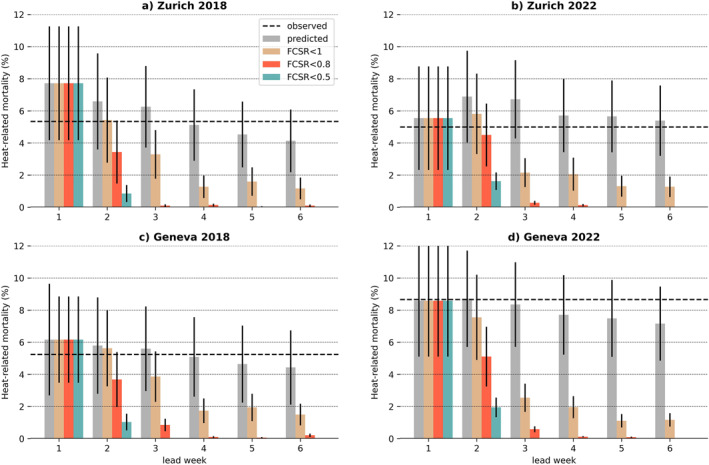
Heatwaves pose a range of severe impacts on human health, including an increase in premature mortality. The summers of 2018 and 2022 are two examples with record-breaking temperatures leading to thousands of heat-related excess deaths in Europe. Some of the extreme temperatures experienced during these summers were predictable several weeks in advance by subseasonal forecasts. Subseasonal forecasts provide weather predictions from 2 weeks to 2 months ahead, offering advance planning capabilities. Nevertheless, there is only limited assessment of the potential for heat-health warning systems at a regional level on subseasonal timescales. Here we combine methods of climate epidemiology and subseasonal forecasts to retrospectively predict the 2018 and 2022 heat-related mortality for the cantons of Zurich and Geneva in Switzerland. The temperature-mortality association for these cantons is estimated using observed daily temperature and mortality during summers between 1990 and 2017. The temperature-mortality association is subsequently combined with bias-corrected subseasonal forecasts at a spatial resolution of 2-km to predict the daily heat-related mortality counts of 2018 and 2022. The mortality predictions are compared against the daily heat-related mortality estimated based on observed temperature during these two summers. Heat-related mortality peaks occurring for a few days can be accurately predicted up to 2 weeks ahead, while longer periods of heat-related mortality lasting a few weeks can be anticipated 3 to even 4 weeks ahead. Our findings demonstrate that subseasonal forecasts are a valuable-but yet untapped-tool for potentially issuing warnings for the excess health burden observed during central European summers.
Keywords: Switzerland; extreme events; heatwaves; heat‐health warnings; mortality prediction; subseasonal forecast.
© 2024 The Author(s). GeoHealth published by Wiley Periodicals LLC on behalf of American Geophysical Union.
Conflict of interest statement
The authors declare no conflicts of interest relevant to this study.
Figures
References
-
- Altalo, M. G. , & Smith, L. A. (2004). Using ensemble weather forecasts to manage utilities risk. Environmental Finance, 20(October), 8–9.
-
- Arias, P. , Bellouin, N. , Coppola, E. , Jones, R. , Krinner, G. , Marotzke, J. , et al. (2021). Climate change 2021: The physical science basis. Contribution of working group I to the sixth assessment report of the intergovernmental panel on climate change; technical summary. Cambridge University Press.
-
- Baker, L. , Charlton‐Perez, A. , & Mattu, K. L. (2023). Skilful sub‐seasonal forecasts of aggregated temperature over Europe. Meteorological Applications, 30(6), e2169. 10.1002/met.2169 - DOI
LinkOut - more resources
Full Text Sources