


Case Report: The unrelenting journey-successful resolution of catecholaminergic polymorphic ventricular tachycardia (CPVT) through right cardiac sympathetic denervation in a teenager after left cardiac sympathetic denervation
- PMID: 39735866
- PMCID: PMC11671521
- DOI: 10.3389/fcvm.2024.1477359
Case Report: The unrelenting journey-successful resolution of catecholaminergic polymorphic ventricular tachycardia (CPVT) through right cardiac sympathetic denervation in a teenager after left cardiac sympathetic denervation
Abstract
Background: Catecholaminergic polymorphic ventricular tachycardia (CPVT) is a rare inherited arrhythmia disorder characterized by ventricular arrhythmia triggered by adrenergic stimulation.
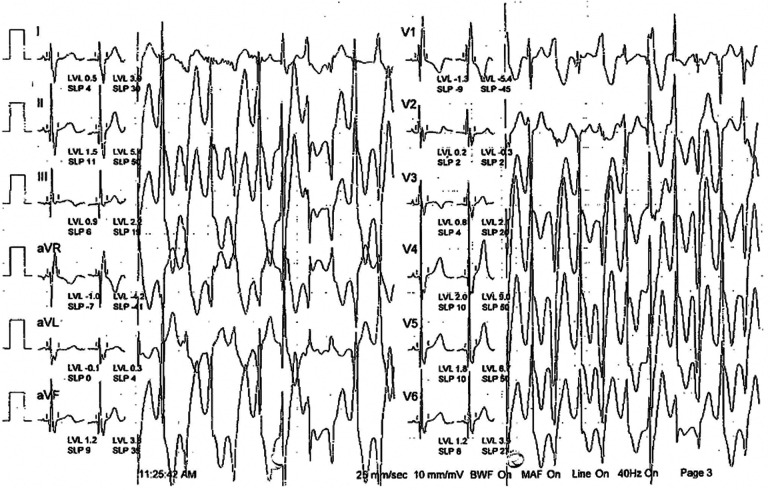
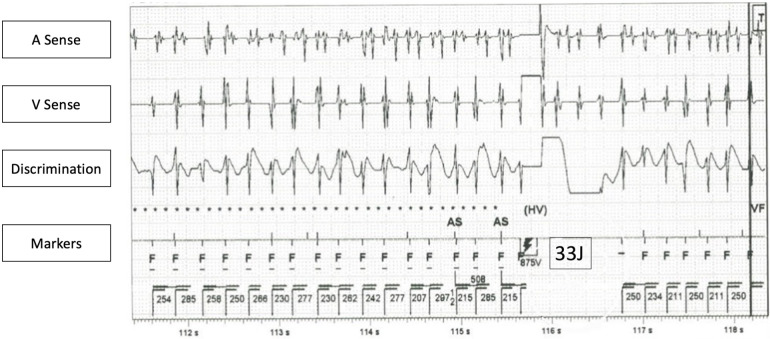
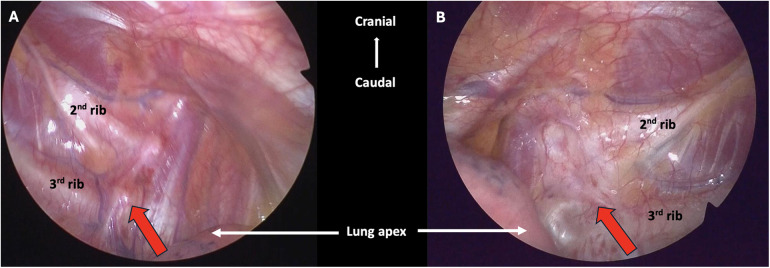
Case presentation: A 9-year-old boy presented with convulsions following physical exertion. Bidirectional ventricular tachycardia (VT) during a treadmill test led to the diagnosis of catecholaminergic polymorphic ventricular tachycardia (CPVT). Genetic testing revealed a pathogenic variant of RYR2:c.720G>A (p.ArG2401His). Nadolol was initially started. However, he experienced aborted VT arrest three years later. Flecainide was thus added as dual therapy and he underwent left cardiac sympathetic denervation (LCSD). Subsequently, a transvenous implantable cardioverter-defibrillator (ICD) was implanted because he still had several episodes of bidirectional VT. Despite a good compliance to medication, the patient still had exercise induced VT episodes with new onset of atrial fibrillation. High dose nadolol was required and amiodarone was added. Despite maximizing the dosage of these three antiarrhythmics, the patient continued to experience multiple episodes of ventricular fibrillation with appropriate ICD shocks and persistent atrial arrhythmias. Right cardiac sympathetic denervation (RCSD) was performed as the last modality of treatment. Patient had a total elimination of VT post bilateral sympathectomy. He remained asymptomatic on follow up. A follow-up treadmill test showed no recurrence of exercise-induced PVCs and VT.
Conclusion: We illustrated the challenges and the complex decision-making process encountered in managing refractory CPVT. In patients unresponsive to conventional therapies, RCSD in additional to LCSD is a safe and effective alternative treatment. A history of LCSD should not preclude physicians from considering RCSD in children with refractory CPVT.
Keywords: bilateral cardiac sympathectomy; case report; catecholaminergic polymorphic ventricular tachycardia (CPVT); left cardiac sympathetic denervation; paediatric; right cardiac sympathetic denervation.
© 2024 Leung, Kwok, Lau, Lee and Tsao.
Conflict of interest statement
The authors declare that the research was conducted in the absence of any commercial or financial relationships that could be construed as a potential conflict of interest.
Figures
References
-
- Peltenburg PJ, Kallas D, Bos JM, Lieve KVV, Franciosi S, Roston TM, et al. An international multicenter cohort study on β-blockers for the treatment of symptomatic children with catecholaminergic polymorphic ventricular tachycardia. Circulation. (2022) 145(5):333–44. 10.1161/CIRCULATIONAHA.121.056018 - DOI - PubMed
-
- Capponi G, Belli G, Giovannini M, Remaschi G, Brambilla A, Vannuccini F, et al. Supraventricular tachycardias in the first year of life: what is the best pharmacological treatment? 24 years of experience in a single centre. BMC Cardiovasc Disord. (2021) 21(1):137. 10.1186/s12872-020-01843-0 - DOI - PMC - PubMed
-
- Bergeman AT, Lieve KVV, Kallas D, Bos JM, Rosés I, Noguer F, Denjoy I, et al. Flecainide is associated with a lower incidence of arrhythmic events in a large cohort of patients with catecholaminergic polymorphic ventricular tachycardia. Circulation. (2023) 148(25):2029–37. 10.1161/CIRCULATIONAHA.123.064786 - DOI - PMC - PubMed
Publication types
LinkOut - more resources
Full Text Sources
