


Clinical characteristics, etiology, and treatment of young adult-onset epilepsy: A 24-year retrospective study
- PMID: 39736142
- PMCID: PMC11803278
- DOI: 10.1002/epi4.13126
Clinical characteristics, etiology, and treatment of young adult-onset epilepsy: A 24-year retrospective study
Abstract
Objective: To analyze the clinical characteristics, etiology, drug treatment, and related factors of patients with young adult-onset epilepsy.
Methods: The study included patients with epilepsy aged between 18 and 44 years and aimed to analyze the clinical characteristics of epilepsy in young people and their response to antiseizure medication (ASM) over a 24-year period (February 1999 and March 2023).
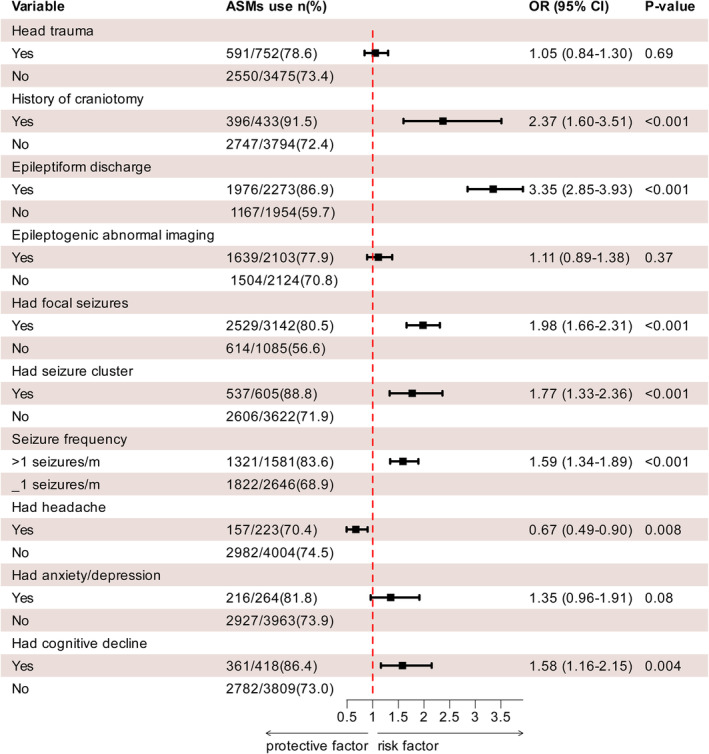
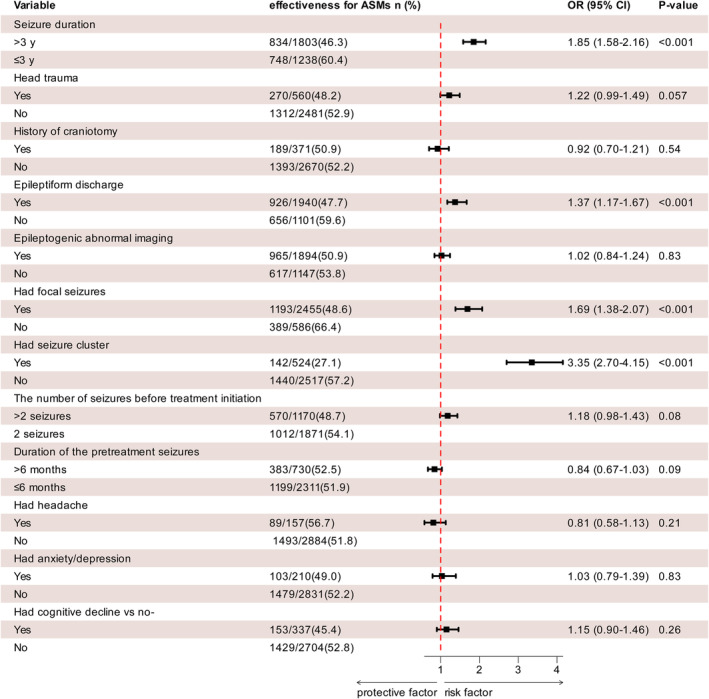
Results: A total of 4227 patients experienced epilepsy onset between 18 and 44 years of age. The median age of onset was 26 years (interquartile range [IQR]: 21-33), and the median duration from the first seizure to starting treatment was 3 months (IQR: 1.0-6.0). Structural etiology was the most common cause of epilepsy, accounting for 43.2% (1827/4227) of cases, of which head trauma and a history of craniotomy accounted for 64.9% (1186/1827). However, these two causes did not necessarily result in prompt medication or poor epilepsy control. Co-morbid cognitive decline was more prevalent than headache and anxiety/depression. Multifactorial regression analysis showed that the factors associated with poor seizure control included longer seizure duration (odds ratio [OR] 1.85; 95% confidence interval [CI] 1.58-2.16; p < 0.001), electroencephalography (EEG) epileptic discharge (OR 1.37; 95% CI 1.17-1.67; p < 0.001), focal seizure (OR 1.69; 95% CI 1.38-2.07; p < 0.001), and seizure clusters (OR 3.35; 95% CI 2.70-4.15; p < 0.001). Initiating treatment after two seizures (OR, 1.18; 95% CI 0.98-1.15; p = .08) or 6 months after the first seizure (OR 0.84; 95% CI 0.67-1.03; p = .09) did not worsen effectiveness.
Significance: Young adult-onset epilepsy was frequently caused by head trauma or craniotomies. Co-morbid cognitive decline was more prevalent than headache and anxiety/depression. The median time from the first seizure to follow-up treatment was 3 months (IQR: 1.0-6.0). Initiating treatment after two seizures did not necessarily indicate poor drug effectiveness.
Plain language summary: In this article, we observed that young adult-onset epilepsy was mainly caused by head trauma and craniotomy; co-morbid cognitive decline was more common. The median duration from first seizure to initiation of treatment for young-onset epilepsy was 3 months, and more than one-third of patients experienced more than two seizures prior to treatment, but this factor had no effect on the drug effectiveness.
Keywords: antiseizure medication; epilepsy; etiology; young adult‐onset.
© 2024 The Author(s). Epilepsia Open published by Wiley Periodicals LLC on behalf of International League Against Epilepsy.
Conflict of interest statement
None of the authors has any conflict of interest to disclose. We confirm that we have read the journal's position on issues involved in ethical publication and affirm that this report is consistent with these guidelines.
Figures
References
-
- Asadi‐Pooya AA, Brigo F, Lattanzi S, Blumcke I. Adult epilepsy. Lancet (London, England). 2023;402(10399):412–424. - PubMed
-
- Guerrini R. Epilepsy in children. Lancet (London, England). 2006;367(9509):499–524. - PubMed
-
- Gogou M, Cross JH. Seizures and epilepsy in childhood. Continuum (Minneapolis, Minn). 2022;28(2):428–456. - PubMed
-
- Sen A, Jette N, Husain M, Sander JW. Epilepsy in older people. Lancet (London, England). 2020;395(10225):735–748. - PubMed
-
- Beghi E, Giussani G, Costa C, DiFrancesco JC, Dhakar M, Leppik I, et al. The epidemiology of epilepsy in older adults: a narrative review by the ILAE task force on epilepsy in the elderly. Epilepsia. 2023;64(3):586–601. - PubMed
MeSH terms
Substances
LinkOut - more resources
Full Text Sources
Medical
