


The role of rapid multiplex molecular syndromic panels in the clinical management of infections in critically ill patients: an experts-opinion document
- PMID: 39736683
- PMCID: PMC11687037
- DOI: 10.1186/s13054-024-05224-3
The role of rapid multiplex molecular syndromic panels in the clinical management of infections in critically ill patients: an experts-opinion document
Abstract
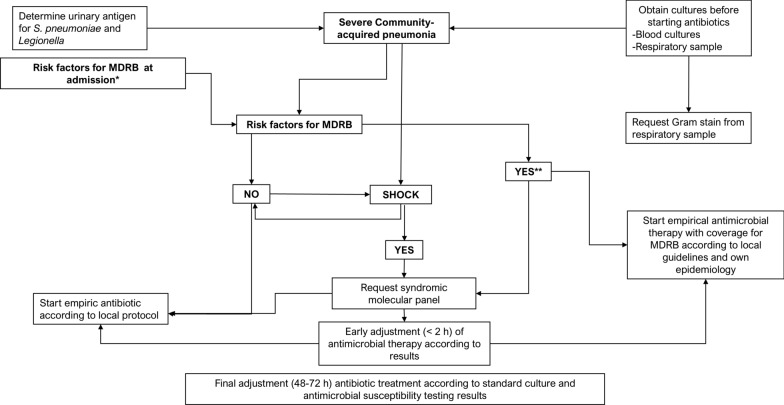
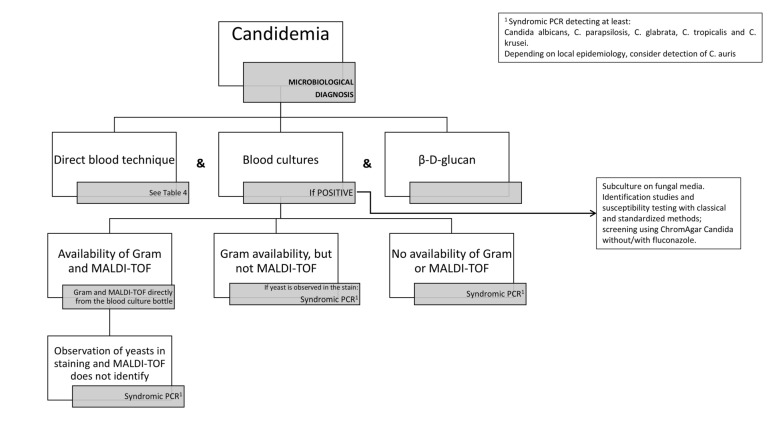
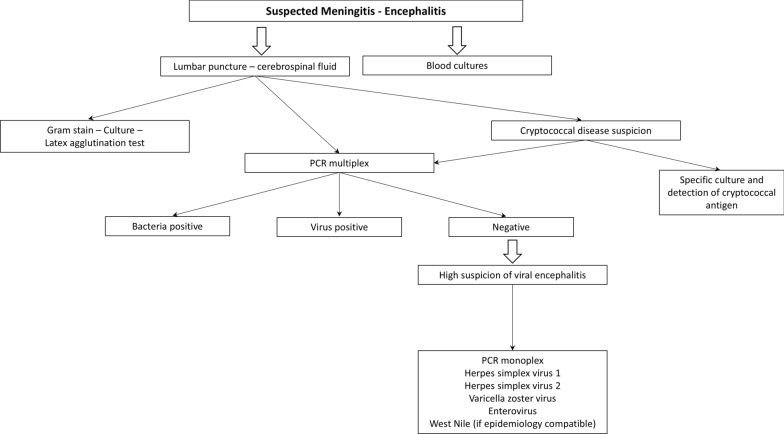
Rapid multiplex molecular syndromic panels (RMMSP) (3 or more pathogens and time-to-results < 6 h) allow simultaneous detection of multiple pathogens and genotypic resistance markers. Their implementation has revolutionized the clinical landscape by significantly enhancing diagnostic accuracy and reducing time-to-results in different critical conditions. The current revision is a comprehensive but not systematic review of the literature. We conducted electronic searches of the PubMed, Medline, Embase, and Google Scholar databases to identify studies assessing the clinical performance of RMMSP in critically ill patients until July 30, 2024. A multidisciplinary group of 11 Spanish specialists developed clinical questions pertaining to the indications and limitations of these diagnostic tools in daily practice in different clinical scenarios. The topics covered included pneumonia, sepsis/septic shock, candidemia, meningitis/encephalitis, and off-label uses of these RMMSP. These tools reduced the time-to-diagnosis (and therefore the time-to-appropriate treatment), reduced inappropriate empiric treatment and the length of antibiotic therapy (which has a positive impact on antimicrobial stewardship and might be associated with lower in-hospital mortality), may reduce the length of hospital stay, which could potentially lead to cost savings. Despite their advantages, these RMMSP have limitations that should be known, including limited availability, missed diagnoses if the causative agent or resistance determinants are not included in the panel, false positives, and codetections. Overall, the implementation of RMMSP represents a significant advancement in infectious disease diagnostics, enabling more precise and timely interventions. This document addresses relevant issues related to the use of RMMSP on different critically ill patient profiles, to standardize procedures, assist in making management decisions and help specialists to obtain optimal outcomes.
Keywords: Critically ill patient; Infection; Multidrug resistant pathogens; Septic shock, sepsis, bloodstream infection; Syndromic molecular diagnosis.
© 2024. The Author(s).
Conflict of interest statement
Declarations. Ethics approval and consent to participate: Not applicable. Consent for publication: Not applicable. Competing interests: Francisco Javier Candel has received (in the last three years) honoraria for lectures and advisory boards from Advanz Pharma, Angelini, Biomerieux, Gilead, Meiji, Menarini, MSD, Pfizer, Shionogi, and Viatris. Miguel Salavert Lletí has received (in the last three years) honoraria for lectures and advisory boards from Advanz Pharma, Angelini, Janssen, Menarini, MSD, Pfizer, Shionogi, and Viatris, and educational grants from Gilead and Tedec-Meiji. Rafael Cantón has participate in educational programs sponsored by BioMeieux, Pfizer, Menarini, MSD, Shionogi, and Tedec-Meiji and participate in research studies funded by BD, BioMerieux, Cepheid, MSD, and Shionogi. Jose Luis del Pozo has received honoraria for lectures and advisory boards from Advanz Pharma, Angelini, Menarini, MSD, Pfizer, Shionogi, and GSK, and educational grants from Pfizer. Fátima Galán-Sánchez has received honoraria for lectures and advisory boards from MSD, Pfizer, Shionogi and bioMerieux, and grants from Pfizer and Menarini. Montserrat Rodríguez-Aguirregabiria has conducted consulting work for Viatris and Shionogi. MR-A has served as a speaker for Pfizer, Gilead Sciences, and Shionogi. Rafael Zaragoza has received (in the last three years) honoraria for lectures and advisory boards from Advanz Pharma, BiomeMeieux, Gilead science, MSD, Mundipharma, Pfizer, Shionogi, and Viatris, David Navarro; Alejandro Rodríguez; Juan Carlos Rodríguez;L and Borja Suberviola declare that they have no competing interests. Jose Luis del Pozo has received honoraria for lectures and advisory boards from Advanz Pharma, Angelini, Menarini, MSD, Pfizer, Shionogi, and GSK, and educational grants from Pfizer. Fátima Galán-Sánchez has received honoraria for lectures and advisory boards from MSD, Pfizer, Shionogi and bioMerieux, and grants from Pfizer and Menarini. Montserrat Rodríguez-Aguirregabiria has conducted consulting work for Viatris and Shionogi. MR-A has served as a speaker for Pfizer, Gilead Sciences, and Shionogi. Rafael Zaragoza has received (in the last three years) honoraria for lectures and advisory boards from Advanz Pharma, BiomeMeieux, Gilead science, MSD, Mundipharma, Pfizer, Shionogi, and Viatris, David Navarro; Alejandro Rodríguez; Juan Carlos Rodríguez;L and Borja Suberviola declare that they have no competing interests.
Figures

References
-
- Kumar A, Ellis P, Arabi Y, Roberts D, Light B, Parrillo JE, et al. Cooperative antimicrobial therapy of septic shock database research group. Initiation of inappropriate antimicrobial therapy results in a fivefold reduction of survival in human septic shock. Chest. 2009;136(5):1237–48. - DOI - PubMed
-
- Rhee C, Kadri SS, Dekker JP, Danner RL, Chen HC, Fram D, et al. CDC prevention epicenters program. Prevalence of antibiotic-resistant pathogens in culture-proven sepsis and outcomes associated with inadequate and broad-spectrum empiric antibiotic use. JAMA Netw Open. 2020;3(4):e202899. - DOI - PMC - PubMed
Publication types
MeSH terms
LinkOut - more resources
Full Text Sources
Molecular Biology Databases
