. 2024 Dec 12;4(1):ycae158.
doi: 10.1093/ismeco/ycae158. eCollection 2024 Jan.

Bacterial synergies amplify nitrogenase activity in diverse systems

Affiliations

Bacterial synergies amplify nitrogenase activity in diverse systems

Andrew W Sher et al. ISME Commun. .

Abstract

Endophytes are microbes living within plant tissue, with some having the capacity to fix atmospheric nitrogen in both a free-living state and within their plant host. They are part of a diverse microbial community whose interactions sometimes result in a more productive symbiosis with the host plant. Here, we report the co-isolation of diazotrophic endophytes with synergistic partners sourced from two separate nutrient-limited sites. In the presence of these synergistic strains, the nitrogen-fixing activity of the diazotroph is amplified. One such partnership was co-isolated from extracts of plants from a nutrient-limited Hawaiian lava field and another from the roots of Populus trees on a nutrient-limited gravel bar in the Pacific Northwest. The synergistic strains were capable of increasing the nitrogenase activity of different diazotrophic species from other environments, perhaps indicating that these endophytic microbial interactions are common to environments where nutrients are particularly limited. Multiple overlapping mechanisms seem to be involved in this interaction. Though synergistic strains are likely capable of protecting nitrogenase from oxygen, another mechanism seems evident in both environments. The synergies do not depend exclusively on physical contact, indicating a secreted compound may be involved. This work offers insights into beneficial microbial interactions, providing potential avenues for optimizing inocula for use in agriculture.

Keywords: endophytes; microbial interactions; nitrogen fixation; populus; symbiosis.


Conflict of interest statement

None declared.

Figures
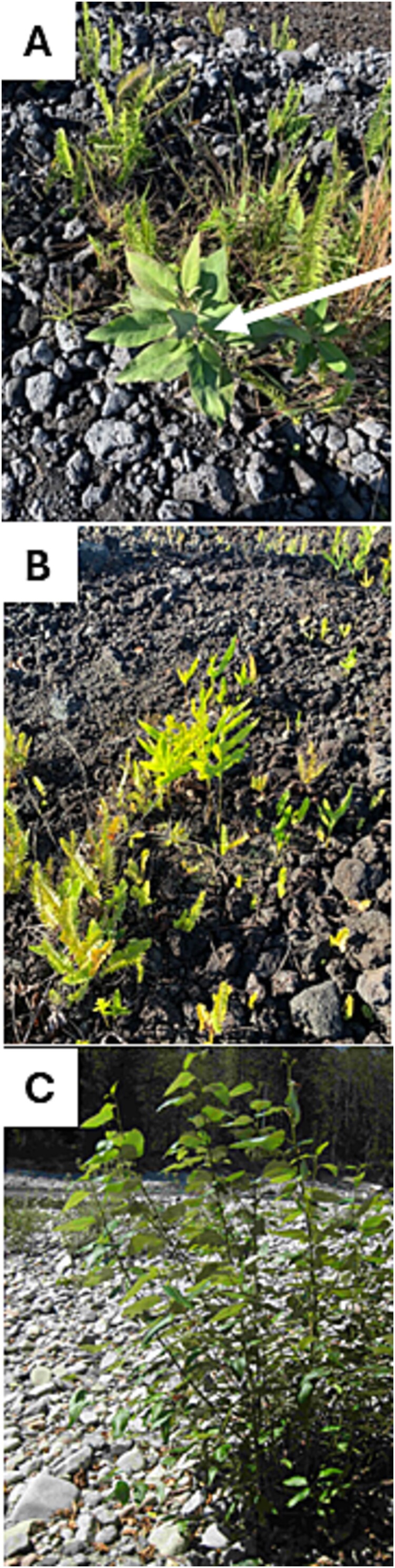
Figure 1
Figure 1
Tissues from a variety of plants growing in nutrient-limited sites were selected to screen for endophytic nitrogen-fixing bacteria. (A, B) Plants growing in a Hawaiian lava field near Kona, Hawaii, USA. The white arrow in (A) is representative of plant HT1. (C) Po. trichocarpa at the Skykomish River in Washington State, USA.
Figure 2
Figure 2
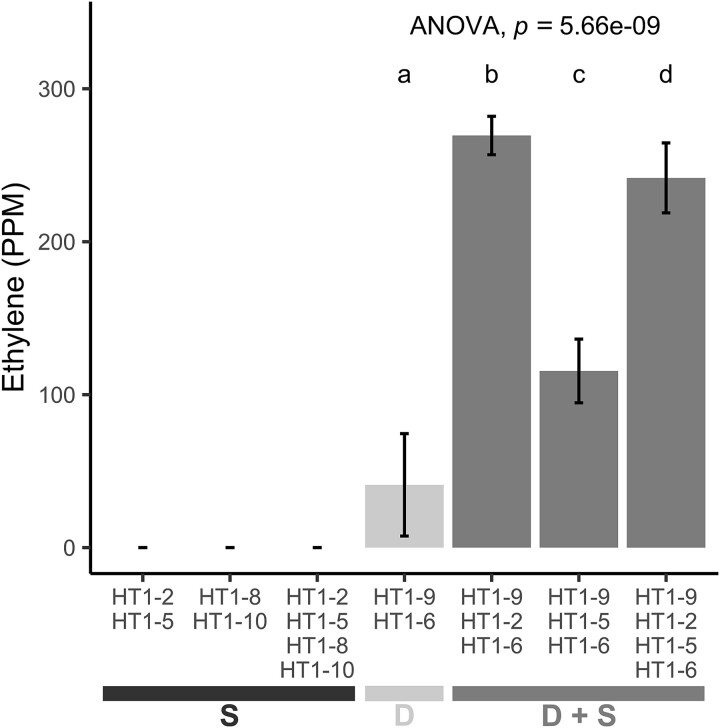
Bacterial cocultures modulate nitrogenase activity in the diazotrophs Azorhizobium HT1-6 and HT1-9. Coculturing Azorhizobium spp. HT1-6 and HT1-9 with Sphingobium sp. HT1-2 or Brevundimonas HT1-5 enhanced nitrogenase activity (seen as ethylene from the reduction of acetylene) compared to HT1-6 and HT1-9 alone (F [3, 8] = 382.131, P < < .001), with HT1-2 exhibiting a greater effect than HT1-5 (Cohen’s d = 24.006 vs. 7.831). Combining HT1-2 and HT1-5 moderately decreased nitrogenase activity compared to HT1-2 alone (Bonferroni, P = .003, Cohen’s d = 2.914). No acetylene reduction was detected in the groups without HT1-6 and HT1-9, including the two Rhizobium strains, HT1-8 and HT1-10; these data were excluded from the statistical analysis. Data are mean ± 95% CI (n = 3); one-way ANOVA. Different letters indicate significant differences (P < .001). Legend key: D, diazotroph; S, synergist; D + S, diazotroph and synergist.
Figure 3
Figure 3
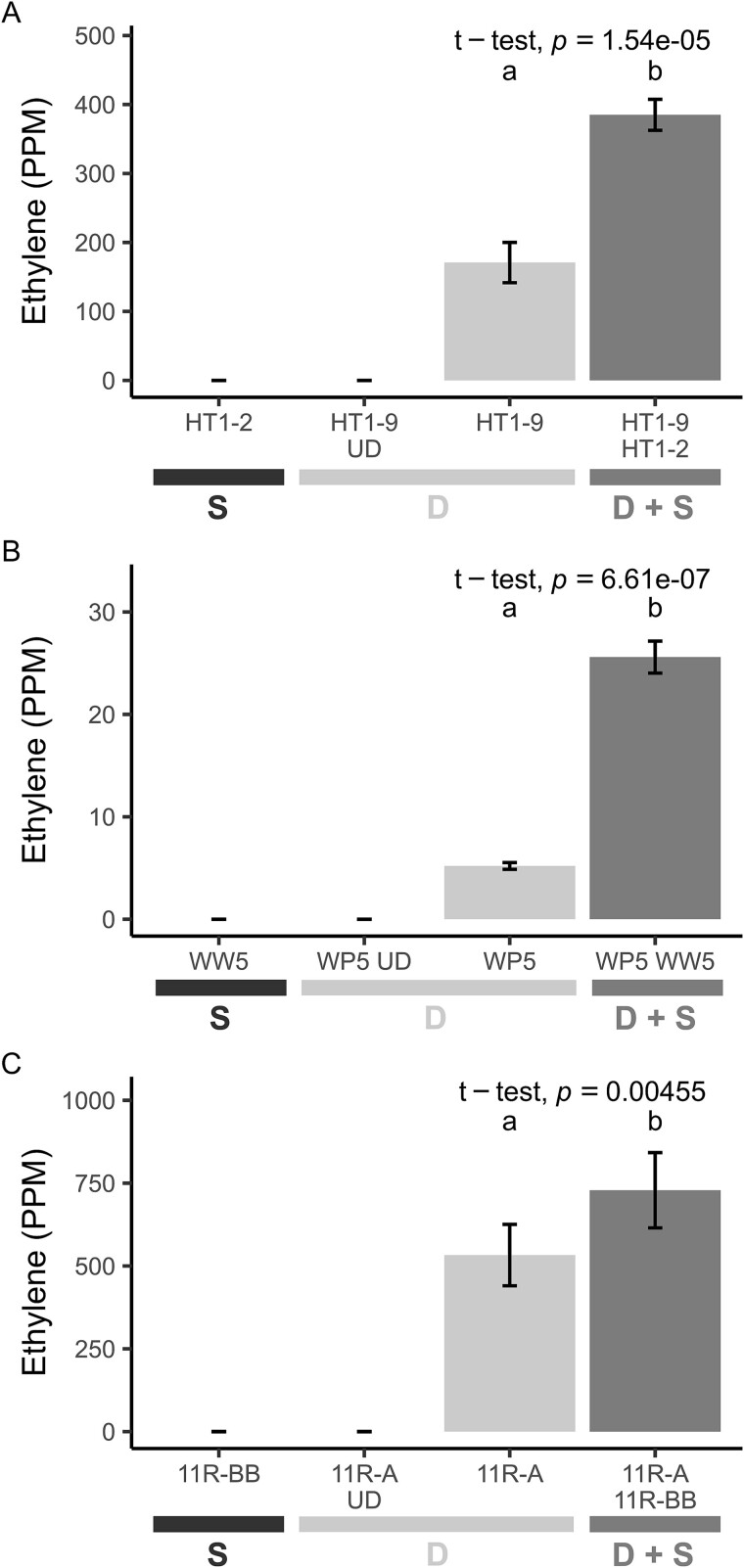
Sphingobium strains enhance nitrogenase activity in diazotrophic cocultures. Nitrogenase activity was measured in cocultures of diazotrophs (Azorhizobium sp. HT1-9, Ra. aceris WP5, Azospirillum sp. 11R-A) with the Sphingobium synergists (HT1-2, WW5, and 11R-BB, respectively). (A) Nitrogenase activity was 2.3-fold higher in the HT1-9/HT1-2 coculture compared to HT1-9 alone (t [4] = −24.935, P < < .001), (B) 4.9-fold higher in the WP5/WW5 coculture compared to WP5 alone (t [4] = −54.861, P < < .001), and (C) 1.4-fold higher in the 11R-A/11R-BB coculture compared to 11R-A alone (t [4] = −5.744, P = .005). No acetylene reduction was detected in the undosed controls or synergist-only groups; these data were excluded from the statistical analysis. Data are mean ± 95% CI (n = 3); independent t-tests. Different letters indicate significant differences (P < .01). Legend key: D, diazotroph; S, synergist; D + S = diazotroph and synergist.
Figure 4
Figure 4
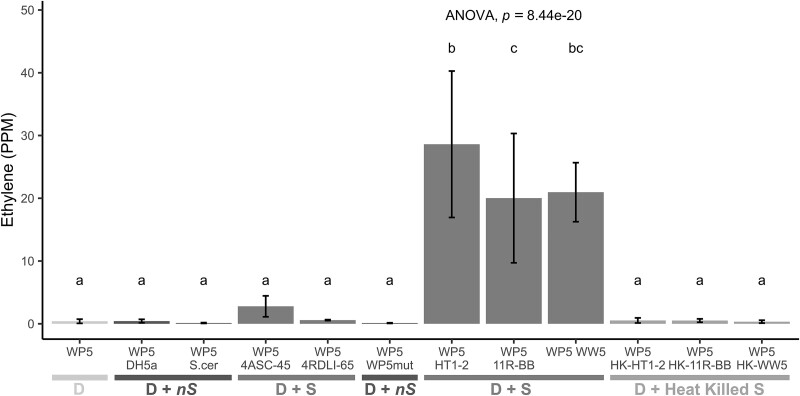
Significantly increased nitrogenase activity of Ra. aceris WP5 when cocultured with any of the synergy strains. The nitrogenase activity of WP5 was measured alone or in coculture with live or heat-killed bacterial or yeast strains. Activity increased only with the live Sphingobium cells (P < .001), with HT1-2 having the strongest effect (Cohen’s d = 7.413); no effect on WP5’s nitrogenase activity was observed with the heat-killed cells. Nitrogenase activity was slightly increased with Frondihabitans 4ASC-45 (P < .05, Cohen’s d = 0.700) but not with Sphingomonas 4RDLI-65. Saccharomyces cerevisiae, E. coli DH5α, and the nifH mutant WP5mut had no effect on the nitrogenase activity of WP5. Data are mean ± 95% CI (n = 5); one-way ANOVA, different letters indicate significant differences (Tukey’s HSD, P < .001). Legend key: D, diazotroph; S, synergist; D + S, diazotroph and synergist; D + nS, diazotroph + nonSynergist; D + heat-killed S, diazotroph and heat-killed synergist.
Figure 5
Figure 5
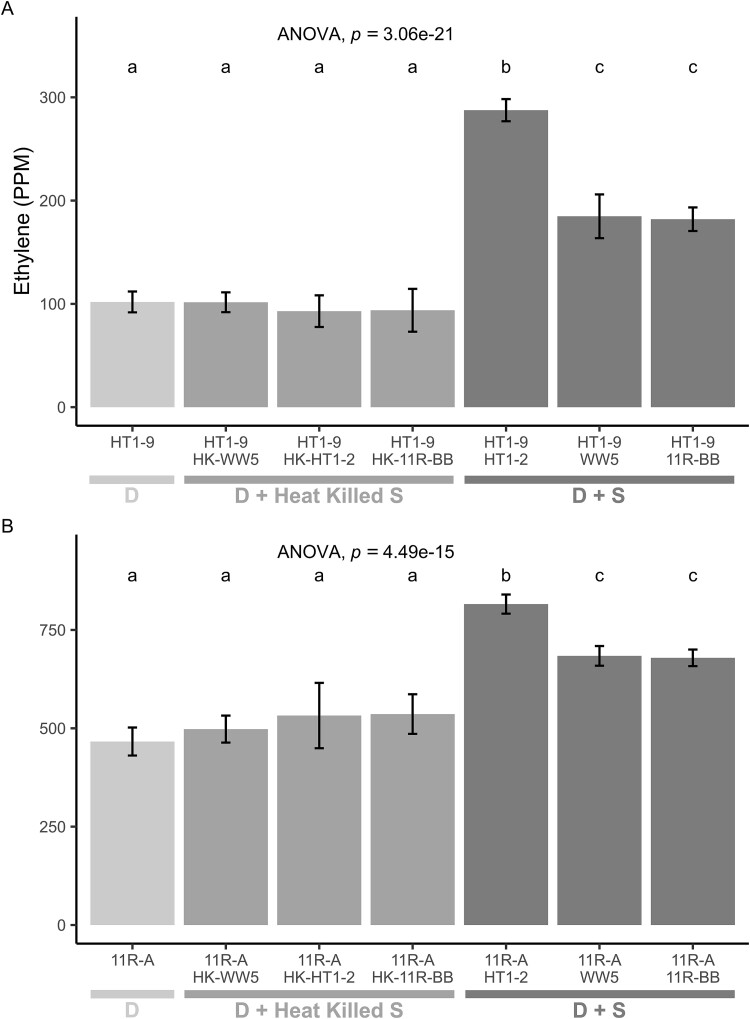
Synergistic enhancement of nitrogenase activity by Sphingobium strains requires live cells. Nitrogenase activity was measured in cocultures of diazotrophs (A) Azorhizobium sp. HT1-9 or (B) Azospirillum sp. 11R-A with live or heat-killed Sphingobium strains HT1-2, WW5, or 11R-BB. For HT1-9, coculture with live HT1-2, WW5, and 11R-BB increased nitrogenase activity by 2.8-fold, 1.8-fold, and 1.7-fold, respectively, compared to HT1-9 alone (F6,28 = 186.505, p < < 0.001). For 11R-A, live HT1–2, WW5 and 11R-BB increased nitrogenase activity by 1.7-fold, 1.5-fold, and 1.5-fold, respectively (F [6, 28] = 64.248, P < < 0.001). Heat-killed synergists had no effect on nitrogenase activity in either diazotroph (Bonferroni, P > .05). Data are mean ± SE (n = 5), one-way ANOVA. Different letters indicate significant differences (P < .05). Legend key: D, diazotroph; S, synergist, D + S, diazotroph and synergist; D + heat-killed S, diazotroph and heat-killed synergist.
Figure 6
Figure 6
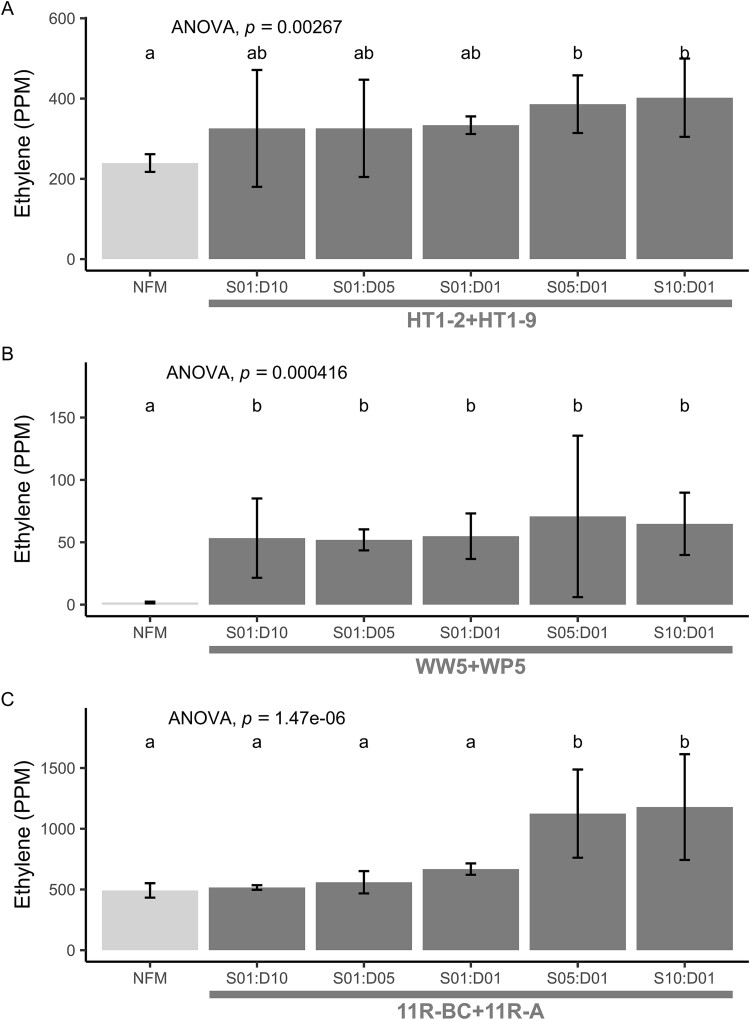
Effect of synergist to diazotroph ratio on nitrogenase activity in cocultures. (A) Azorhizobium sp. HT1-9 and Sphingobium sp. HT1-2, (B) Ra. aceris sp. WP5 and Sphingobium sp. WW5, and (C) Azospirillum sp. 11RA and Herbiconiux sp. 11R-BC. Nitrogenase activity was measured at various synergist to diazotroph ratios (S01:D10, S01:D05, S01:D01, S05:D01, and S10:D01) in NFMs, with S01:D01 representing a starting OD600 of 0.5. The presence of the synergist enhanced nitrogenase activity compared to the NFM control in all experiments. For HT1-9/HT1-2 (A) and WP5/WW5 (B), higher synergist proportions (S05:D01 and S10:D01) showed greater activity than the NFM control (Bonferroni, P < .01). For 11R-A/11R-BC (C), increasing the synergist proportion while keeping the diazotroph constant (D01) enhanced activity (Bonferroni, P < .01). Statistically varying the diazotroph proportion with a constant synergist (S01) had minimal impact on activity in the HT1-9/HT1-2 and WP5/WW5 pairs but increased activity in the 11R-A/11R-BC. Data are mean ± 95% CI (n = 3), one-way ANOVA. Different letters indicate significant differences (P < .05).
Figure 7
Figure 7
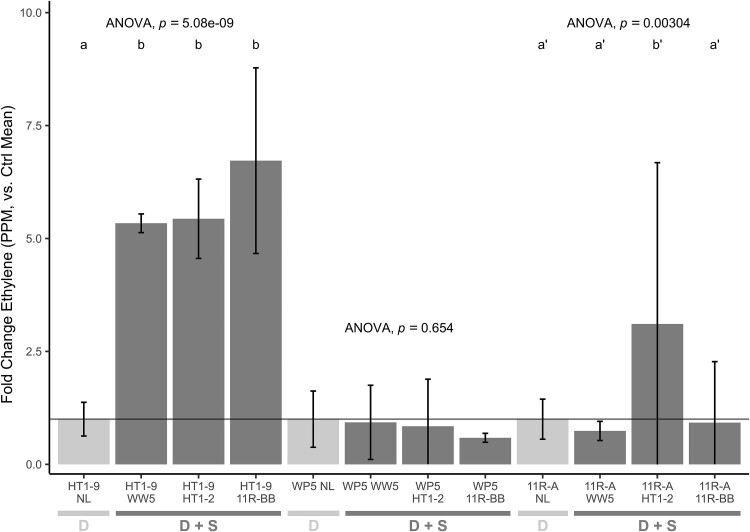
Normalized effect of synergists on nitrogenase activity in 0.2 um filter-separated cultures. Nitrogenase activity was measured in a nitrogen-limited medium (NL) and normalized against the mean ppm of the NL group for each diazotroph (represented by the black line at 1.0). For HT1-9, all three Sphingobium synergists (WW5, HT1-2, and 11R-BB) increased normalized nitrogenase activity compared to the NL control (Bonferroni, P < < .001), while none affected activity in WP5 (Bonferroni, P > .05). HT1-2 increased normalized activity in 11R-A compared to NL and the other synergists (Bonferroni, P < .01), and WW5 had no effect (Bonferroni, P > .05). Data are presented as mean ± 95% CI (for HT1-9 and WW5 in NL n = 6, and with synergists, n = 3, for 11R-A in NL, n = 9, and with synergists, n = 3), one-way ANOVA (Type III SS). Different letters indicate significant differences (P < .05).
Figure 8
Figure 8
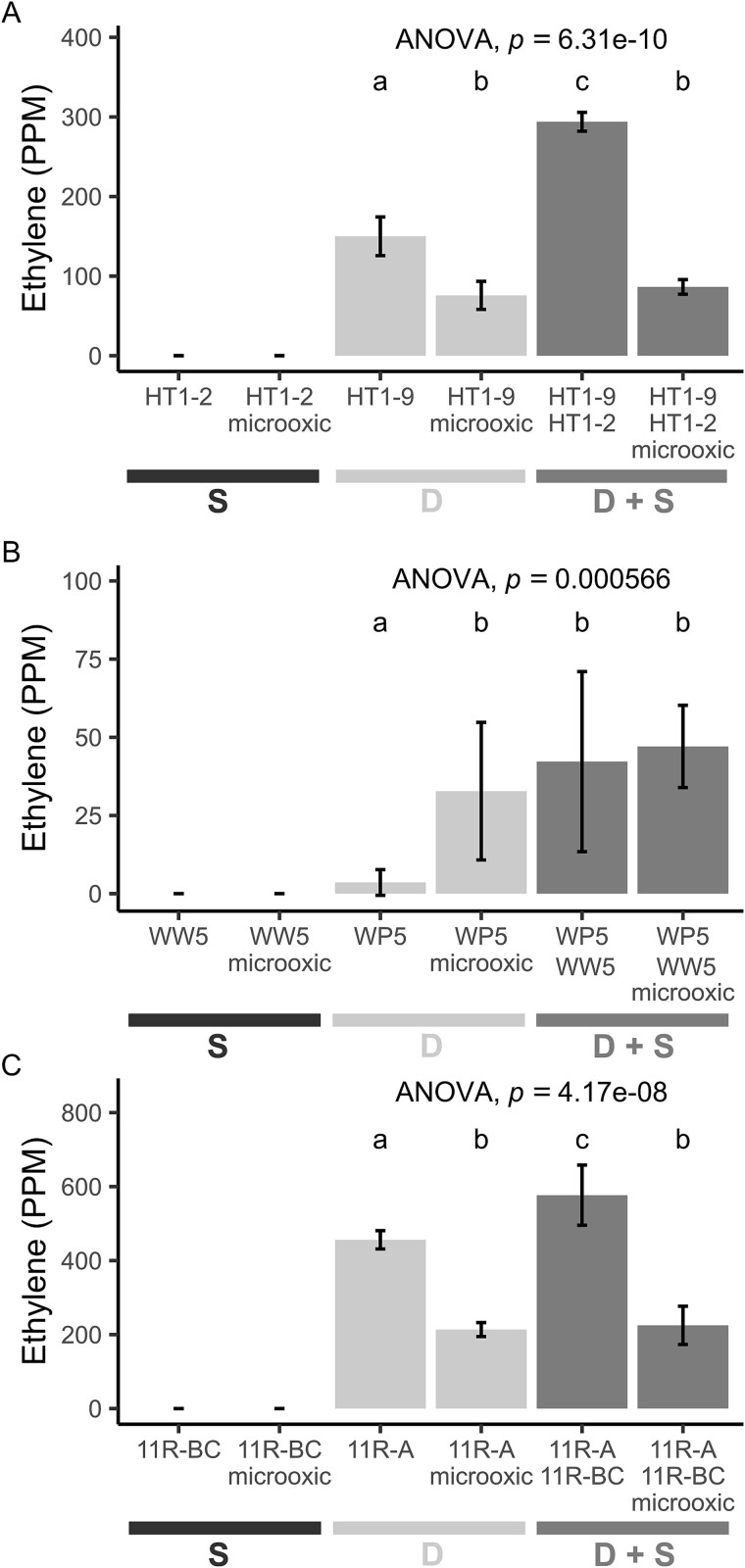
Effect of a microoxic environment on nitrogenase activity. Nitrogenase activity was measured under ambient and microoxic conditions for (A) Azorhizobium sp. HT1-9, B) Ra. aceris WP5, and (C) Azospirillum sp. 11R-A, alone and in coculture with their respective synergists (Sphingobium sp. HT1-2, Sphingobium sp. WW5, and Sphingobium sp. 11R-BB). For HT1-9 (A) and 11R-A (C), microoxic conditions reduced activity both when grown alone and in coculture with their synergists (Bonferroni, P < < .001). For WP5 (B), microoxic conditions increased nitrogenase activity when grown alone (Bonferroni, P < .01) but had no effect when cocultured with its synergist WW5 (Bonferroni, P > .05). Data are mean ± 95% CI (n = 3), one-way ANOVA. Different letters indicate significant differences (P < .05).

References

    1. Mee MT, Collins JJ, Church GMet al. Syntrophic exchange in synthetic microbial communities. Proc Natl Acad Sci USA 2014;111:E2149–56. 10.1073/pnas.1405641111 - DOI - PMC - PubMed
    1. Buonaurio R, Moretti C, da Silva DPet al. The olive knot disease as a model to study the role of interspecies bacterial communities in plant disease. Front Plant Sci 2015;6:434. 10.3389/fpls.2015.00434 - DOI - PMC - PubMed
    1. Spribille T, Tuovinen V, Resl Pet al. Basidiomycete yeasts in the cortex of ascomycete macrolichens. Science 2016;353:488–92. 10.1126/science.aaf8287 - DOI - PMC - PubMed
    1. da Silva TR, Rodrigues RT, Jovino RSet al. Not just passengers, but co-pilots! Non-rhizobial nodule-associated bacteria promote cowpea growth and symbiosis with (Brady)rhizobia. J Appl Microbiol 2023;134. 10.1093/jambio/lxac013 - DOI - PubMed
    1. Berg G, Rybakova D, Grube Met al. The plant microbiome explored: implications for experimental botany. J Exp Bot 2016;67:995–1002. 10.1093/jxb/erv466 - DOI - PMC - PubMed

LinkOut - more resources