


Effects of various feed forms on some gut bacteria and subsequent effects on productivity, egg quality, and intestinal morphology in Indigenous laying hens
- PMID: 39737008
- PMCID: PMC11682750
- DOI: 10.5455/OVJ.2024.v14.i11.37
Effects of various feed forms on some gut bacteria and subsequent effects on productivity, egg quality, and intestinal morphology in Indigenous laying hens
Abstract
Background: Local hen layers play a crucial role in egg production and the poultry industry. Optimizing their performance, egg quality, and overall health is of paramount importance.
Aim: This research aims to examine the effects of different feed forms on gut bacteria and subsequent effects on productivity, egg quality, and intestinal morphology in indigenous laying hens.
Methods: Forty-five hens aged 73 weeks were randomly distributed into three treatment groups, each with three replicates of 5 chickens in ground cages. The dietary treatments included a 100% mash diet (T1), 50% mash + 50% pellet diet (T2), and 100% pellet diet (T3).
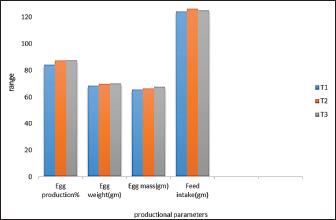
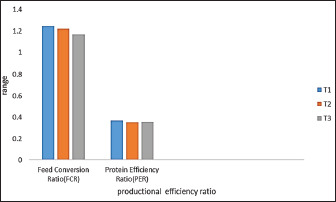
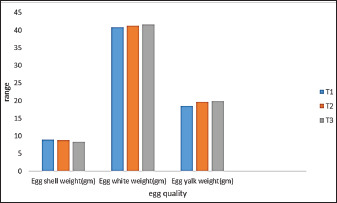
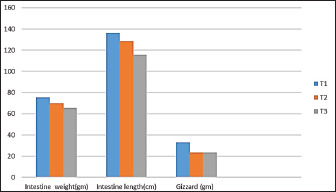
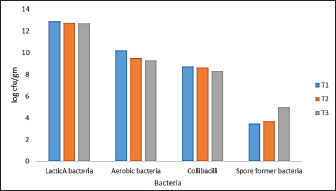
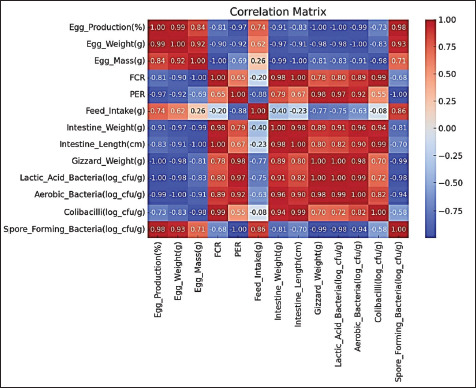
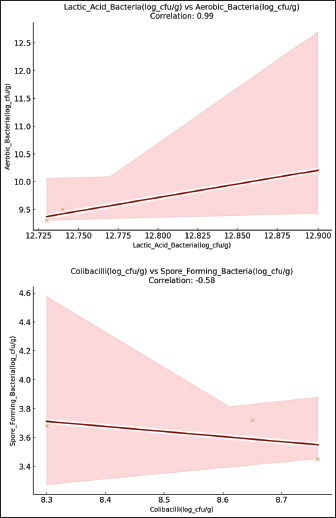
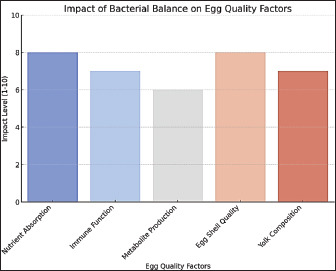
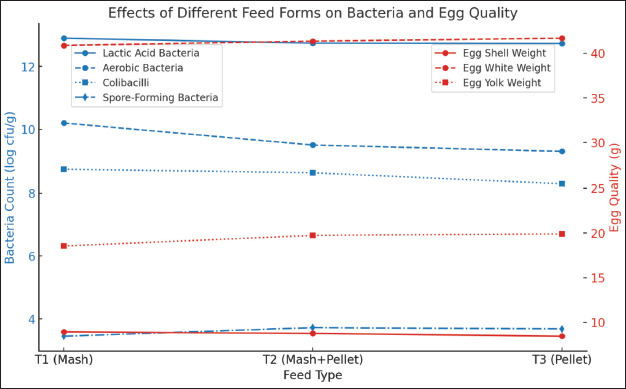
Results: Compared to the mash-fed group (T1), birds in the pellet and mixed-diet groups (T2 and T3) exhibited significant improvements (p ≤ 0.05) in productive performance and egg quality. Furthermore, there were significant reductions (p < 0.05) in intestinal weight, intestinal length, and gizzard weight, accompanied by significant increases (p < 0.05) in lactic acid bacteria and Spore-forming bacteria, along with a decrease in Aerobic bacteria and Colibacilli bacteria. Increases seen in beneficial bacteria were accompanied by increases in egg quality, especially when pellet form was utilized by the layer hens.
Conclusion: These findings support the advantages of using pellet diets to enhance productive performance and intestinal health and morphology in local hen layers.
Keywords: Feed form; Intestinal morphology; Local laying hen; Microbial content; Productive performance.
Conflict of interest statement
No conflict of interest is found in the present study.
Figures
References
-
- Abadi, M.H.M.G., Moravej, H., Shivazad, M., Torshizi, M.A.K. and Kim, W.K. 2019. Effects of feed form and particle size, and pellet binder on performance, digestive tract parameters, intestinal morphology, and cecal microflora populations in broilers. Poult. Sci. 98, 1432–1440. - PubMed
-
- Ademola, S.G., Lawal, T.E., Odu, O., Shittu, M.D., Oladiran, H.O. and Adeshina, M.T. 2013. Effects of native and microbial phytase on laying performance, shell ash, and phosphorus content of hens fed mash and pelleted diets. Online J. Anim. Feed Res. 3, 230–234.
-
- Ball, M.E., Magowan, E., McCracken, K.J., Beattie, V.E. and Bradford, R. 2015. An investigation into the effect of dietary particle size and pelleting of diets for finishing pigs. Livest. Sci. 173, 48–54.
-
- Bao, Z., Li, Y., Zhang, J., Li, L., Zhang, P. and Huang, F.R. 2016. Effect of particle size of wheat on nutrient digestibility, growth performance, and gut microbiota in growing pigs. Livest. Sci. 183, 33–39.
-
- Boumans, I.J., Schop, M., Bracke, M.B., de Boer, I.J., Gerrits, W.J. and Bokkers, E.A. 2022. Feeding food losses and waste to pigs and poultry: Implications for feed quality and production. J. Clean. Prod. 2022, 378.
MeSH terms
LinkOut - more resources
Full Text Sources