


Prevalence of unintended pregnancy and associated factors among pregnant women with disabilities in Ethiopia: from the social model of disability perspective
- PMID: 39737367
- PMCID: PMC11683010
- DOI: 10.3389/fgwh.2024.1458664
Prevalence of unintended pregnancy and associated factors among pregnant women with disabilities in Ethiopia: from the social model of disability perspective
Abstract
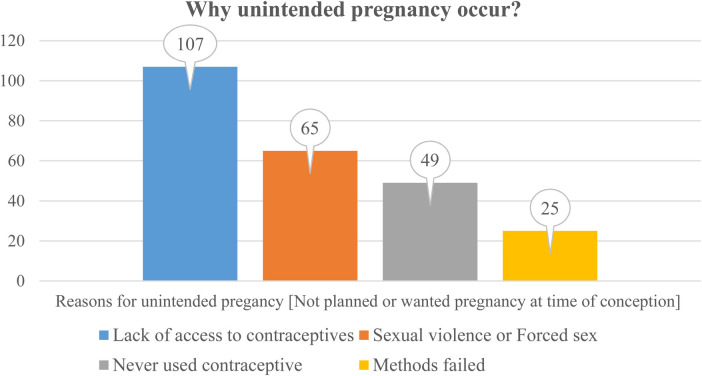
Background: In low-income countries, women with disabilities face numerous challenges in accessing sexual and reproductive health services and experience high unintended pregnancy rates and adverse pregnancy outcomes, with 42% of cases ending in abortion. However, little is known about unintended pregnancy among women with disabilities in Ethiopia. Therefore, this study aimed to assess the prevalence of unintended pregnancy and associated factors among women with disabilities in the Central Regional State of Ethiopia.
Methods: A community-based cross-sectional study was conducted from December 2023 to February 2024, and multistage random sampling was used to enroll 572 study participants. The sample size was proportionally allocated to each zone, district and kebele. The Kobo Toolbox was used for data collection and cleaning, and the Statistical Package for Social Science version 26 was used for analysis. The multivariable analysis was used to identify the factors significantly associated with unintended pregnancy using an adjusted odds ratio (AOR), a 95% confidence interval (CI), and a p-value less than 0.05.
Results: The prevalence of unintended pregnancy was 43.8% (95% CI: 39.5, 47.8) in the Central Ethiopia Regional State, Ethiopia. The significantly associated factors were household size (AOR = 4.6, 95% CI: 2.6, 7.9), awareness of pregnancy intention (AOR = 2.4, 95% CI:1.4, 4.1), domestic violence (AOR = 5.9, 95% CI: 3.4, 10.4), accessibility of service (AOR = 2.4, 95% CI: 1.2, 5.4), discrimination by care providers (AOR = 2.1, 95% CI: 1.5, 2.9), disability-unfriendly health facility structure (AOR = 1.5, 95% CI: 1.2, 2.40), and negative community attitudes (AOR = 2.7, 95% CI: 1.7, 4.3). The overall direction of the associated variables' effect was positive.
Conclusion: This study sheds light on the need for disability-inclusive and sensitive healthcare services. Therefore, to achieve universal access to sexual and reproductive healthcare targeted under the Sustainable Development Goals, the Minister of Women and Social Affairs, Ministry of Health, Regional Health Bureau, and health facilities authorities should pay attention to improving awareness on pregnancy intention and domestic violence and ensuring accessible, inclusive, and equitable maternal health care for women with disabilities.
Keywords: Ethiopia; disabilities; pregnancy; unintended; women.
© 2024 Anshebo, Larebo, Behera and Gopalan.
Conflict of interest statement
The authors declare that the research was conducted in the absence of any commercial or financial relationships that could be construed as a potential conflict of interest.
Figures
References
-
- Mcfarlane I, Zerzan R, Baker D, Keogh S, Luchsinger G, Roseman M, et al. State of the World Population: Seeing the Unseen. the Case for Action in the Neglected Crisis of Unintended Pregnancy. New York: Unfpa; (2022). p. 1–160.
LinkOut - more resources
Full Text Sources
