


Why do students drop out of regular sport in late adolescent? The experience of a systematic review
- PMID: 39737456
- PMCID: PMC11684458
- DOI: 10.3389/fpubh.2024.1416558
Why do students drop out of regular sport in late adolescent? The experience of a systematic review
Abstract
Introduction: The positive impact of youth sport on physical, mental and social health has been highlighted in several research which reinforces further investigations concerning the reasons for dropout of athletes. As one of the most emergent difficulties in youth sports is to prevent athletes from dropping out, it is important to explore what factors play important part in this process. The purpose of this study was to identify barriers and challenges related to sport persistence and dropout.
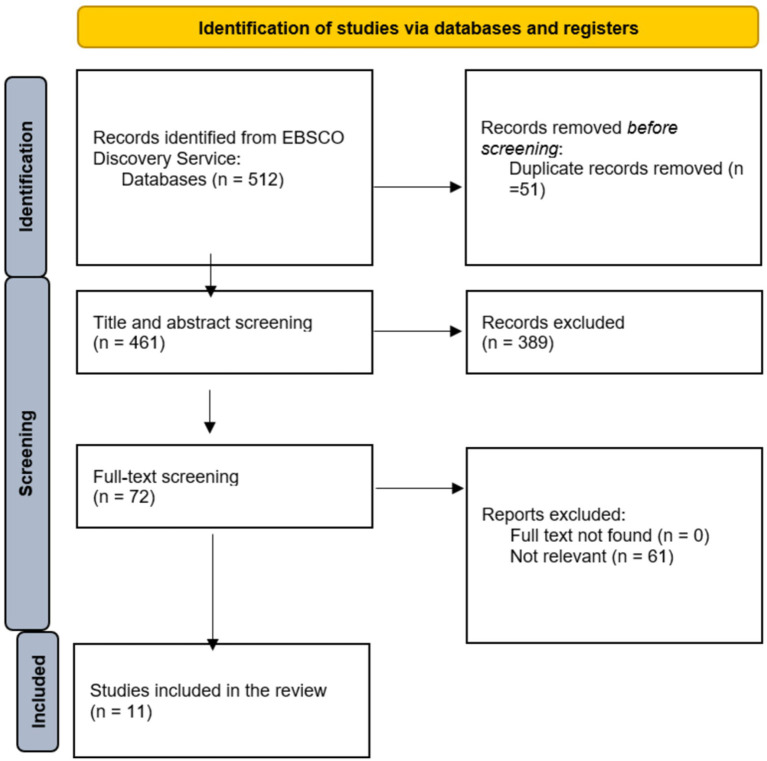
Methods: We conducted a systematic literature review using the EBSCO Discovery Service Search Engine. Our method followed the Preferred Reporting Items for Systematic Reviews and Meta-Analyses (PRISMA) guidelines.
Results: Out of the initially examined 512 publications, 11 papers were included in our final sample. Original empirical research published in a peer-reviewed journal, papers focusing on participants age below 25 years and exploring factors influencing dropout determined by any levels of Bronfenbrenner's model were analyzed. Results showed that gender differences were extensively examined and did, in fact, contribute to dropout ratios, while socio-cultural and ethnic backgrounds were largely disregarded in most studies. From presented individual psychological factors perception of ability and success, enjoyment, sports satisfaction and life satisfaction all protected against dropout.
Discussion: Achievement, goal, social and win orientation emerged as positive predictors of sport persistence in many studies, along with motivation and commitment. Many non-psychological factors were also mentioned. Sports requiring more training may lead to increased dropout rates, just as well as the lack of knowledge acquisition and competitiveness. Lastly, social environment and status also often play a significant role in dropout. Individuals with more resourceful socio-economical background find it easier to keep up the pace and have the opportunity to participate in more wealth-consuming sports. Social support received from the family and peers is a very strong preventive factor against dropout and both the personality and leadership of the coach were mentioned in multiple studies. A lack of methodological diversity, paired with the presence of only cross-sectional studies fulfilling the inclusivity criteria raises attention to the importance of examining underrepresented factors and the need for longitudinal research on the topic.
Systematic review registration: https://inplasy.com/inplasy-2024-11-0015/, INPLASY2024110015.
Keywords: dropout; individual factors; social support; sport persistence; systematic review.
Copyright © 2024 Zhang, Wang, Szakál, Bíró, Kovács, Őrsi and Kovács.
Conflict of interest statement
The authors declare that the research was conducted in the absence of any commercial or financial relationships that could be construed as a potential conflict of interest.
Figures
References
-
- Liu N, Zhong Q. The impact of sports participation on individuals’ subjective well-being: the mediating role of class identity and health. Hum Soc Sci Commun. (2023) 10:1–9. doi: 10.1057/s41599-023-02064-4 - DOI
Publication types
MeSH terms
LinkOut - more resources
Full Text Sources
Medical
Research Materials
Miscellaneous
