


Reconfiguration of brain network dynamics in bipolar disorder: a hidden Markov model approach
- PMID: 39737898
- PMCID: PMC11685458
- DOI: 10.1038/s41398-024-03212-3
Reconfiguration of brain network dynamics in bipolar disorder: a hidden Markov model approach
Abstract
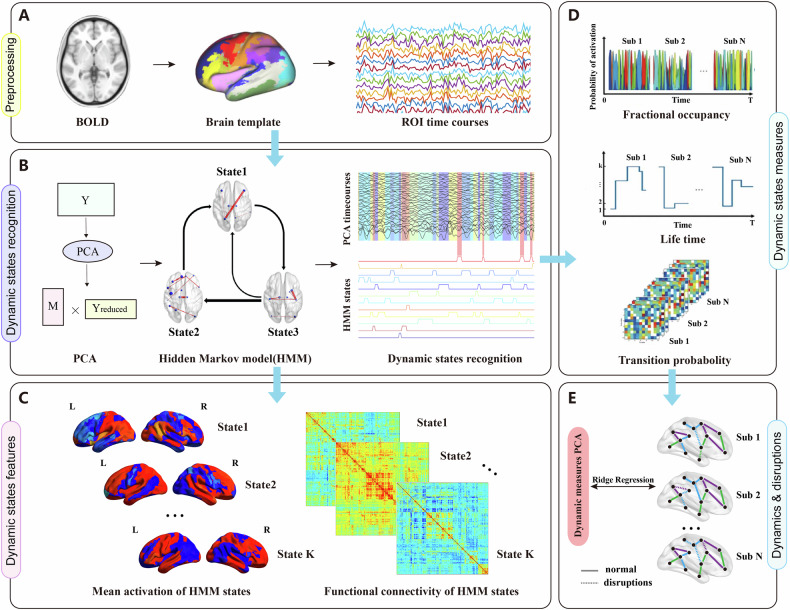
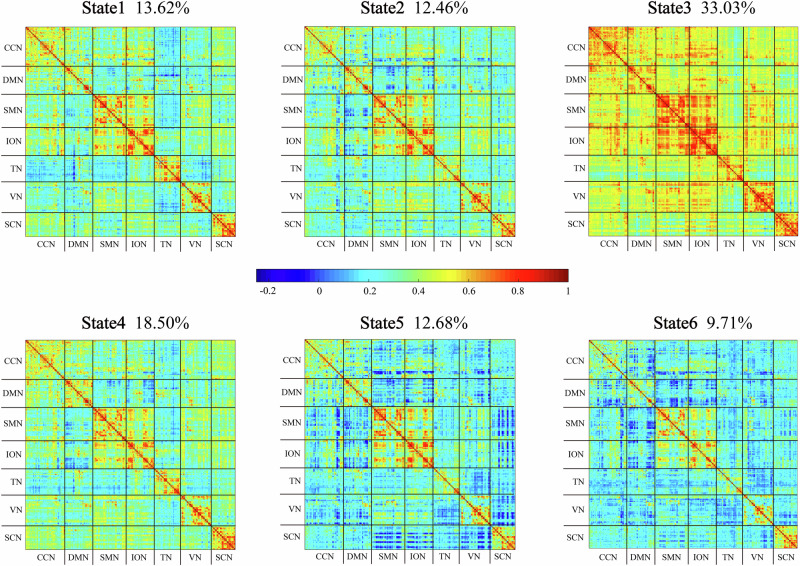
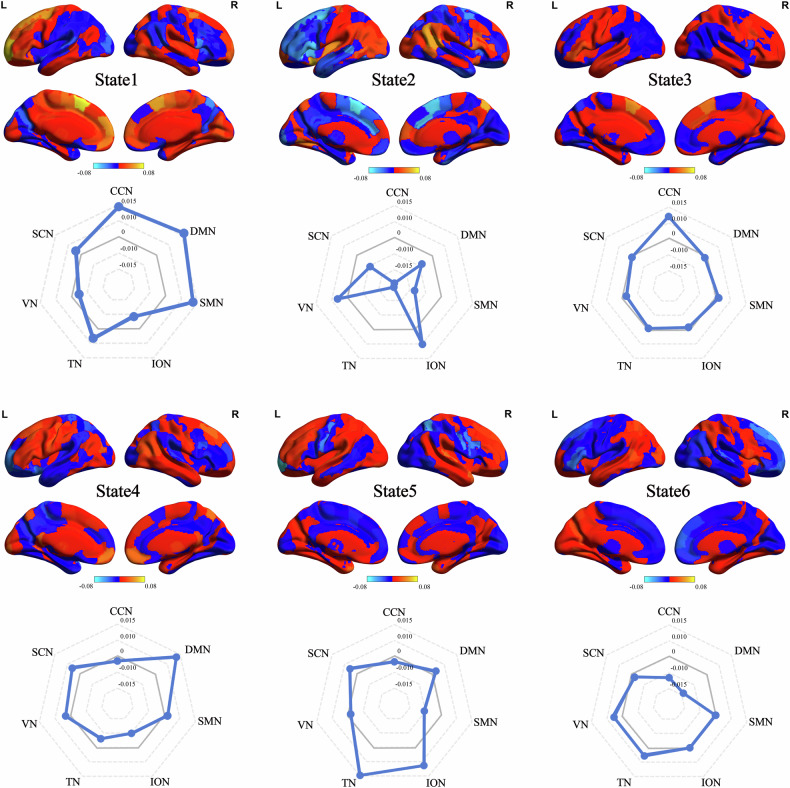
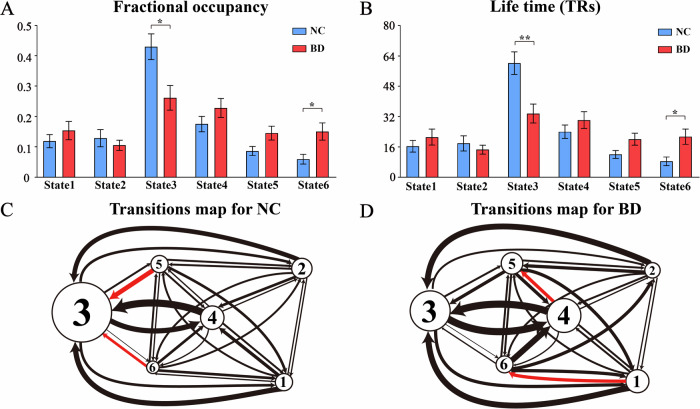
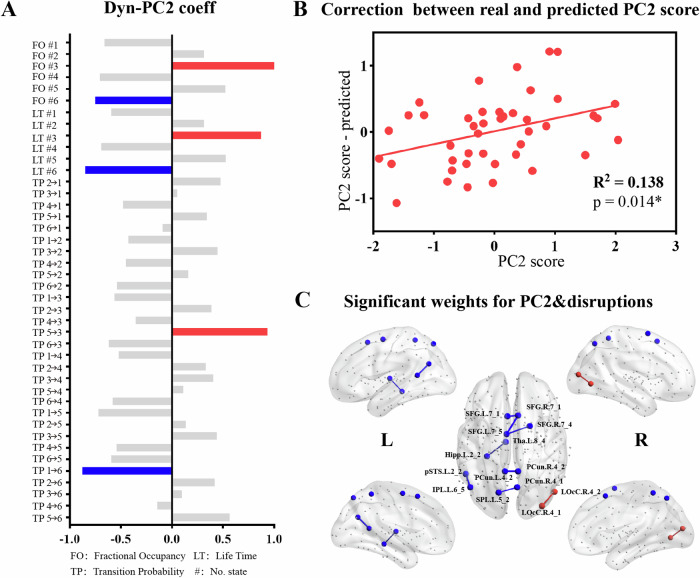
Bipolar disorder (BD) is a neuropsychiatric disorder characterized by severe disturbance and fluctuation in mood. Dynamic functional connectivity (dFC) has the potential to more accurately capture the evolving processes of emotion and cognition in BD. Nevertheless, prior investigations of dFC typically centered on larger time scales, limiting the sensitivity to transient changes. This study employed hidden Markov model (HMM) analysis to delve deeper into the moment-to-moment temporal patterns of brain activity in BD. We utilized resting-state functional magnetic resonance imaging (rs-fMRI) data from 43 BD patients and 51 controls to evaluate the altered dynamic spatiotemporal architecture of the whole-brain network and identify unique activation patterns in BD. Additionally, we investigated the relationship between altered brain dynamics and structural disruption through the ridge regression (RR) algorithm. The results demonstrated that BD spent less time in a hyperconnected state with higher network efficiency and lower segregation. Conversely, BD spent more time in anticorrelated states featuring overall negative correlations, particularly among pairs of default mode network (DMN) and sensorimotor network (SMN), DMN and insular-opercular ventral attention networks (ION), subcortical network (SCN) and SMN, as well as SCN and ION. Interestingly, the hypoactivation of the cognitive control network in BD may be associated with the structural disruption primarily situated in the frontal and parietal lobes. This study investigated the dynamic mechanisms of brain network dysfunction in BD and offered fresh perspectives for exploring the physiological foundation of altered brain dynamics.
© 2024. The Author(s).
Conflict of interest statement
Competing interests: The authors declare no competing interests. Ethics approval and consent to participate: The neuroimaging dataset used in this study was approved by the Institutional Review Boards at UCLA and the Los Angeles County Department of Mental Health. All participants provided written informed consent.
Figures

References
Publication types
MeSH terms
Grants and funding
LinkOut - more resources
Full Text Sources
Medical
