


Screening of native wild Salvia nemorosa populations for chemical compositions, antioxidant activity and UHPLC-HRMS profiling
- PMID: 39738427
- PMCID: PMC11685535
- DOI: 10.1038/s41598-024-83756-y
Screening of native wild Salvia nemorosa populations for chemical compositions, antioxidant activity and UHPLC-HRMS profiling
Abstract
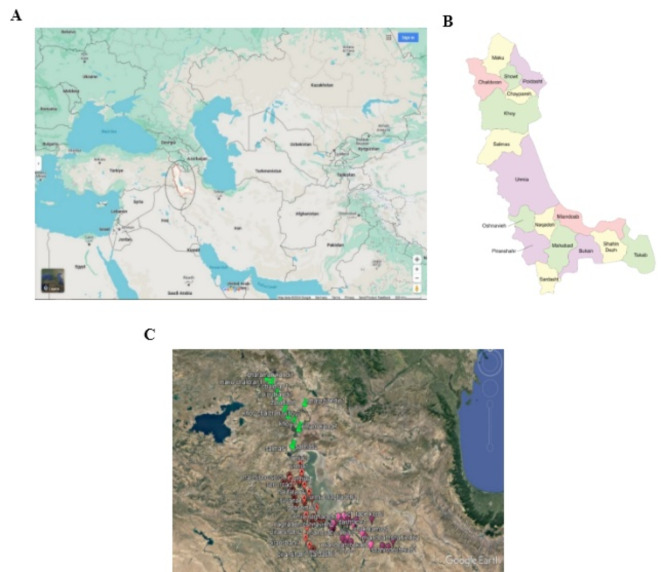
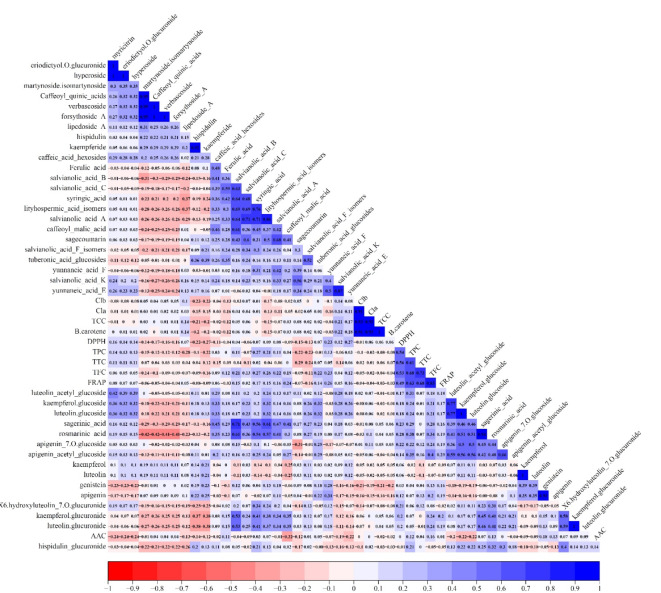
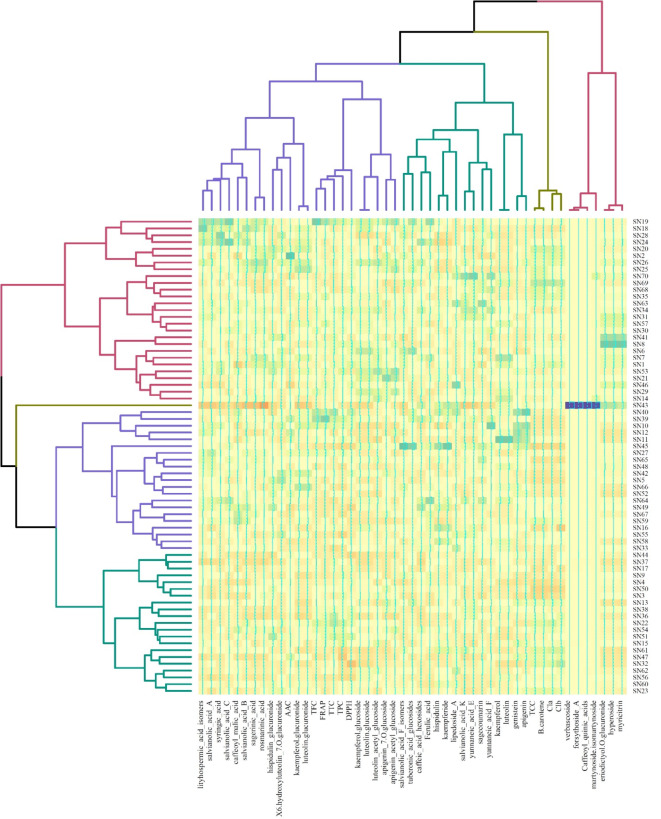
In this study, screening of the collected 70 Salvia nemorosa L. populations from 54 habitats from West Azerbaijan province, Iran was evaluated by analyzing the content of phytochemical compounds, antioxidant activity, and UHPLC-HRMS profiling in different populations. The aerial parts of the plants were analyzed based on total phenolic (TPC) and flavonoid (TFC), total tannin (TTC), ascorbic acid (AAC), chlorophylls (Cla, and Clb), total carotenoid (TCC), β-carotene, antioxidant activity (by DPPH and FRAP assays), and 40 polyphenolic compounds by UHPLC-HRMS (phenolic acids, flavonoids and fatty acyl glicosides). Significant variations in phytochemical compositions and antioxidant activity were observed among S. nemorosa samples from different habitats. Rosmarinic acid, sagerinic acid, and caffeoylquinic acids (notable polyphenolic compounds with significant pharmacological properties, particularly in the context of their antioxidant, anti-inflammatory, and enzyme inhibitory activities) were identified as the major compounds in S. nemorosa populations. According to hierarchical cluster analysis (HCA) three groups of species were identified based on phytochemical compounds and antioxidant activity. Data analysis indicated that the quality and quantity of the chemical compounds, as well as their antioxidant functions, varied depending on habitat diversity. Overall, the results showed that each population exhibited a unique class of polyphenols, highlighting diverse potential applications across various industries. These findings suggest that the S. nemorosa populations studied here have significant potential for the development of innovative nutraceuticals, addressing the current scarcity of S. nemorosa-derived products in the market.
Keywords: Salvia nemorosa; Antioxidant; Flavonoids; Phenolic compounds; UHPLC-HRMS.
© 2024. The Author(s).
Conflict of interest statement
Declarations. Competing interests: The authors declare no competing interests.
Figures
References
-
- Esmaeili, G. H., Azizi, M., Arouiee, H. & Vaezi, J. Anatomical and morphological properties of trichomes in four Iranian native Salvia species under cultivated conditions. Int. J. Hortic. Sci.6, 189–200 (2019).
-
- Salvia nemorosa. Global Biodiversity Information Facility. Retrieved 6 February (2021).
-
- Betsy, C. & Barner, C. D. The New Book of Salvias216 (Timber, 2003).
-
- Ghafiyehsanj, E., Dilmaghani, K., Chaparzade, N. & Saadatmand, S. Comparative study on antioxidant activity of Salvia nemorosa L. from two different locations. South. Brazilian J. Chem.28, 17–21 (2020). (2020). - DOI
-
- Esmaeili, G. et al. Diversity of chemical composition and morphological traits of eight Iranian wild Salvia species during the first step of domestication. Agronomy12, 2455 (2022). - DOI
MeSH terms
Substances
LinkOut - more resources
Full Text Sources
Medical
Miscellaneous
