


Application of the Left Ventricular Pressure-Strain Loop Technique in Monitoring Improvement Factors of Patients With Heart Failure Reduced Ejection Fraction
- PMID: 39742018
- PMCID: PMC11668549
- DOI: 10.1155/cdr/5562513
Application of the Left Ventricular Pressure-Strain Loop Technique in Monitoring Improvement Factors of Patients With Heart Failure Reduced Ejection Fraction
Abstract
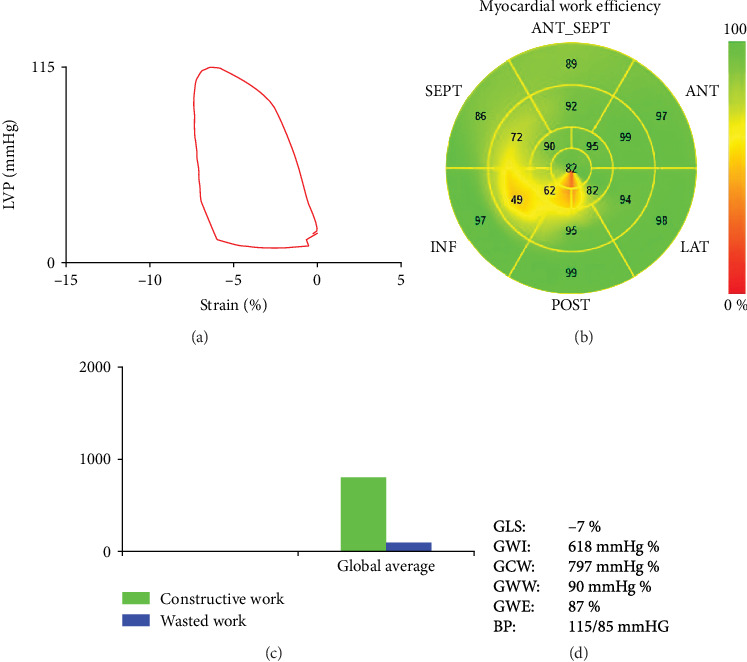
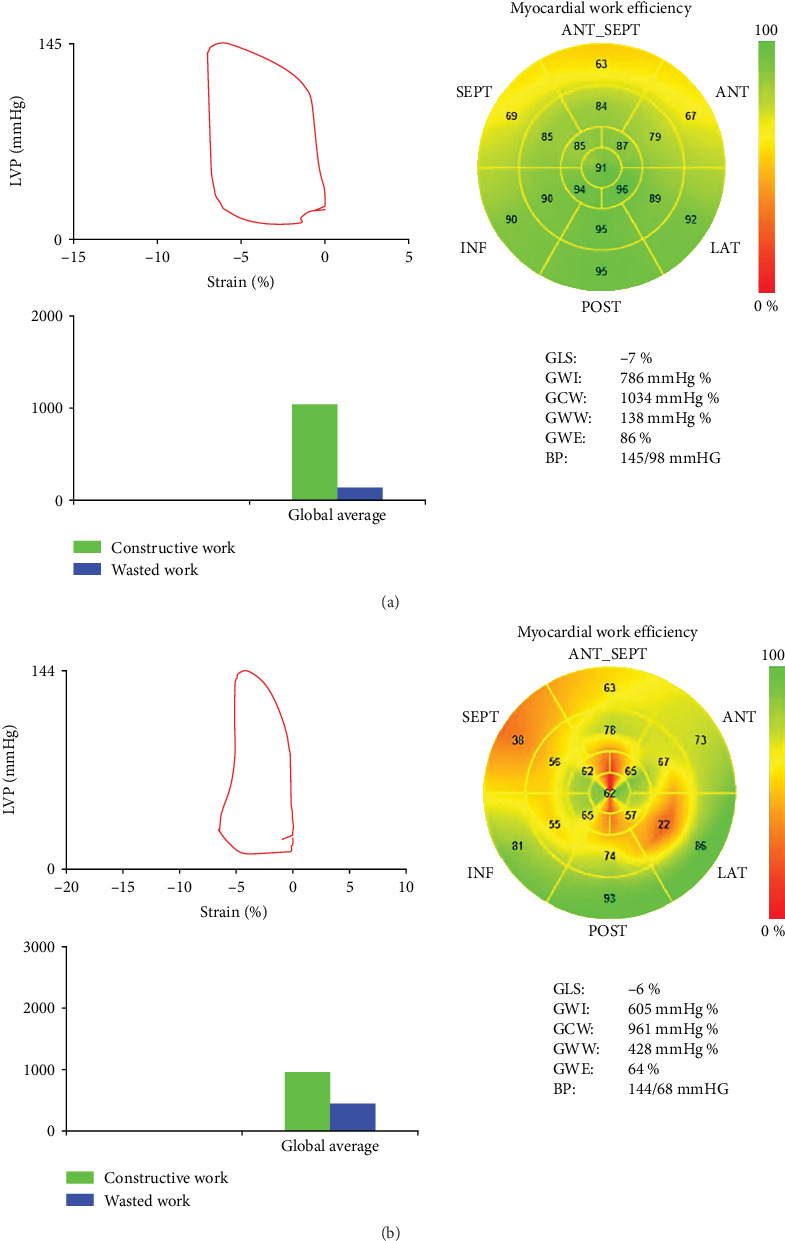
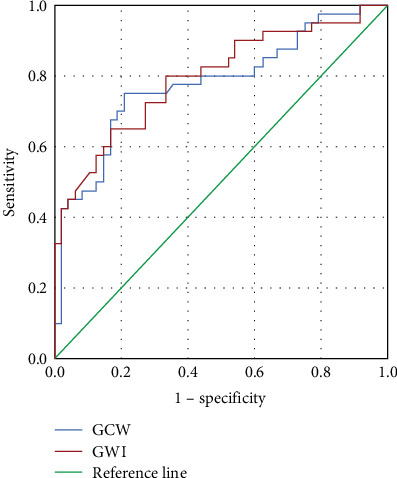
The left ventricular pressure-strain loop (PSL) is a new technique based on ultrasound for noninvasive quantitative evaluation of global and local myocardial work (MW). This study is aimed at evaluating improvement factors of patients with heart failure (HF) reduced ejection fraction (HFrEF) using the PSL technique. A total of 88 patients with HF were enrolled in this study, which had ≤ 40% left ventricular ejection fraction (LVEF). The EchoPAC workstation was used to obtain the global longitudinal strain (GLS) and MW parameters of the left ventricle. All patients have taken medicines for HF treatments for 6-12 months. The improvements of HF after therapies were evaluated according to the following recommended criteria. The clinical characteristics of patients with improved and nonimproved groups were stratified via univariate or multivariate logistic regression analysis, receiver operating characteristic (ROC), and the area under ROC (area under the curve (AUC)). There were no significant differences in general medical information, the underlying diseases, laboratory findings, myocardial enzyme activities, and taking medicines between the improved and nonimproved LVEF patients (p > 0.05). There were significant differences in LVEF of patients at admission, left ventricular end-diastolic diameter (LVEDD), interventricular septum thickness (IVST), early diastolic mitral flow peak velocity E (E peak), GLS, global myocardial work index (GWI), global myocardial constructive work (GCW), and global myocardial work efficiency (GWE) between the two groups (p < 0.05). Univariate and multivariate logistic regression analyses confirmed that GWI and GCW were critical predictive factors for LVEF improvement in patients with HF. ROC curve showed that the AUC of GWI and GCW were 0.796 and 0.779 at the cut-off of 741 mmHg% for GWI and 973.5 mmHg% for GCW, respectively. The sensitivities of GWI and GCW were 65% and 75%, and the specificities of GWI and GCW were 83.3% and 79.2% at given cut-off values. These results revealed that GWI and GCW were independent predictors of improvement of LVEF in patients with HFrEF.
Keywords: echocardiography; heart failure; left ventricular ejection fraction; myocardial work; pressure–strain loop.
Copyright © 2024 Qing Li et al.
Conflict of interest statement
The authors declare no conflicts of interest.
Figures
References
-
- Heidenreich P. A., Bozkurt B., Aguilar D., et al. 2022 AHA/ACC/HFSA guideline for the management of heart failure: executive summary: a report of the American College of Cardiology/American Heart Association joint committee on clinical practice guidelines. Journal of the American College of Cardiology . 2022;79(17):1757–1780. doi: 10.1016/j.jacc.2021.12.011. - DOI - PubMed
-
- Heart Failure Group of Chinese Society of Cardiology of Chinese Medical Association. Chinese guidelines for the diagnosis and treatment of heart failure 2018. Zhonghua Xin Xue Guan Bing Za Zhi . 2018;46(10):760–789. - PubMed
-
- Liu Q., Chen L., Liu X., et al. Evaluation of left ventricular myocardial work in patients with hyperthyroidism with different heart rates with noninvasive pressure-strain loop based on two-dimensional speck tracking imaging. Quantitative Imaging in Medicine and Surgery . 2023;13(4):2248–2261. doi: 10.21037/qims-22-534. - DOI - PMC - PubMed
MeSH terms
LinkOut - more resources
Full Text Sources
Medical
Research Materials
Miscellaneous
