


Current pathways model for hall thruster plumes in ground-based vacuum test facilities: measurements and observations
- PMID: 39744443
- PMCID: PMC11685261
- DOI: 10.1007/s44205-024-00097-8
Current pathways model for hall thruster plumes in ground-based vacuum test facilities: measurements and observations
Abstract
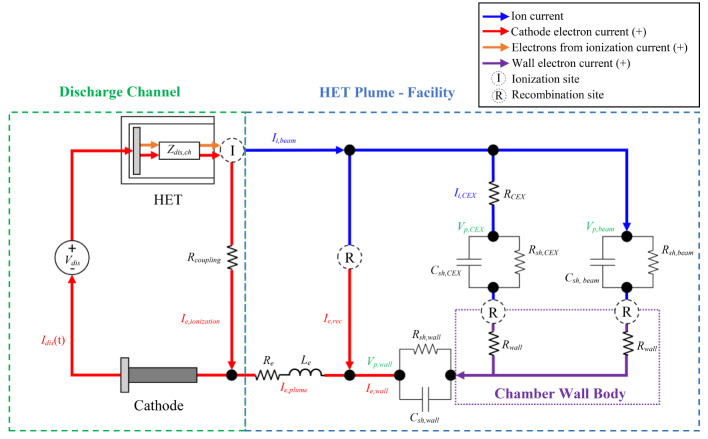
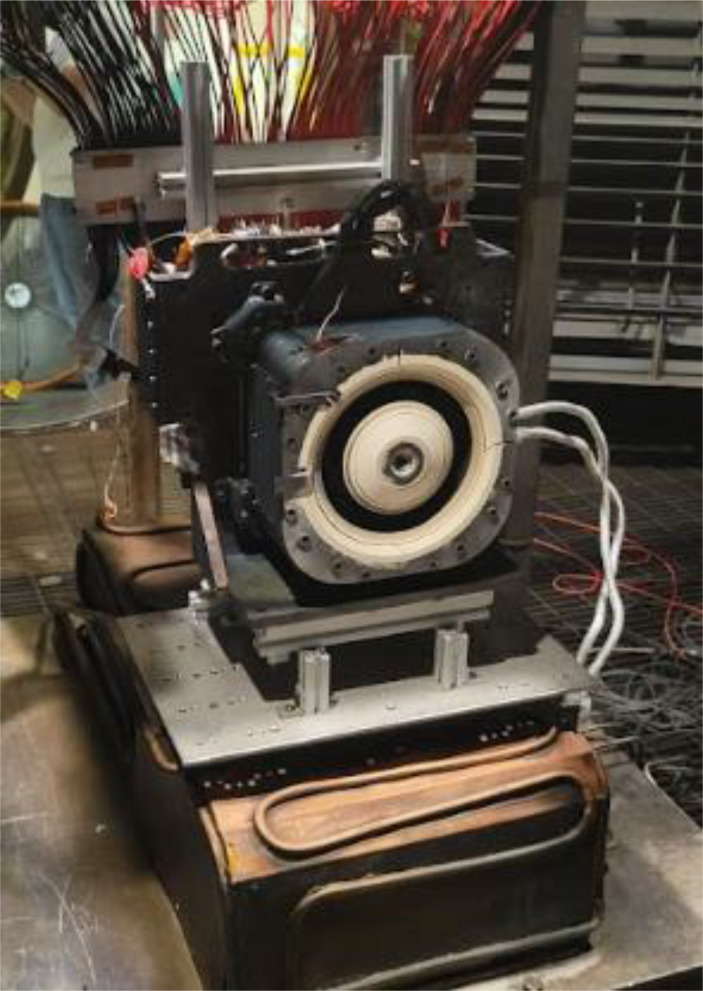
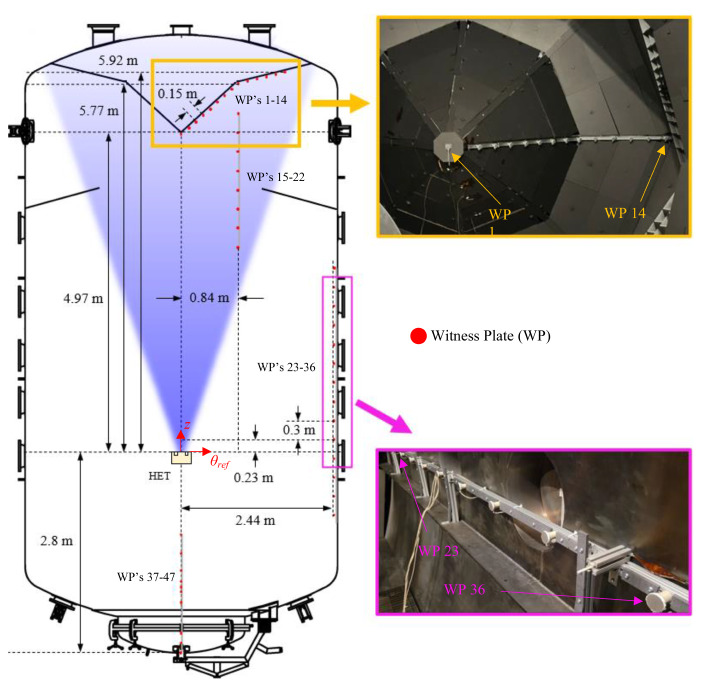
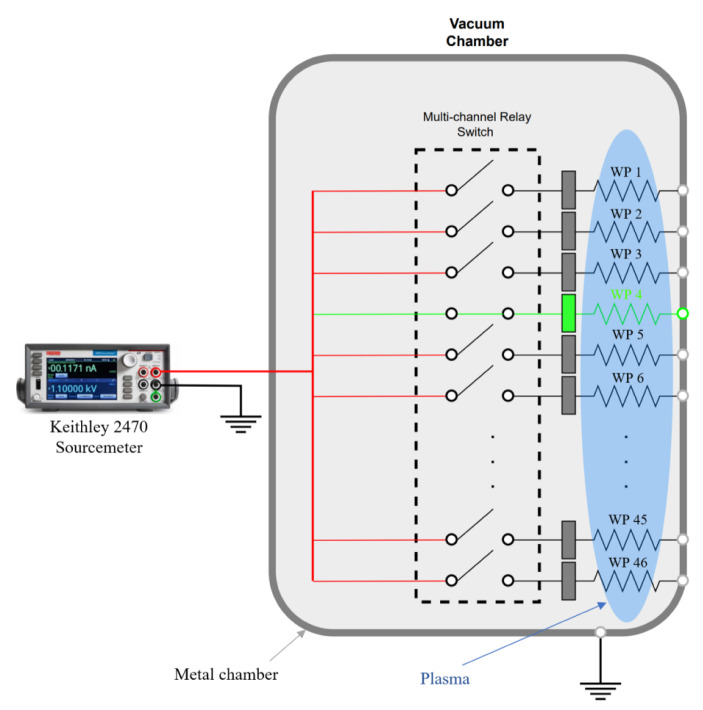
A previous companion paper introduced a current pathways model that represents the electrical coupling between the Hall effect thruster (HET) and the ground-based vacuum test facility operational environment. In this work, we operated a 7-kW class HET at 4.5 kW, 15 A and 6 kW, 20 A on krypton to quantify aspects of the current pathways model to characterize the role metal vacuum chambers play in the thruster's discharge circuit as a function of discharge current. During HET operation, far-field ion and electron saturation currents at 47 near-facility wall locations were measured using an array of 5.08 cm diameter, stainless-steel planar electrodes. In addition, the plasma properties at three distinct locations within the facility, 25 cm from the facility wall, were obtained using Langmuir probes. Experimental results show that thruster beam ions do not readily neutralize with cathode electrons and instead neutralize with the free electrons provided by the metallic chamber wall. In addition, significant charge-exchange (CEX) ion current was measured in the background plasma environment and constituted about 23% of the total ion current measured by the planar electrode array. Thus, the metallic vacuum chamber surfaces facilitate charge neutralization for both ion populations. Additionally, the plasma environment near the facility walls was characterized to be non-uniform with an estimated plasma sheath capacitance ranging between 0.45 µF and 1.79 µF. Further analysis shows that the plasma sheath at the facility wall behaves like a parallel RC circuit, potentially concealing the thruster's AC characteristics. Inherent plasma oscillations give rise to inductive effects with inductances that varied between 76.5 nH and 101.4 nH. Hence, the dynamic characteristics of the HET's discharge are influenced by the capacitive and inductive effects introduced by the vacuum test facility operational environment.
Keywords: Electrical facility effects; Hall effect thruster; Plasma plume; Plume facility interaction.
© The Author(s) 2024.
Conflict of interest statement
Competing interestsThe authors declare no competing interests.
Figures
References
-
- Jovel D, Walker ML (2024) Current pathways model for Hall Thruster plumes in Ground-based Vacuum Test facilities. AIAA Scitech 2024 Forum, 4
-
- Peterson PY, Kamhawi H, Huang W, Williams G, Gilland JH, Yim J, Hofer RR, Herman DA (2016) NASA’s HERMeS Hall Thruster Electrical Configuration Characterization, 52nd AIAA/SAE/ASEE Joint Propulsion Conference, 25–27 July
-
- Walker JA, Frieman JD, Walker ML, Khayms V, King D, Peterson PY (2016) Electrical Facility effects on Hall-Effect-Thruster Cathode Coupling: Discharge oscillations and Facility Coupling. J Propul Power 32(4):844–855 - DOI
-
- Nilsson JW, Riedel SA (2010) Electric circuits. Prentice Hall, Upper Saddle River, NJ
-
- Godyak VA, Piejak RB, Alexandrovich BM (1991) Electrical characteristics of parallel-plate RF discharges in argon. IEEE Trans Plasma Sci, pp. 660–676
LinkOut - more resources
Full Text Sources