


TGF-β drives differentiation of intraepithelial mast cells in inflamed airway mucosa
- PMID: 39744947
- PMCID: PMC11684809
- DOI: 10.1172/JCI186337
TGF-β drives differentiation of intraepithelial mast cells in inflamed airway mucosa
Abstract
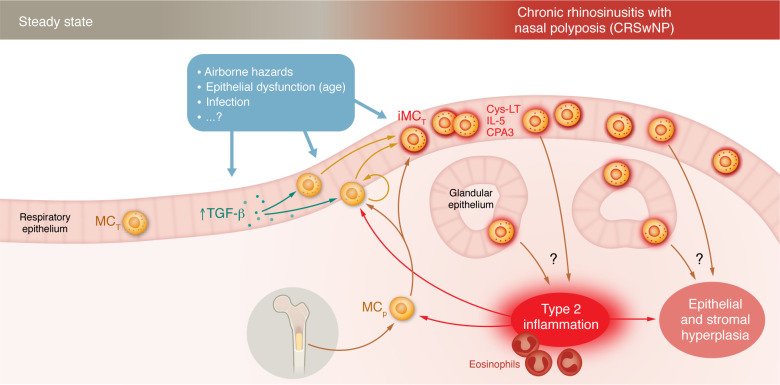
Similarly to acute intestinal helminth infection, several conditions of chronic eosinophilic type 2 inflammation of mucosal surfaces, including asthma and eosinophilic esophagitis, feature robust expansions of intraepithelial mast cells (MCs). Also the hyperplastic mucosa of nasal polyposis in the context of chronic rhinosinusitis, with or without COX1 inhibitor intolerance, contains impressive numbers of intraepithelial MCs. In this issue of the JCI, Derakhshan et al. elucidate the heterogeneity of MCs in nasal polyposis and identify a transcriptional signature of TGF-β target genes expressed by the intraepithelial MC population. These MCs displayed effector functions that implicate them as pathogenetic contributors. TGF-β directed differentiation of similar MC populations also in vitro. These findings extend the emerging concept of TGF-β as a driver of type 2 inflammation at barrier surfaces.
Conflict of interest statement
Figures
Comment on
- Human intraepithelial mast cell differentiation and effector function are directed by TGF-β signaling doi: 10.1172/JCI174981
References
-
- Derakhshan T, et al. Human intraepithelial mast cell differentiation and effector function are directed by TGF-β signaling. J Clin Invest. 2024;134(22):e174981.
MeSH terms
Substances
LinkOut - more resources
Full Text Sources
