


Human intraepithelial mast cell differentiation and effector function are directed by TGF-β signaling
- PMID: 39744949
- PMCID: PMC11684804
- DOI: 10.1172/JCI174981
Human intraepithelial mast cell differentiation and effector function are directed by TGF-β signaling
Abstract
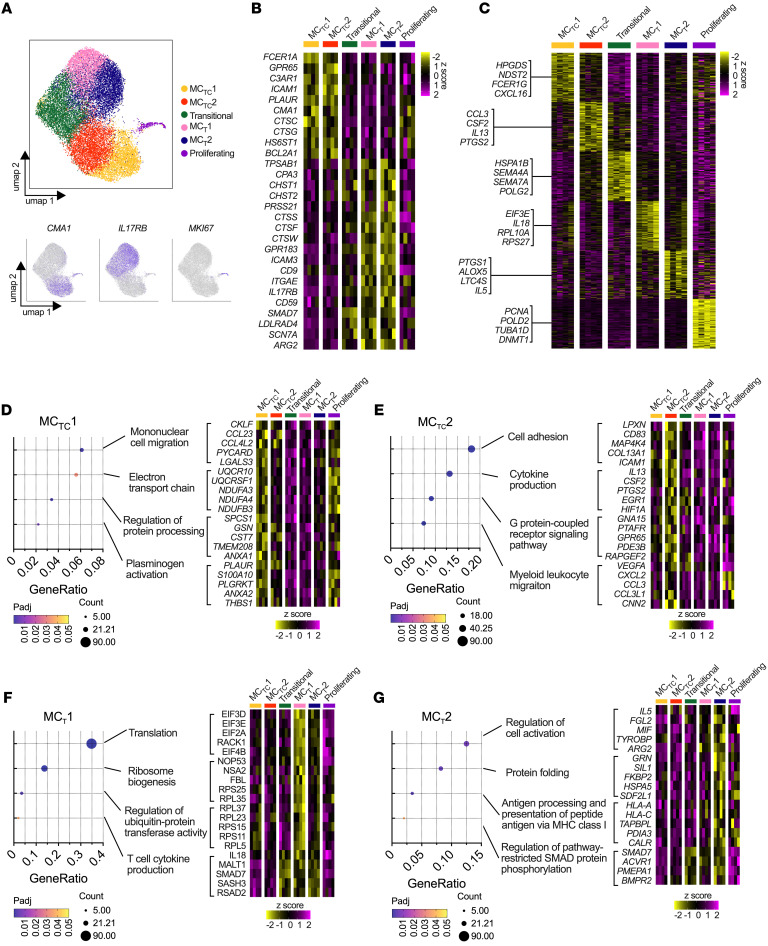
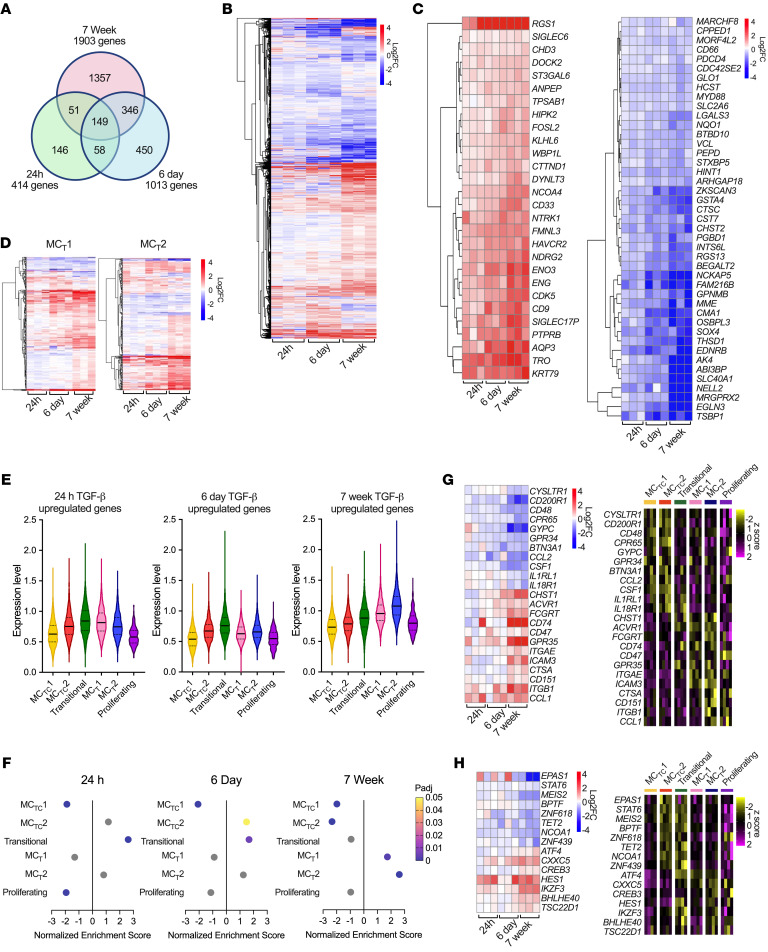
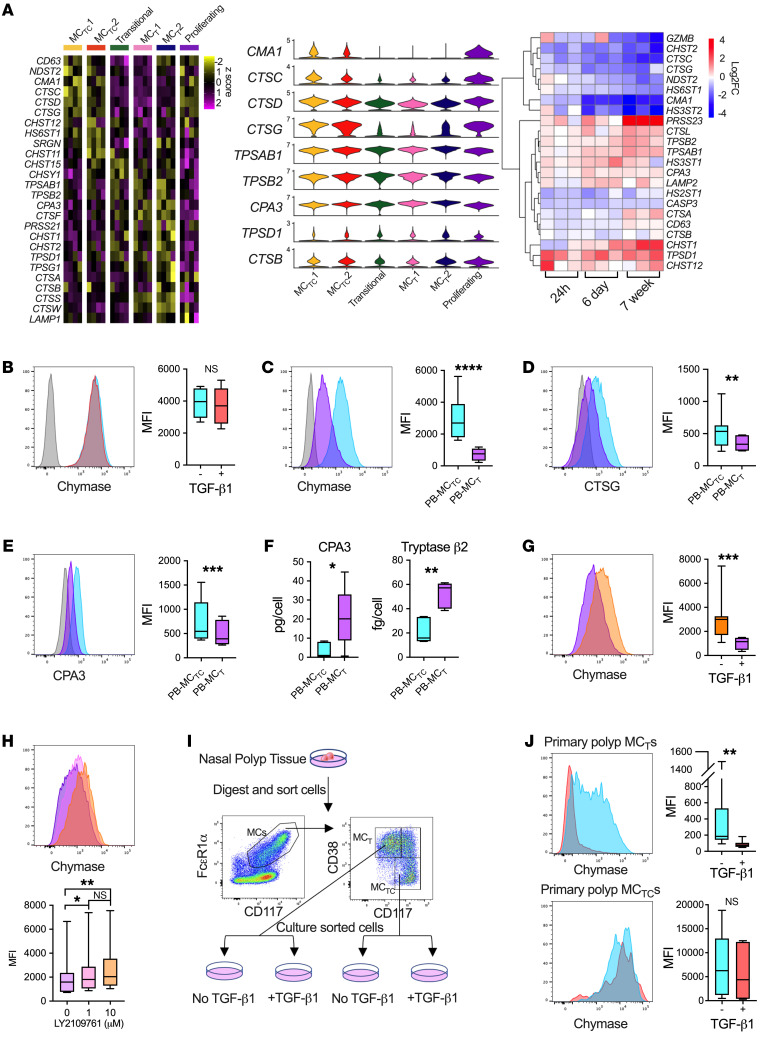
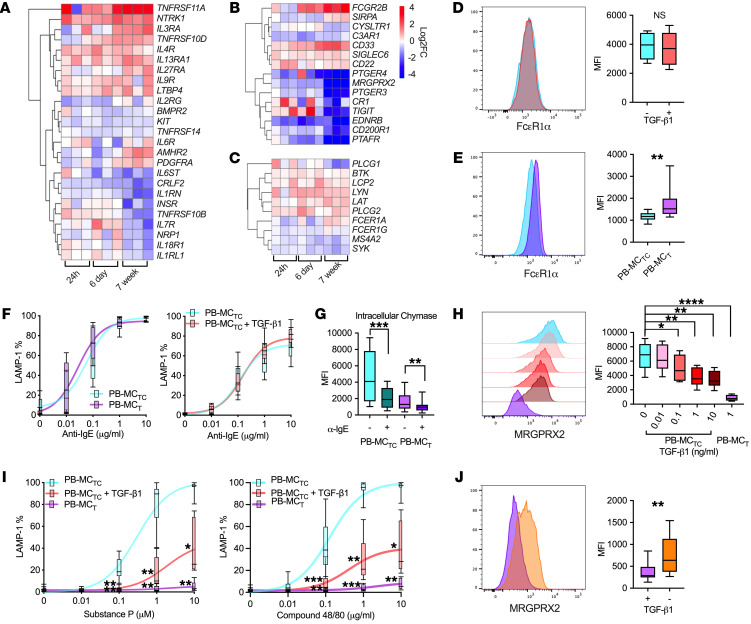
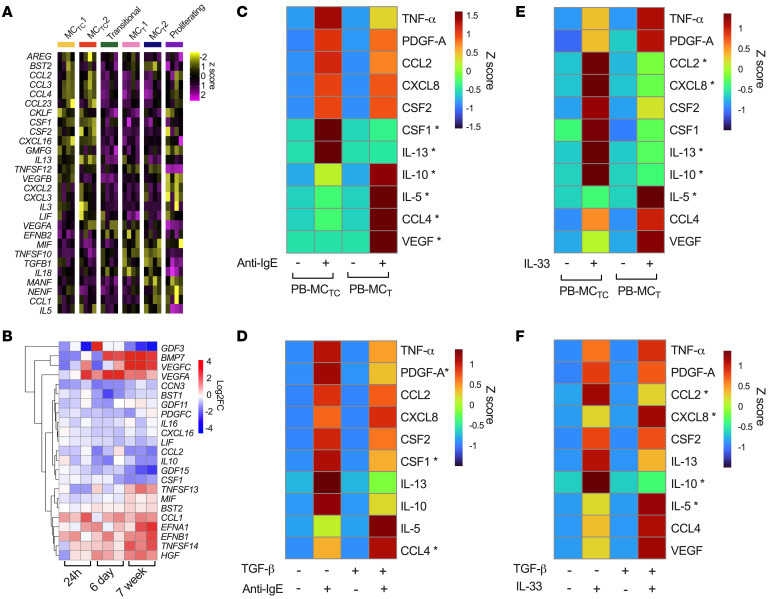
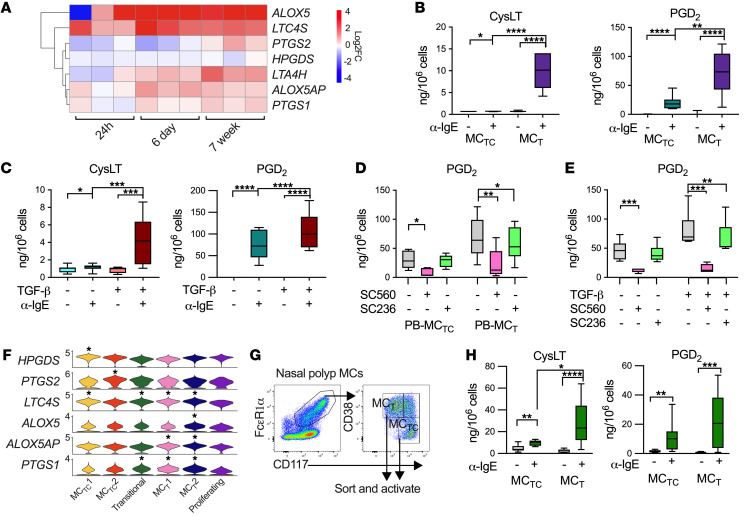
Mast cells (MCs) expressing a distinctive protease phenotype (MCTs) selectively expand within the epithelium of human mucosal tissues during type 2 (T2) inflammation. While MCTs are phenotypically distinct from subepithelial MCs (MCTCs), signals driving human MCT differentiation and this subset's contribution to inflammation remain unexplored. Here, we have identified TGF-β as a key driver of the MCT transcriptome in nasal polyps. We found that short-term TGF-β signaling alters MC cell surface receptor expression and partially recapitulated the in vivo MCT transcriptome, while TGF-β signaling during MC differentiation upregulated a larger number of MCT-associated transcripts. TGF-β inhibited the hallmark MCTC proteases chymase and cathepsin G at both the transcript and protein level, allowing selective in vitro differentiation of MCTs for functional study. We identified discrete differences in effector phenotype between in vitro-derived MCTs and MCTCs, with MCTs exhibiting enhanced proinflammatory lipid mediator generation and a distinct cytokine, chemokine, and growth factor production profile in response to both innate and adaptive stimuli, recapitulating functional features of their tissue-associated counterpart MC subsets. Thus, our findings support a role for TGF-β in promoting human MCT differentiation and identified a discrete contribution of this cell type to T2 inflammation.
Keywords: Allergy; Asthma; Immunology; Mast cells.
Conflict of interest statement
Figures
Comment in
- TGF-β drives differentiation of intraepithelial mast cells in inflamed airway mucosa doi: 10.1172/JCI186337
References
MeSH terms
Substances
Grants and funding
LinkOut - more resources
Full Text Sources
